
Romantic Bridal Updos: Your Complete Guide to Timeless Bridal Hair

A romantic bridal updo is one of the most consistently requested looks in luxury bridal hair, and one of the most misunderstood. Brides arrive at their trial with Pinterest boards full of soft, undone chignons and loose braided styles, and they sometimes leave with something that feels too formal, too tight, or too finished. The look they wanted was romantic. What they got was polished.
The difference is in the details, and in the vocabulary. Understanding what makes an updo romantic rather than structured, and knowing which specific elements to ask for, is how you get the look you actually want. This guide covers the full category: the major romantic updo styles, how each one suits different hair types and venues, how they perform in South Florida’s heat and humidity, and what to nail down at your bridal trial.
What Makes an Updo “Romantic” — And Why It Matters
The defining quality of a romantic updo is intentional softness: elements that are deliberately undone, organic in shape, and feminine in character. Face-framing tendrils that fall loosely at the temples and in front of the ears. A chignon base that has visible texture and dimension rather than a smooth, polished surface. Shapes that look like they came together naturally rather than being architected.
This is distinct from a formal or structured updo, which is defined by precision: a French twist with clean, folded edges, a sleek low chignon with every strand in place, a tightly pinned ballerina bun. Those styles have their own beauty and they suit certain brides and venues perfectly. But they read as designed and deliberate in a way that romantic updos intentionally don’t.
For brides deciding between updo styles and whether to go up or down with their hair, the complete bridal hairstyles guide by texture covers the full range of options across all hair types and helps narrow down which style category fits your hair best.
Why the Romantic Updo Is Perennially Requested
Part of what makes romantic updos so consistently popular in bridal is that they age well. The loose chignon photographed at a 2010 wedding still looks beautiful today; the very structured updo of the same era can feel more dated. Romantic styling has a timeless quality because it references something organic and human rather than a specific trend.
It’s also practical in a way that matters for a wedding: a romantic updo holds hair up and away from the neck and face, which is a genuine comfort advantage at an outdoor South Florida ceremony. It typically has natural movement without the “I’ve been wearing a complicated updo for eight hours” fatigue of more rigid styles.
The Loose Chignon — The Most Requested Romantic Updo
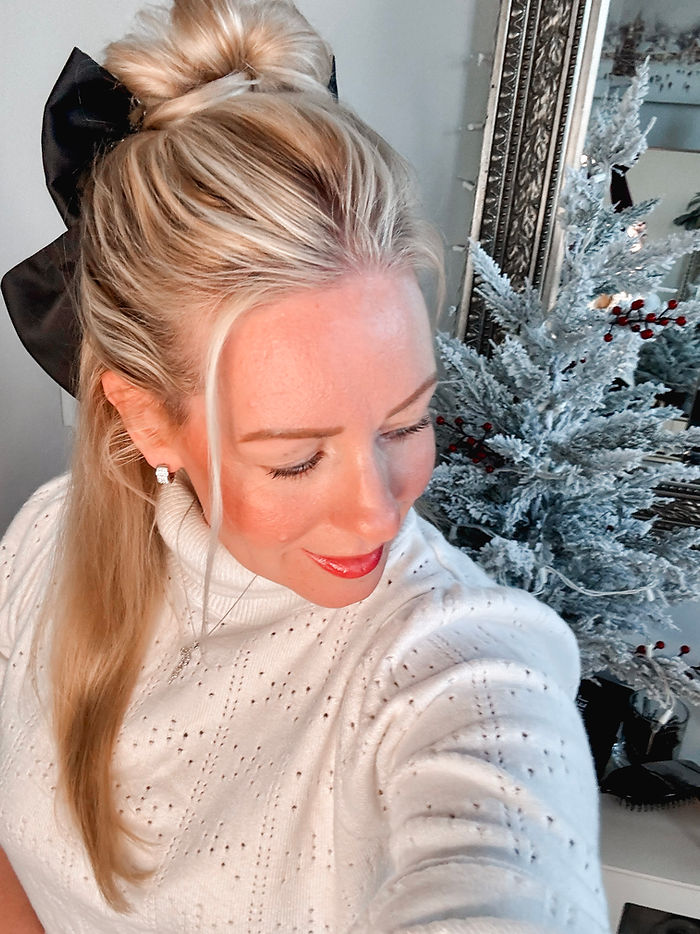
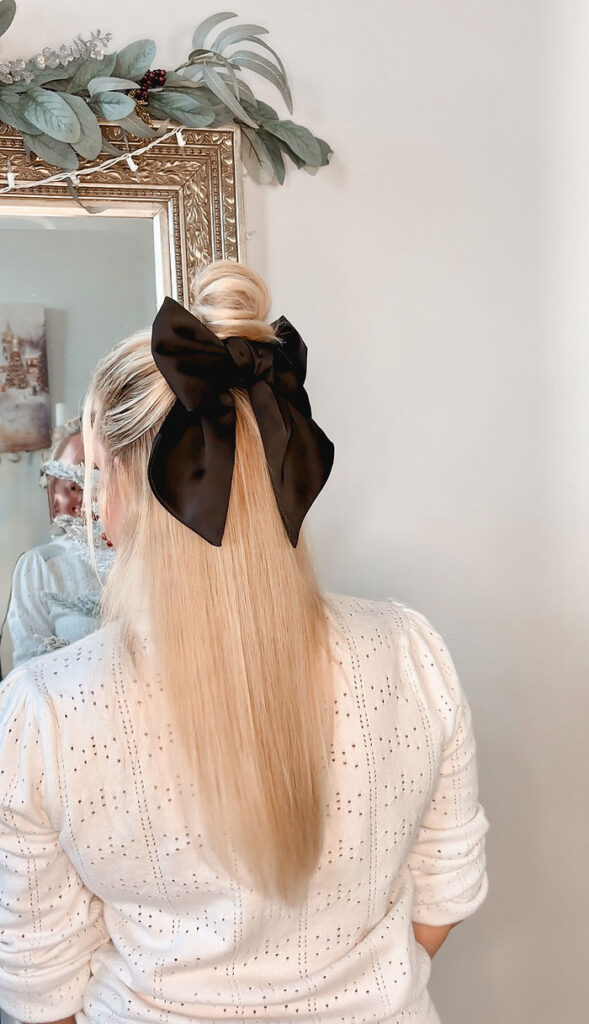
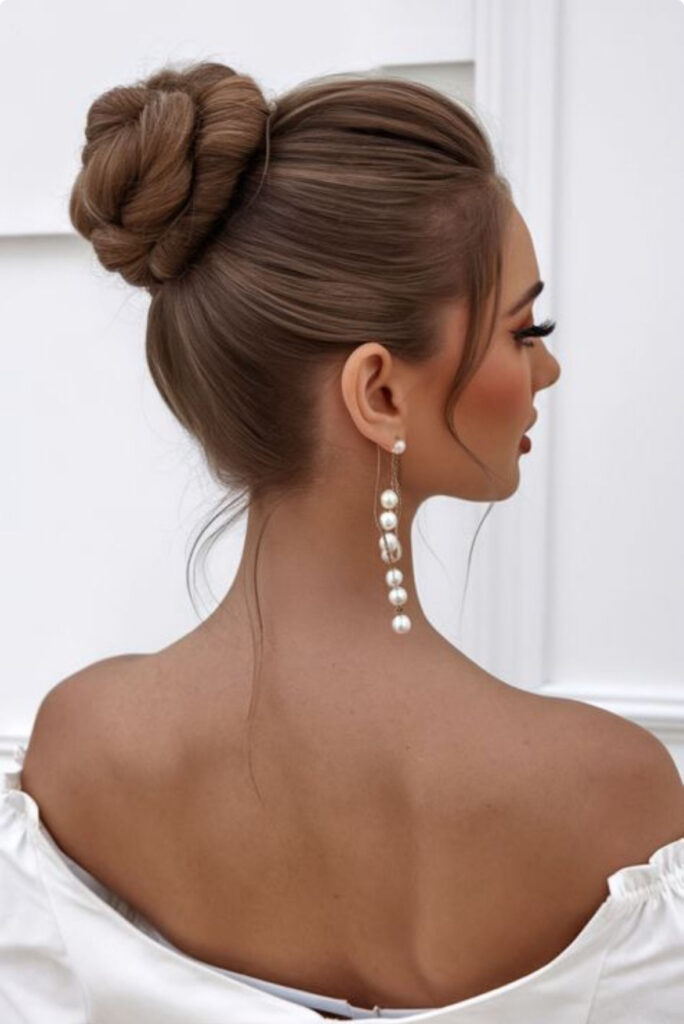
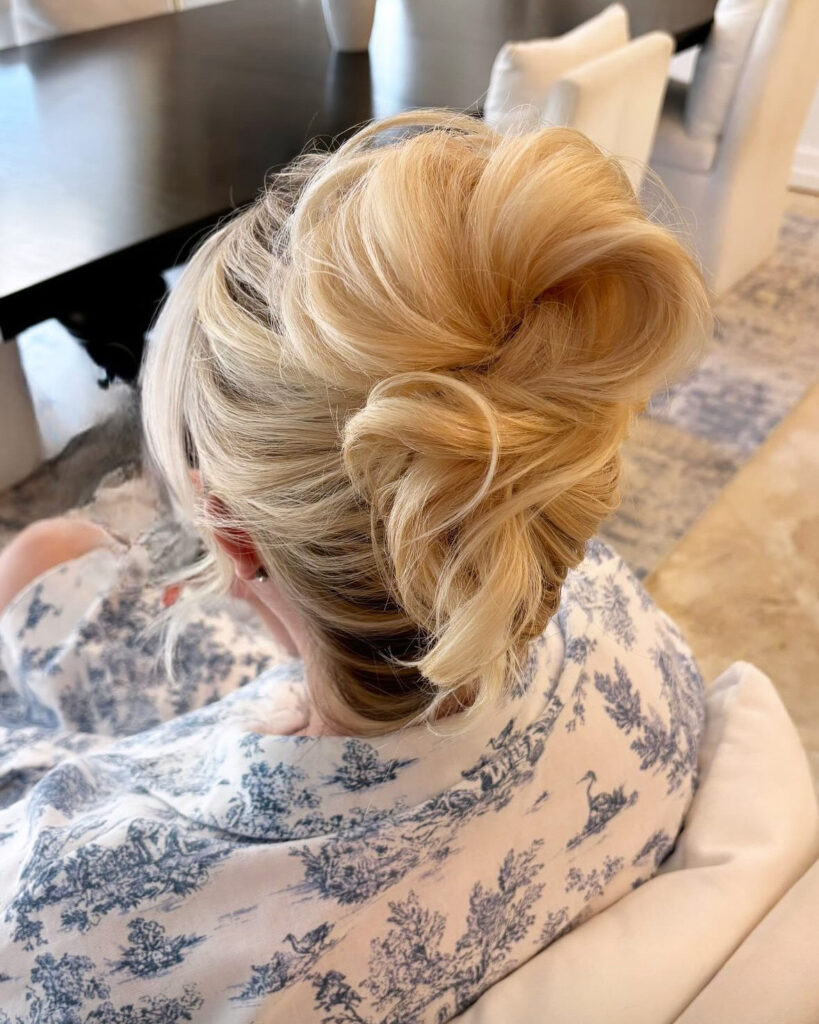
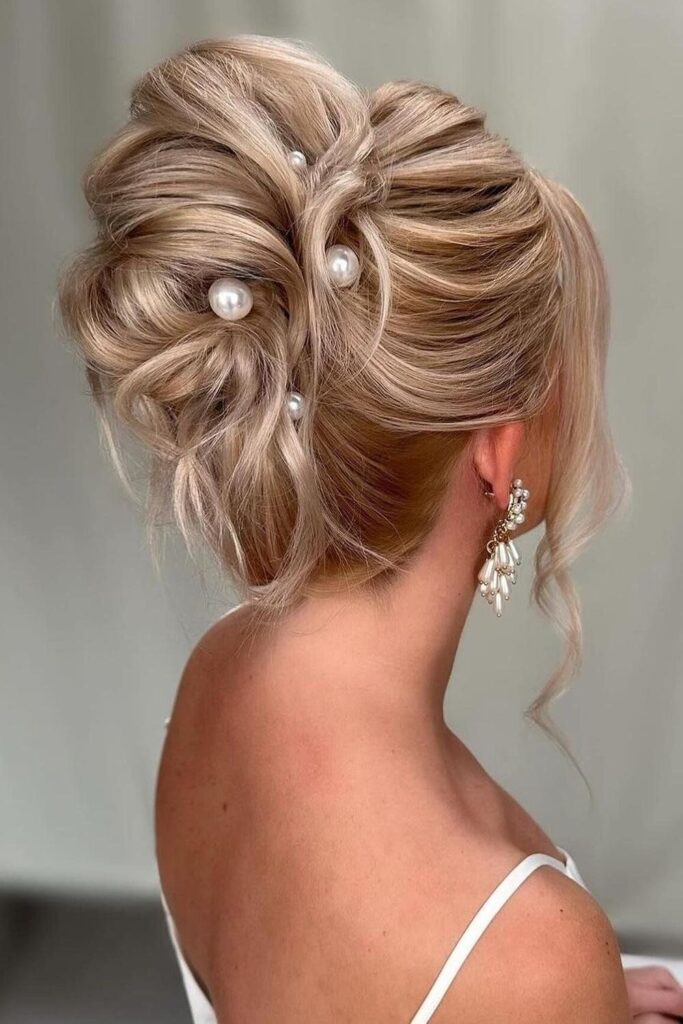
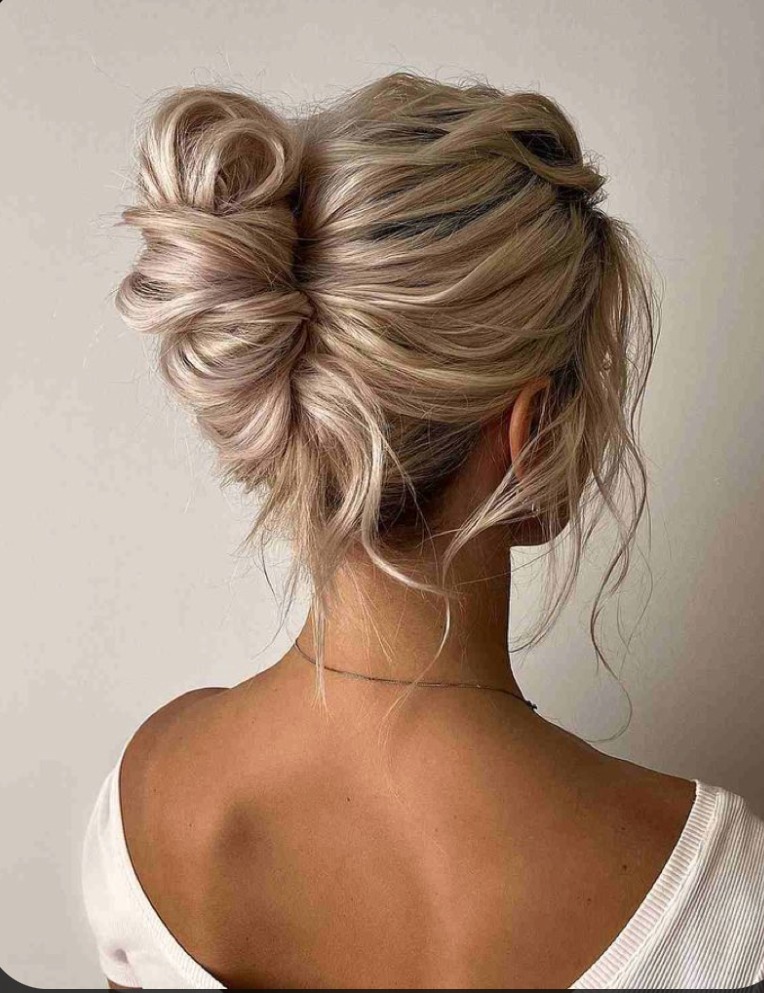
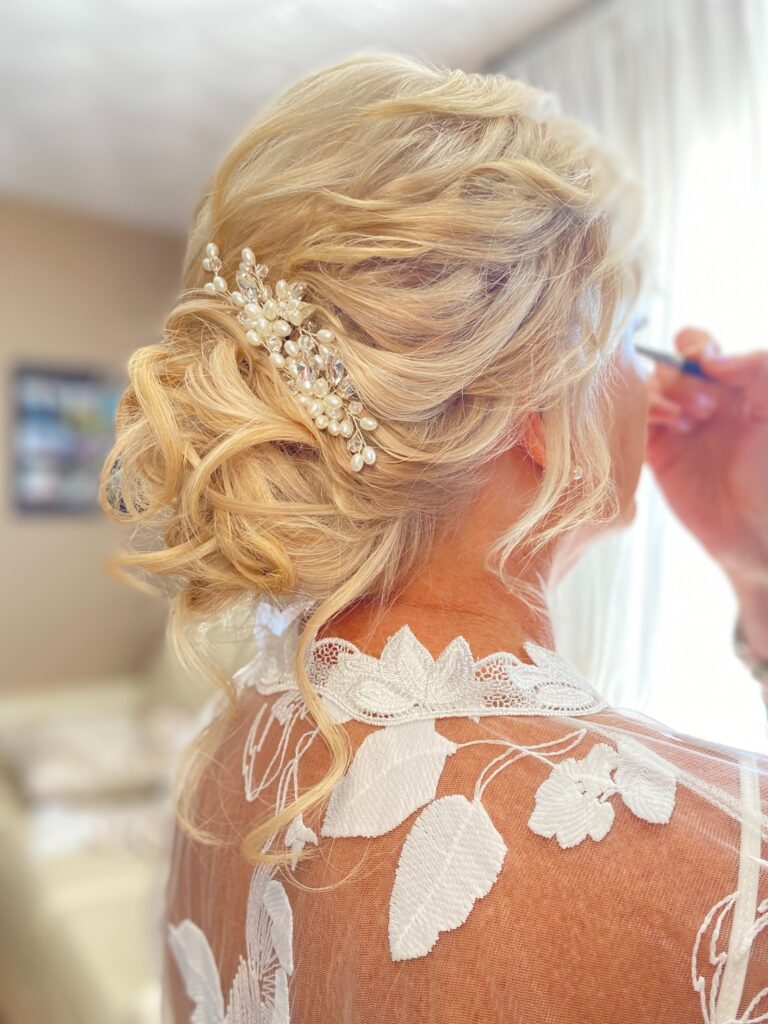
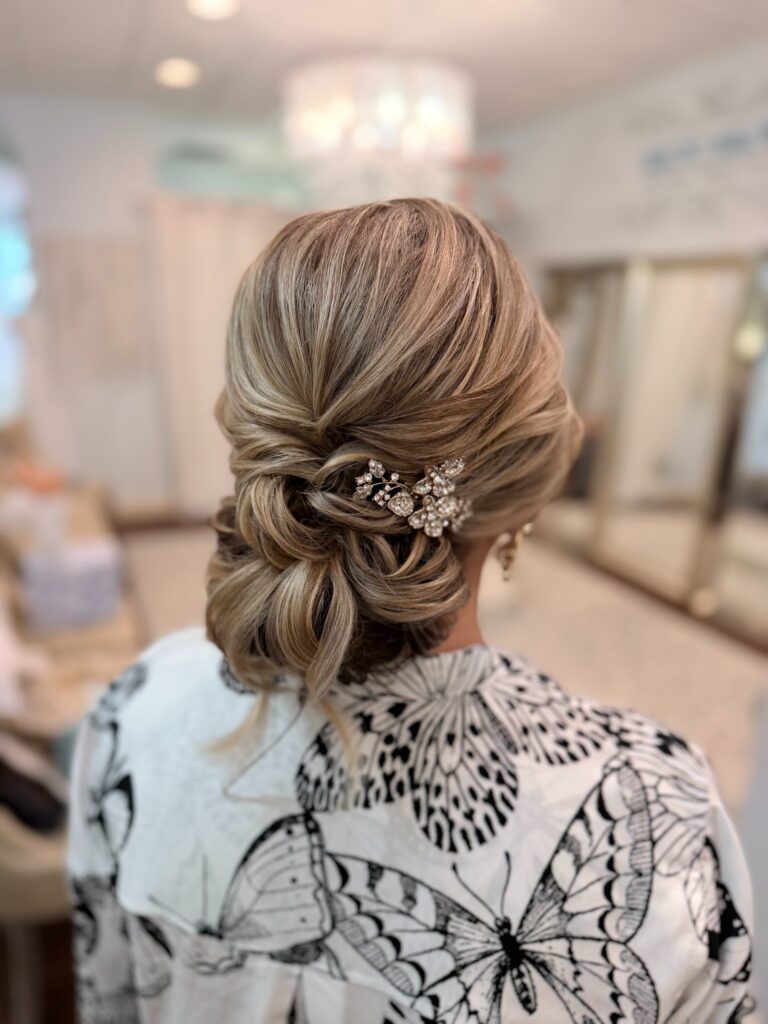
The loose chignon is the cornerstone of romantic bridal hair. In its most basic form, it’s a gathered bundle of hair at or near the nape of the neck, secured loosely enough that the base has visible texture and dimension rather than a smooth, tight profile. Pieces are deliberately pulled from around the base to create softness, face-framing tendrils are released at the temples, and the whole arrangement reads as thoughtfully undone rather than carelessly messy.
Variations
The low chignon sits at the nape of the neck and is the most classic placement. It works with almost every neckline, pairs naturally with a veil or hair accessories, and suits both outdoor and ballroom settings. The slight off-center chignon, placed slightly to one side, adds a deliberate asymmetry that photographs particularly well in profile shots.
The mid-height chignon sits higher on the head, at or just above the occipital bone. It creates more lift and a different silhouette from behind, and suits brides who want more visible height or who are wearing statement earrings they want fully visible below the hair.
Hair Types and the Chignon
Fine hair needs volume built into the chignon architecture before it’s gathered. Backcombing or a volumizing powder at the base creates the density that makes the chignon look full rather than flat. This is a technique adjustment, not a limitation: fine hair actually photographs beautifully in a romantic chignon because the soft texture suits the style.
Thick hair produces chignons with natural volume and body. The adjustment for thick hair is managing the weight of the bun so it stays in place through the day. Proper pinning technique and the right finishing products prevent the chignon from loosening as the hours pass.
Braided Romantic Updos
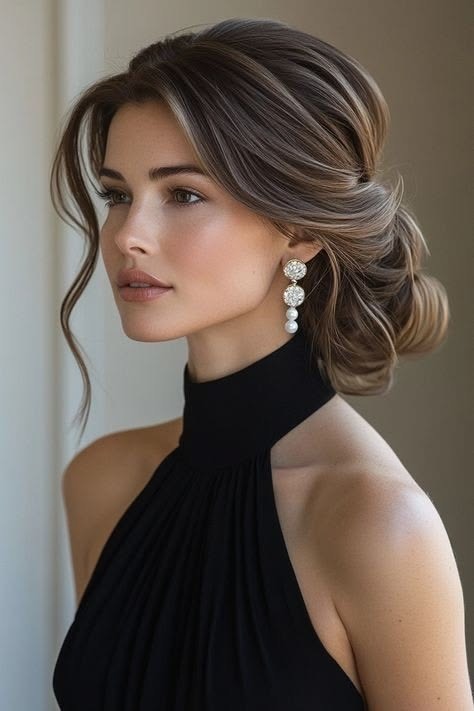
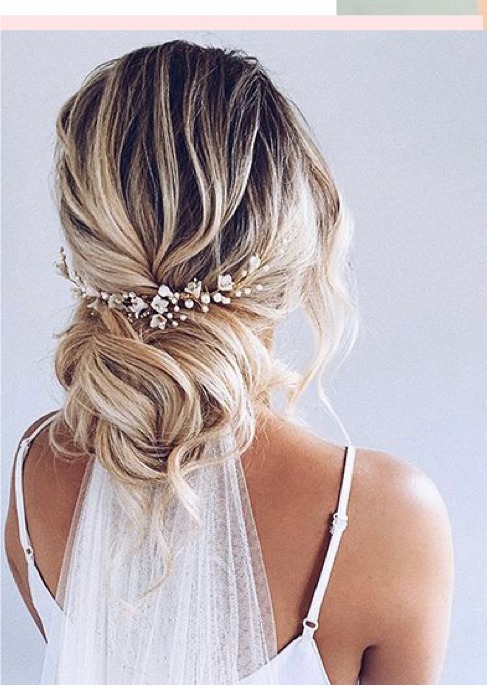
Braided elements add structure and visual interest to a romantic updo without making it feel formal. A French braid or Dutch braid that feeds into a chignon at the nape creates a style that has both architecture and softness: the braid provides a clean line from the crown down, and the chignon at the end softens the overall result.
Waterfall braid elements used as a frame, rather than as the primary structure of the updo, create a particularly romantic effect: the braid runs horizontally across the back of the head or along the side, with strands cascading through it, while the majority of the hair is gathered in a chignon or twisted arrangement below.
Why Braids Work Well in South Florida Conditions
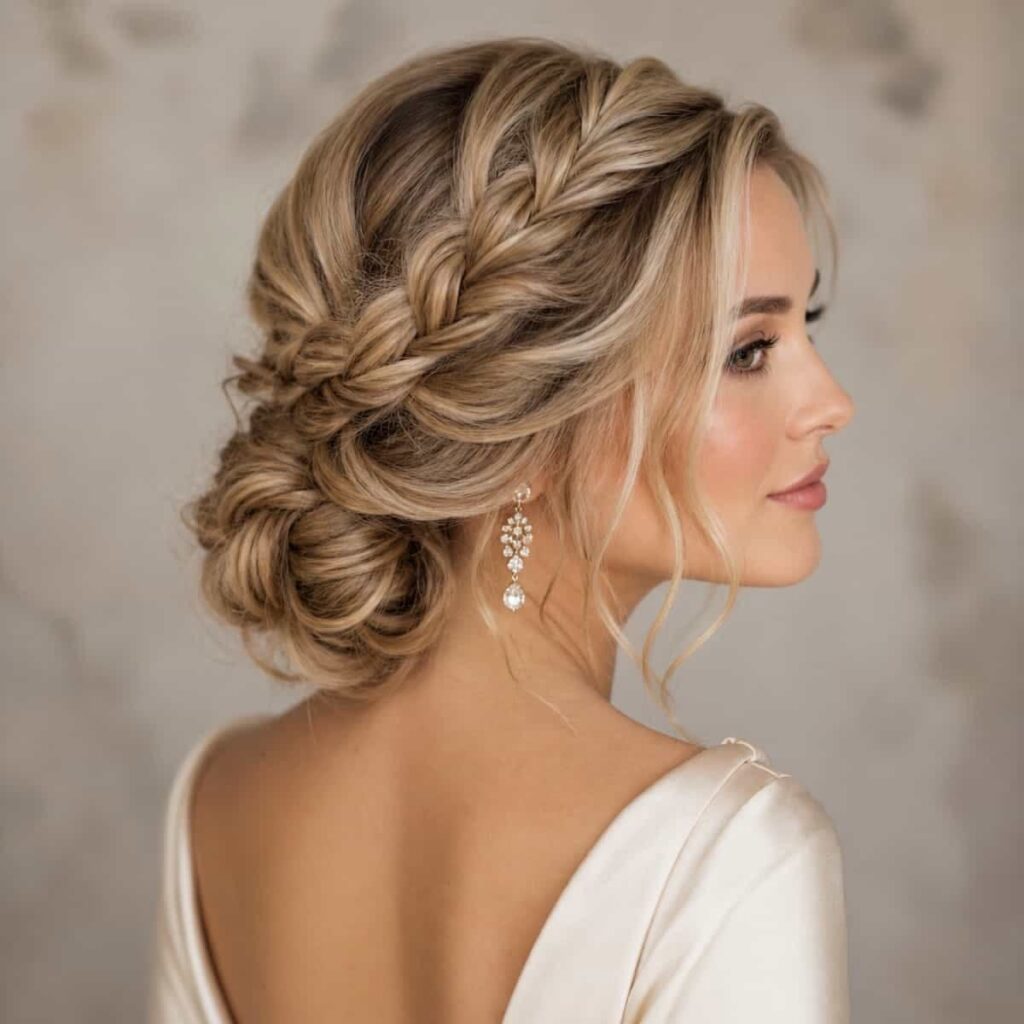
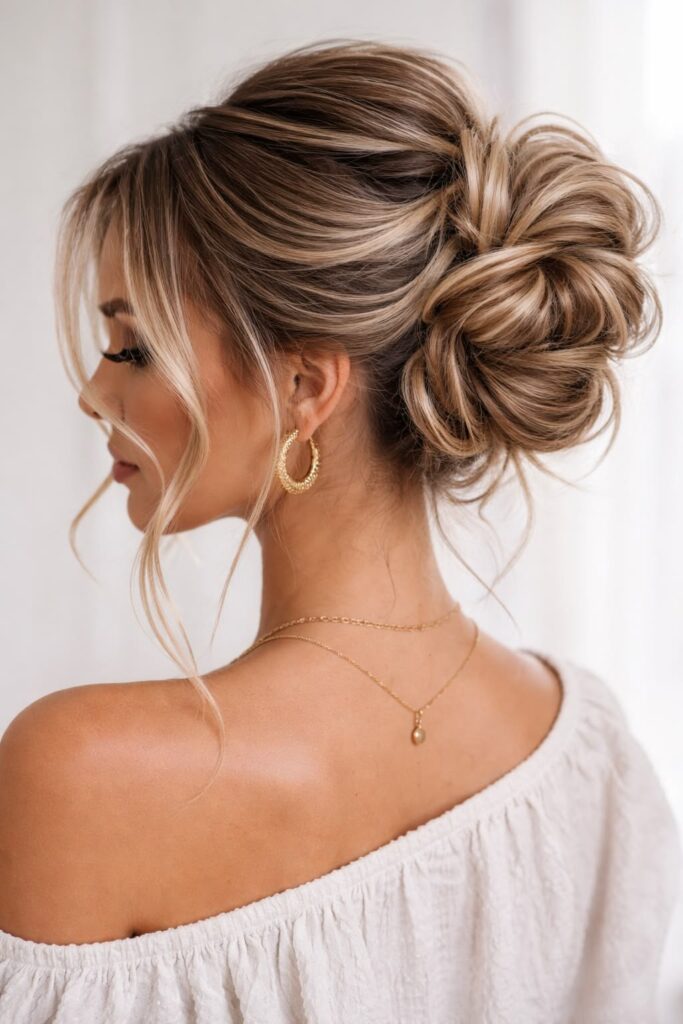
Braided elements perform particularly well in South Florida outdoor conditions, which is one of the practical reasons they’re frequently recommended for outdoor ceremony brides. The interlocking structure of a braid holds against wind and humidity in a way that loose twisted or pinned elements don’t always match. The braid becomes more secure rather than less secure as the day warms, while loose elements can shift with perspiration under pins.
If your ceremony is outdoors in summer months, a braided element in the updo architecture is a practical recommendation as much as an aesthetic one.
Twisted Updos — Softness Without the Braid
Twisted rope elements use the same basic principle as braids but produce a softer, less patterned texture. Where a braid has a distinct over-under pattern that creates visible facets and a strong linear quality, twisted rope elements have a smoother, more organic spiral that reads softer in photographs.
Twisted updos are often the choice for brides who want the structural quality of a braided updo but prefer the texture to feel more like fabric draped loosely than like a clearly defined braid. They sit slightly lower on the formality scale than braided updos while still providing more structure than a pure chignon.
The main practical note for twisted styles in South Florida is that the twists require slightly more pinning than braids to stay in place through outdoor conditions. A skilled stylist will anchor the twist structure with pins at regular intervals rather than relying on the twist’s own tension to hold, which ensures the style stays intact regardless of wind or humidity.
Half-Up Romantic Styles — When You Want Length and Lift
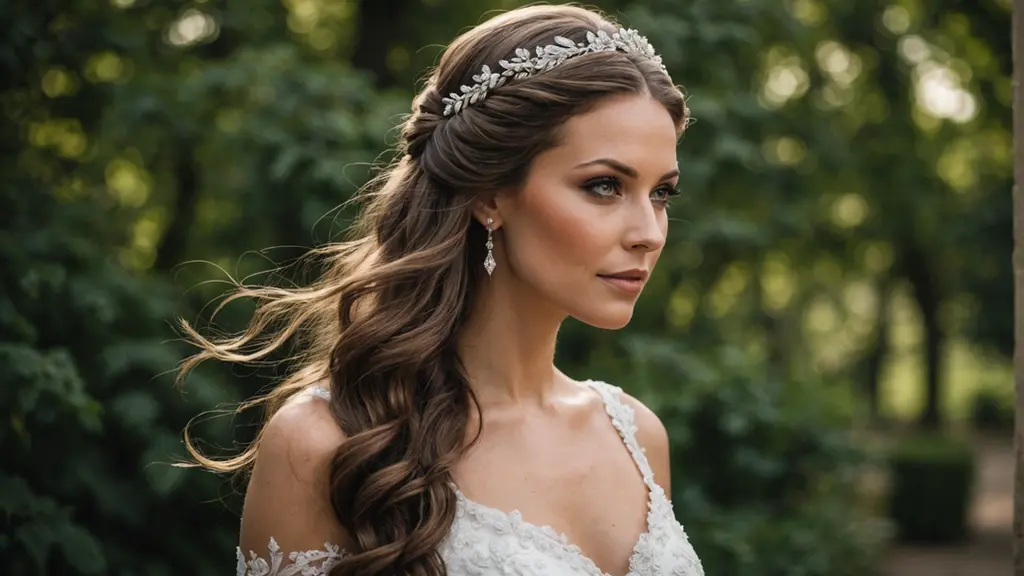
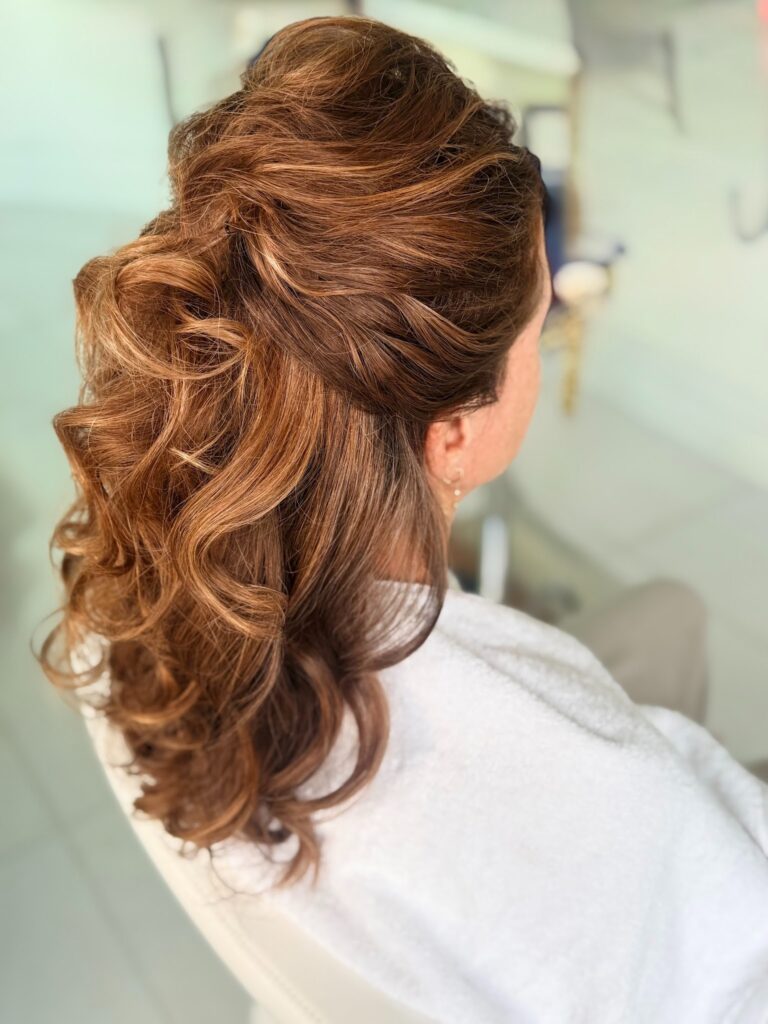
A half-up half-down style sits in the category of romantic updos as a softer alternative to a full updo: the upper section of hair is gathered and arranged upward, while the lengths below are left down, styled in waves or soft curls.
The appeal for brides who are drawn to both options is clear: you get the lifted, polished quality of an updo at the crown and the femininity and movement of hair falling down the back. It’s a compromise in the best sense.
What “Half-Up” Actually Means in Practice
The phrase half-up half-down describes a broad range of styles. At one end, a minimal section of hair at the crown is gathered into a small knot or twist, with most of the hair left down. At the other end, the full top half of the hair is gathered into a chignon or braided arrangement, with only the lower half falling free.
The specific proportion matters: how much hair goes up determines how formal or casual the overall silhouette reads. A larger gathered section reads closer to a full updo; a minimal crown section with most of the hair down reads closer to a down style with a detail element. Your stylist will build the proportion based on your face shape, the style of the arrangement, and your overall bridal aesthetic.
How Half-Up Styles Perform Outdoors
The practical consideration for a half-up style in South Florida’s outdoor conditions is that the lengths left down are exposed to wind and humidity in the same way as a fully down style. They’ll need the same anti-humidity products and finishing approach as any down style in this climate. If the outdoor conditions are particularly demanding, your stylist may recommend that the lengths left down be styled in a wave or braid that holds better than straight-blown hair in wind.
For the full approach to South Florida bridal hair and makeup in outdoor conditions, the climate-resistant bridal beauty guide covers what to plan for and how to prepare.
Romantic Updos for Different Hair Textures
Straight Hair
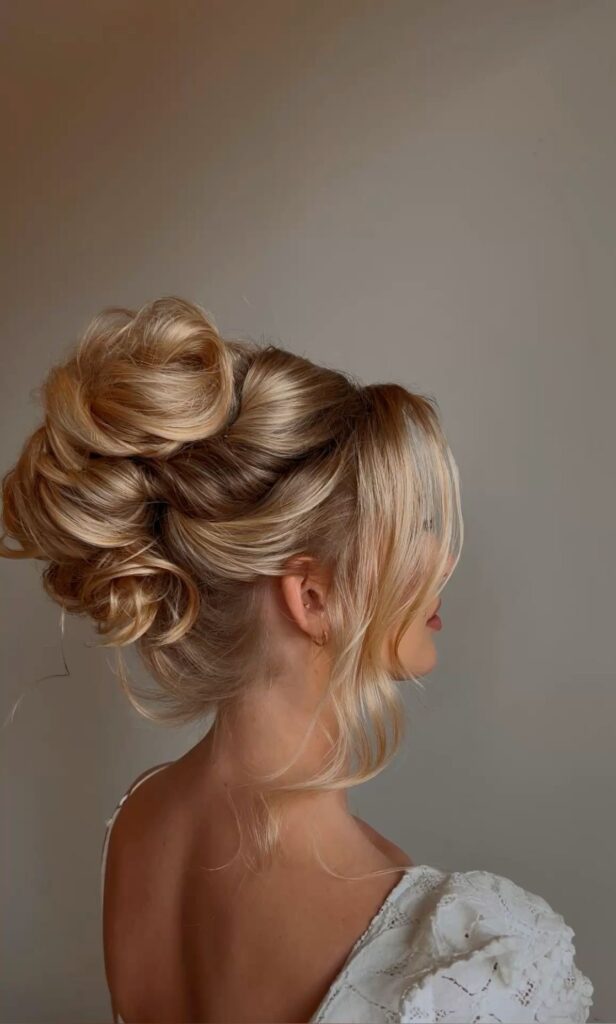
Straight hair is an excellent canvas for romantic updos, particularly for styles that rely on the clean surface of the hair for their visual quality: the pulled, twisted sections of a chignon read crisply, and braided elements have definition. The challenge is that straight hair doesn’t contribute natural texture to the undone quality of the style. Your stylist will add texture using a wave iron on the sections before gathering, or a texturizing product that creates the grip and body the romantic updo needs to hold its shape.
Wavy Hair
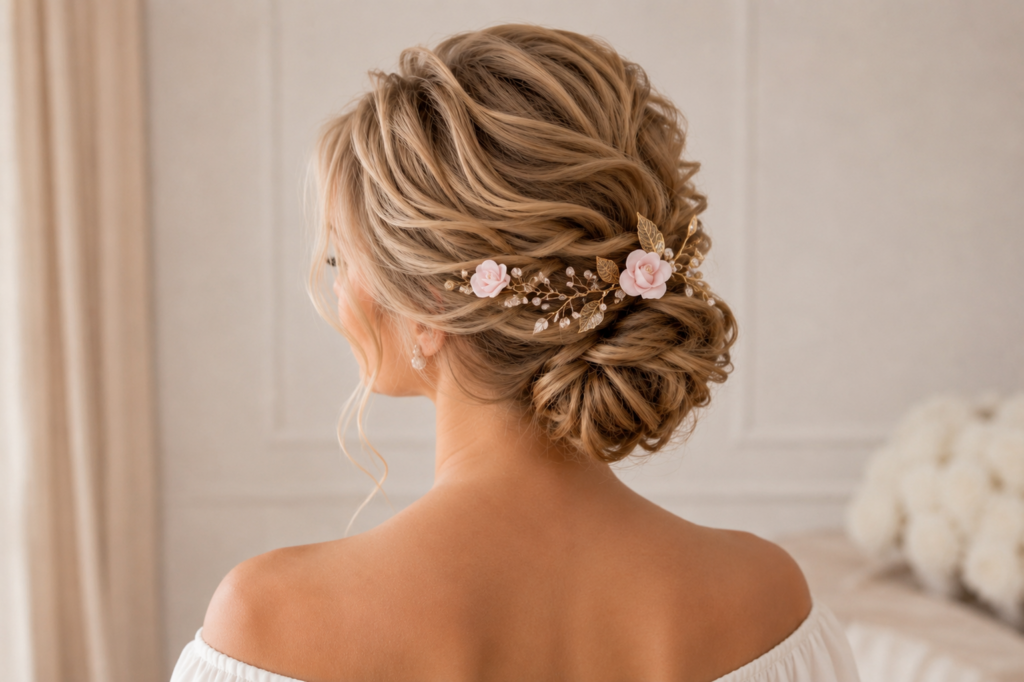
Naturally wavy hair is the most intuitive fit for romantic updos. The existing texture contributes naturally to the softness of the style: the sections that escape the chignon have movement without needing to be styled separately, the base of the updo has dimension from the natural wave, and the face-framing tendrils curl softly without any additional work. For wavy-haired brides, the romantic updo is the most natural expression of their hair’s own character.
Curly Hair
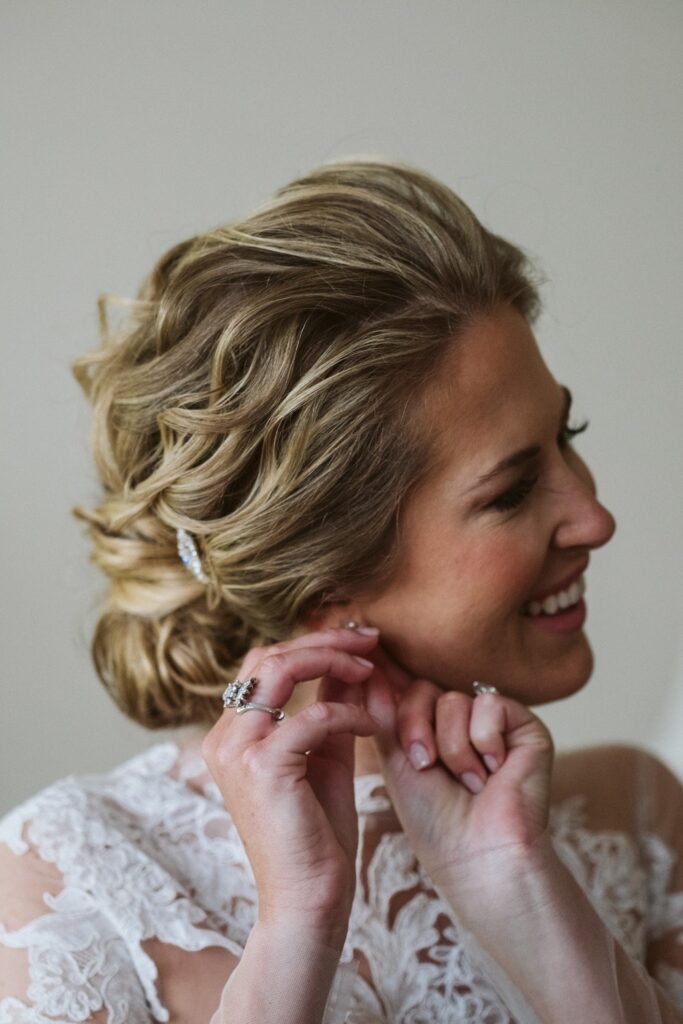
Romantic updos on naturally curly hair can be genuinely stunning because the curl texture amplifies the romantic quality of the style. A loose chignon on curly hair has a richness and visual complexity that straight hair can’t replicate. The approach changes depending on whether the bride wants the curls to be part of the updo’s character (working with them) or smoothed out for a cleaner look (working against them). Both are achievable; discuss the preference specifically at the consultation and trial.
Fine Hair
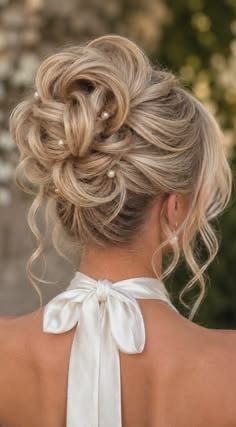
Fine-hair brides can absolutely wear romantic updos beautifully, with one key technical step: volume must be built into the hair before the updo is assembled. A volumizing spray, light backcombing at the base sections, or a texture spray gives fine hair the grip and body it needs to fill out the chignon and hold the face-framing pieces in place through the day. Extensions are a useful tool for fine-hair brides who want a particularly full or elaborate updo and find that their natural hair volume doesn’t achieve the silhouette they want.
South Florida Considerations — What Holds and What Doesn’t
Romantic updos are, as a category, better performers in South Florida outdoor wedding conditions than most down styles. The hair is gathered and secured, which means the wind has less to work with. The updo’s structure also means that minor humidity-induced frizz at the surface doesn’t collapse the style the way it can collapse loose wave sets.
That said, a few specific considerations apply.
Bobby Pin Security in Heat
Bobby pins placed into dry hair in South Florida’s outdoor conditions can shift as the scalp warms. The fix is a pre-anchoring technique: a light wax or pin-grip spray worked through the hair at the attachment points before pinning gives the pin something to grab beyond the hair strand itself. A stylist experienced with South Florida outdoor weddings already knows this and will adjust accordingly.
The Tendril Frizz Problem
The loose face-framing tendrils that define a romantic updo are also the most humidity-exposed part of the style, and they’re closest to the face, which means warmth and moisture hit them first. The anti-humidity product applied to these sections before they’re released is specific and deliberate: not hairspray, which stiffens them, but a light serum or anti-frizz cream that seals the cuticle while preserving the tendril’s soft natural movement.
The Pre-Wedding Maintenance Appointment
For brides wearing extensions, the pre-wedding appointment 7 to 10 days before the wedding should be mentioned to your bridal stylist so they know the state of the extension rows going into the updo assembly. Confirmation that the attachment points are secure matters for any updo style, since the updo’s foundation is built around and over those rows.
Accessories for Romantic Updos
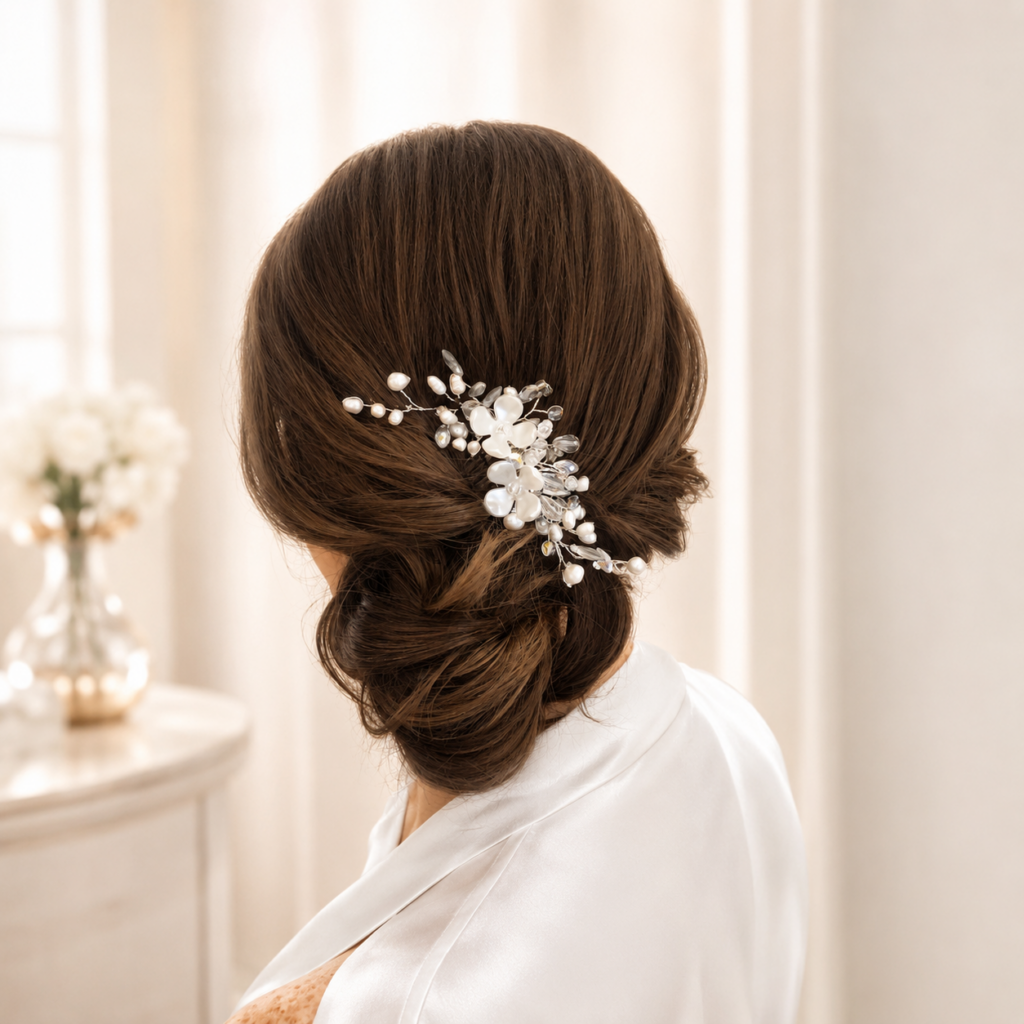
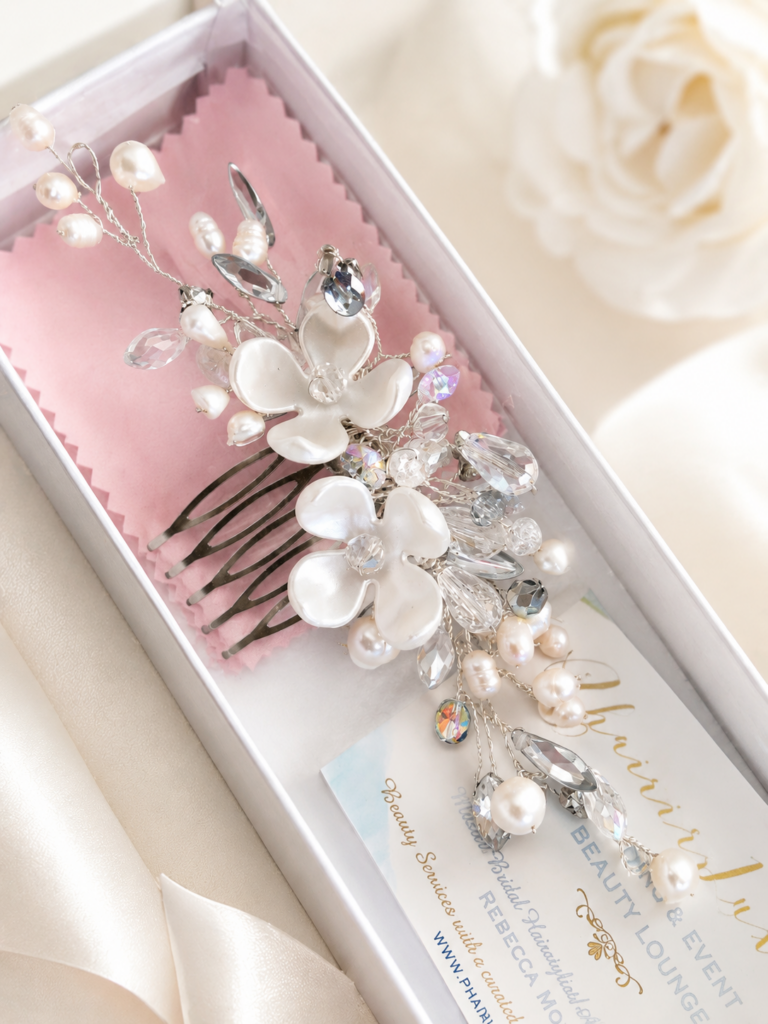
The accessory range for romantic updos is broad because the style’s inherent softness absorbs embellishment well.
Fresh florals are a particularly natural pairing: a single bloom placed at the base of the chignon, a cluster of smaller florals scattered through a braided section, or a single statement flower worn at the side of the hair. For South Florida summer weddings, some flower varieties hold well in heat and some don’t: gardenias and sweet peas wilt quickly; orchids, stephanotis, and spray roses hold far longer. Your florist and your stylist should coordinate on which varieties are planned, ideally before the trial.
Pearl-tipped pins and crystal-tipped pins scattered through the chignon add sparkle without competing with the softness of the style. Hair vines threaded through braided sections add a botanical or vintage quality depending on the design. Vintage combs worn at the side of the chignon suit the romantic aesthetic beautifully.
Veils and Romantic Updos — What Works
The most natural veil placement for a romantic updo is at the back of the head, positioned just above or within the chignon. A cathedral veil attached here drapes beautifully down the back and doesn’t interfere with the structure of the updo at the crown.
A blusher veil attached at the crown works when the updo sits at the nape: the blusher can be worn over the face for the processional and then flipped back without disturbing the updo below. A blusher attached to an updo that sits mid-height on the head is more complex to manage and worth testing specifically at the trial.
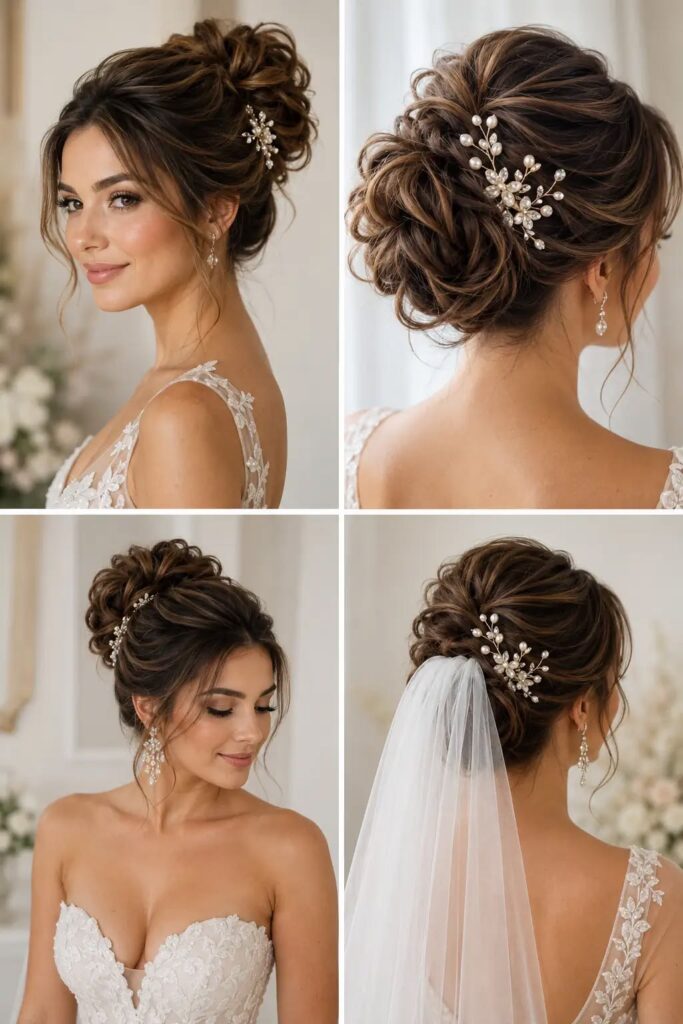
What typically doesn’t work: a veil attached inside the chignon without enough structural support underneath, which causes the veil to sag or pull the chignon apart over several hours. The attachment should be to pins or a comb placed inside the chignon base, not just to the gathered hair itself.
At the Trial — What to Confirm
Bring: a curated selection of 3 to 5 inspiration images with notes on what specifically appeals to you about each (the tendril placement in this one, the braid detail in that one, the height of the chignon in this other). Bring your accessories and veil. If you’re wearing extensions, bring or have them in.
What to test at the trial: the proportions of the chignon, specifically whether the base volume is right for your hair type and the overall silhouette suits your face shape. The specific tendril placement: how many pieces, how long, whether they curl or fall straight. How the style holds at the 2-hour mark, which gives you a sense of how it will hold through the ceremony and first part of the reception.
What to photograph: the back and the left and right profiles. Romantic updos exist in three dimensions and the full effect is only visible from multiple angles. Front-only trial photos will leave you without the information you need to evaluate the style accurately.
Frequently Asked Questions
What is a romantic updo?
A romantic updo is a gathered bridal hairstyle characterized by deliberate softness: loose face-framing tendrils, textured or organically shaped bases, and elements that appear beautifully undone rather than architecturally precise. Styles in this category include the loose chignon, braided updos, twisted rope arrangements, and soft half-up styles.
Which romantic updo is best for an outdoor South Florida wedding?
Braided elements perform best in South Florida outdoor conditions because the interlocking structure holds against wind and humidity more reliably than loose pinned or twisted elements. A French braid feeding into a loose chignon at the nape combines the structural durability of the braid with the romantic softness of the chignon base. This is one of the most consistently requested outdoor ceremony styles in this climate.
Can a romantic updo work on fine hair?
Yes, with volume-building technique. Backcombing or a volumizing spray at the base sections before the updo is assembled creates the body fine hair needs to fill out the chignon silhouette. Face-framing tendrils on fine hair often look particularly delicate and romantic. Extensions are useful when the natural volume isn’t sufficient for the specific updo style the bride wants.
How long does a romantic updo take to create?
A loose chignon on a bride takes approximately 45 to 75 minutes depending on hair length, thickness, and the complexity of any braid or twist elements. A braided updo with significant braid detail can take 75 to 90 minutes. The bridal trial is where your stylist times the specific execution and builds that time into your wedding morning schedule.
Do romantic updos work with extensions?
Yes. Extensions add volume and length that can expand what’s possible in a romantic updo, particularly for fine-hair brides or brides whose natural hair is shorter than the style requires. The extensions should be in place at the trial so the stylist builds the updo with the combined hair and calibrates the product choices accordingly.
What is the best romantic updo for 2026?
The loose low chignon with softly curled face-framing tendrils and a scattered floral accessory continues to be the most requested romantic bridal updo style. Braided elements are seeing strong interest in 2026, particularly the waterfall braid as a frame rather than a structural element. Half-up styles with textured, wave-set lengths remain popular with brides who want to combine the lift of an updo with the movement of hair down the back.
Ready to Find Your Perfect Updo?
The right romantic updo is the one that suits your hair, your face shape, your venue, and your sense of yourself as a bride. The trial is where all of those pieces come together.
Contact Phairis Luxury to check availability and schedule your bridal hair consultation.
For more on bridal hair and beauty planning:
To be iconic?
Ready
I'm excited to hear all about your wedding/Event day. Have a question about a booking and hair styling sessions? View our services and talk to us, also dont forget to check our portfolio
