
The Phairis Standard: Your Complete Guide to White-Glove Bridal Beauty

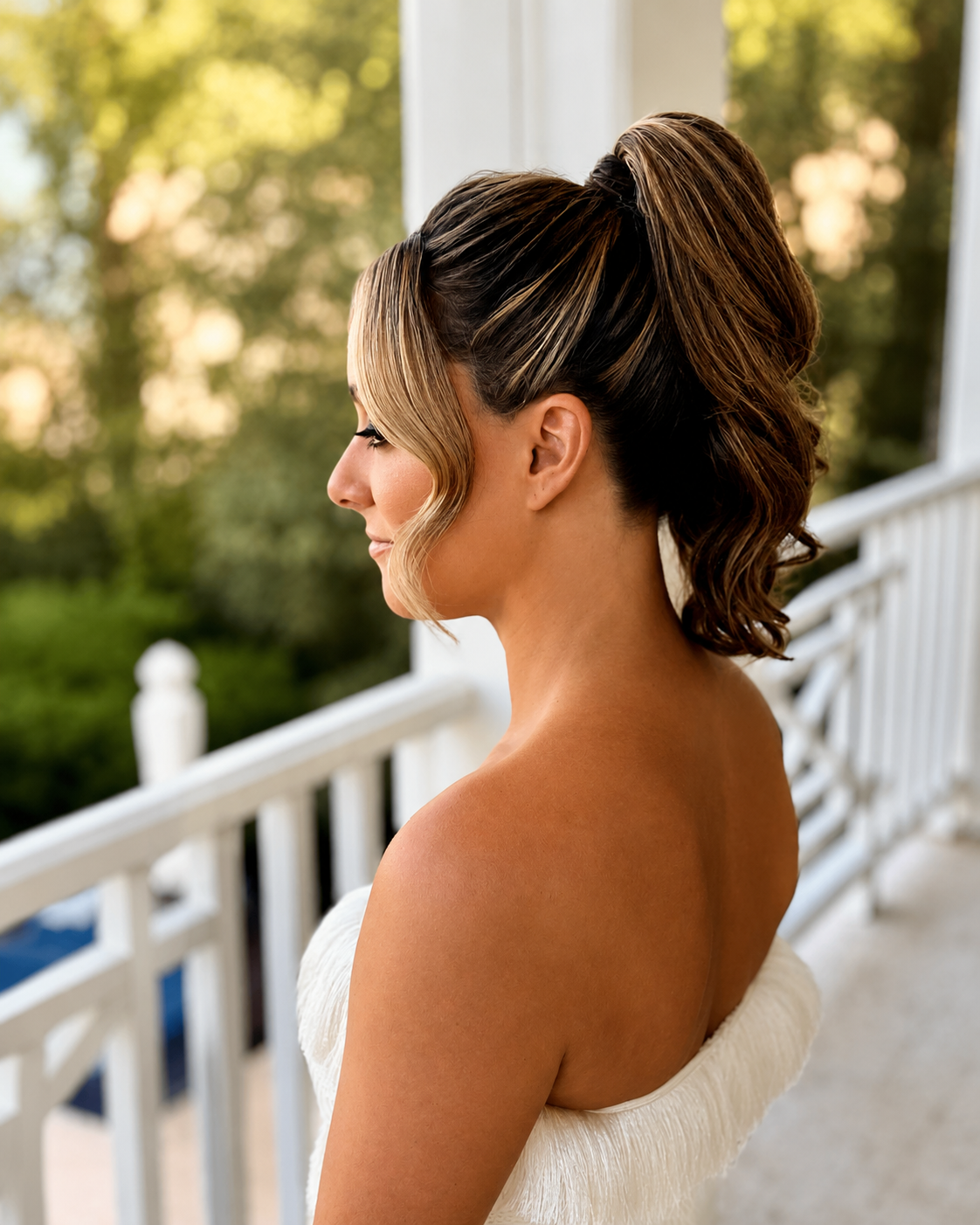
Most bridal hair and makeup bookings work like this: the team arrives the morning of the wedding, styles the bridal party, finishes the bride, and leaves before the ceremony starts. The bride is on her own for the rest of the day.
That model works. But it’s not what we do.
The Phairis Standard is our name for the service model we’ve built and refined over 18 years: a full-day, white-glove bridal beauty experience where the team doesn’t leave when the last person is finished. We stay. We’re on-site through the ceremony, the portraits, the cocktail hour, and the reception. We handle touch-ups when they’re needed, manage second-look transitions if the bride is changing styles, and ensure the look that was built in the morning is still the look she’s living in at the last dance.
This page is a complete explanation of what that means in practice, from the first consultation call through the final evening touch-up.
What “White-Glove” Actually Means in Bridal Beauty
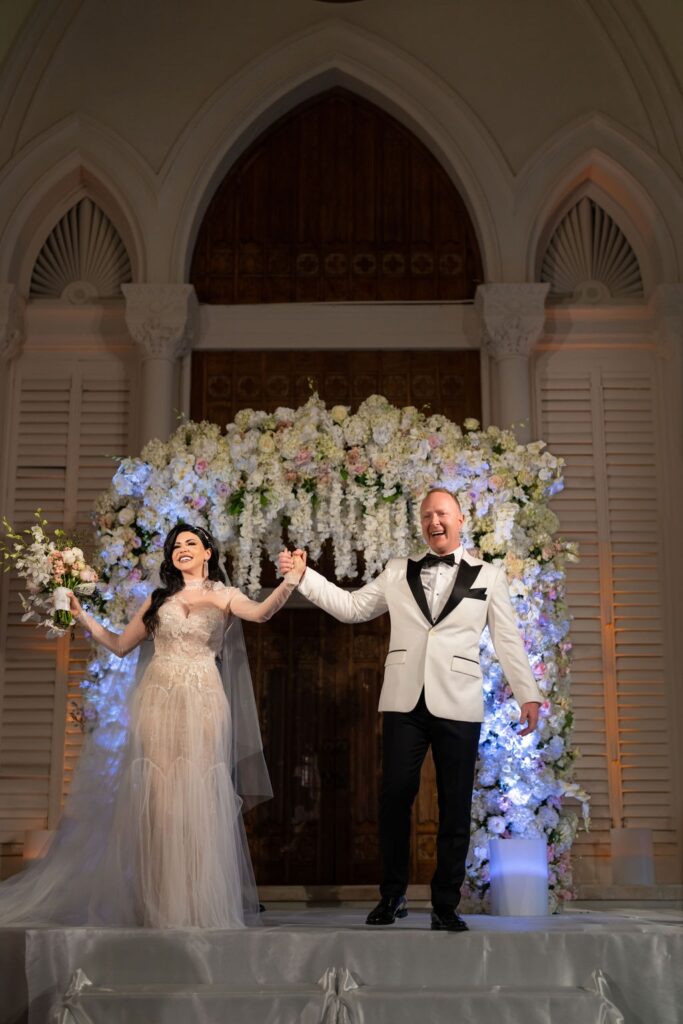
The phrase “white-glove service” gets used a lot in luxury contexts. Lately every wedding vendor you come across states that they do “luxury” services. In the bridal beauty world specifically, it has a precise meaning: it describes a service model where the provider takes full responsibility for the entire experience, not just the deliverable. It’s not just hair & makeup. It’s a team that arrives promptly, dressed professionally, with everything you can possibly need to create your dream bridal look. It’s the calmness they bring when they walk in.
The smiles and soft spoken good mornings while all aspects of your morning are pre-planned and ready to be executed. It’s years of skill and expertise that they bring to not only the bride but every client they serve that day. It’s the communication between your wedding planner, the precisely created beauty timeline and the way they make you feel calm, relaxed and excited for the day, knowing your beauty team has everything handled.
In a standard bridal booking: hair and makeup applied and finished by a certain time. In a white-glove model, the deliverablethe beauty service is the beginning of the experience and the result across the full duration of the wedding.
The distinction isn’t subtle once you’ve seen both in practice. A standard booking requires the bride to manage herself after the team leaves: carry a touch-up bag, monitor her makeup, hope the updo holds in the Florida heat through an outdoor portrait session, do her own touchups and constantly ask her bridesmaids if her makeup is okay and if she still looks good. A white-glove model means someone else holds that responsibility. The bride’s job is to be present and soak in every moment, not to manage her appearance.
That’s what the Phairis Standard does. Every decision in our service model is designed to remove that management burden from the bride so she can be fully in her wedding day, not watching over her shoulder at her reflection.
One Event Per Day What This Commitment Means for You
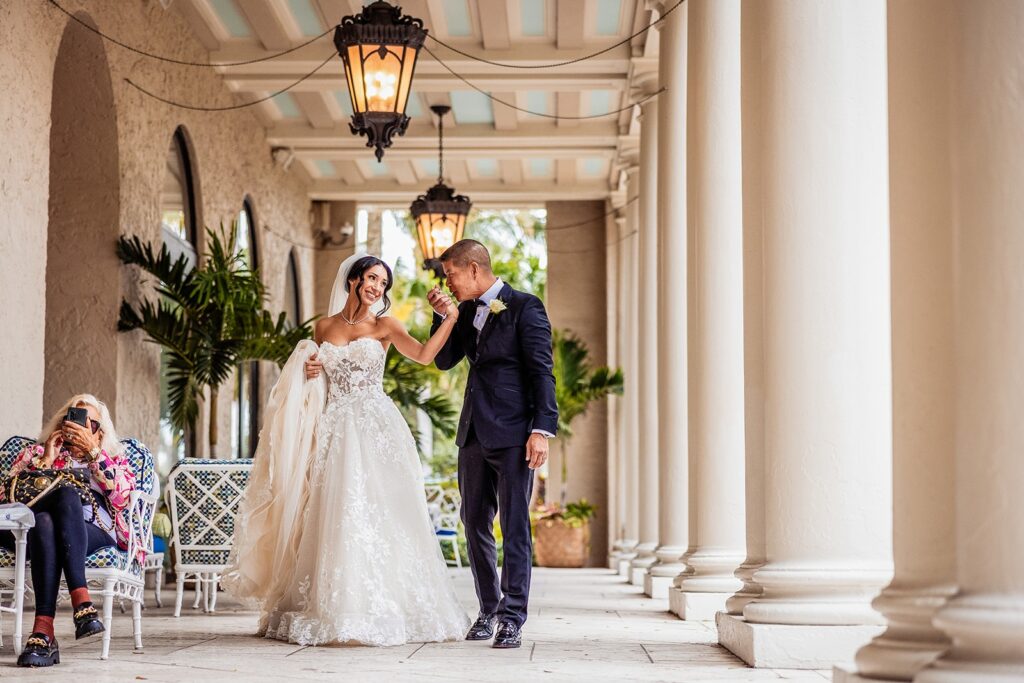
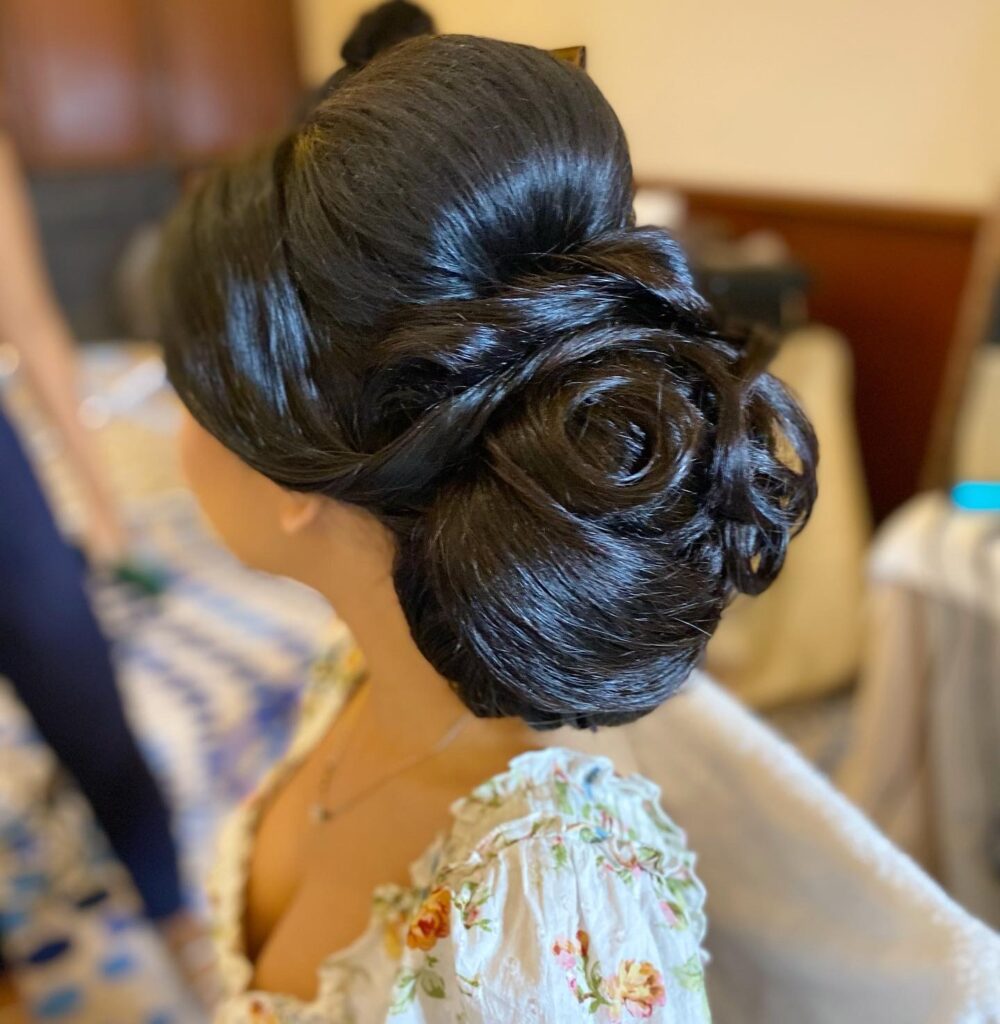
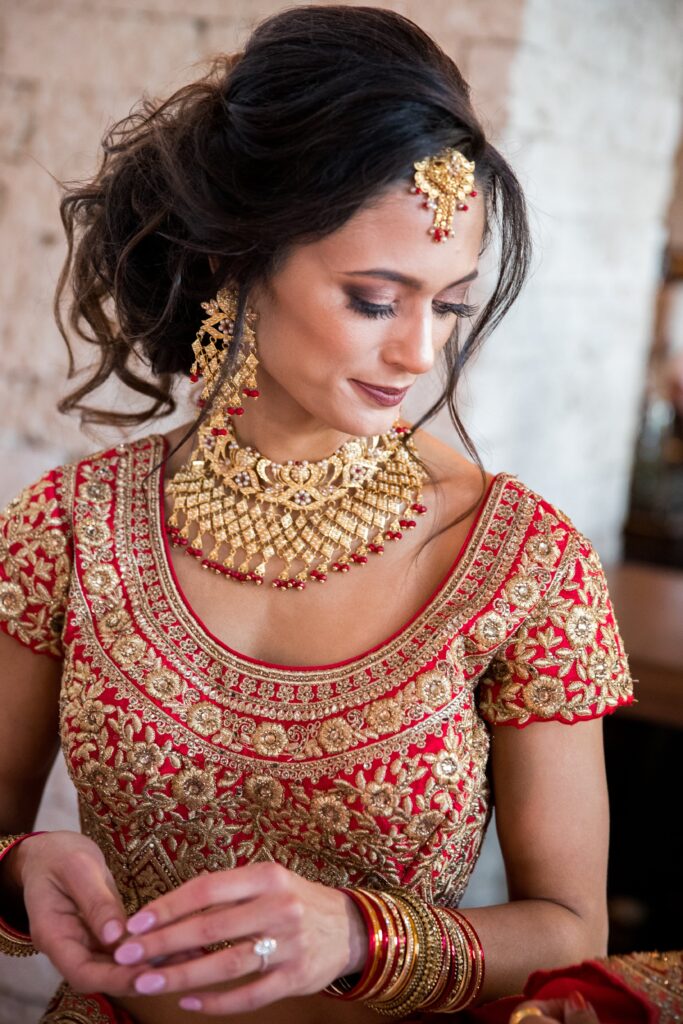
The Phairis Luxury Standard begins with a commitment that shapes everything else: we take one event per day.
This is unusual. Most bridal hair and makeup artists take multiple bookings in a single day. A morning wedding and an afternoon event or bridal consultations following your wedding glam. Two weddings with staggered start times. It’s economically logical and operationally common. But it changes the quality of the experience in ways that aren’t always obvious until the day itself.
When an artist has a second booking at 2pm, there is a version of the morning where she is managing both. Not consciously, and not intentionally, but the second wedding exists in the room. The timeline has a hard edge. If the updo takes longer than planned, that time has to come from somewhere. You feel your stylists’ anxious energy and feel like you’re being rushed through so they can get to their next event.
When we take one event per day, there is no second wedding. The team’s only job from the time they arrive until the time they leave is your day. The morning has no clock pressure beyond what the wedding schedule itself creates. If something takes longer, it takes longer. There’s no abbreviated version of the service.
For the bride, this feels like space, relaxation and calm. Space to take a breath during the morning prep. Space for the photographer to capture a candid moment without someone needing to get back to a workstation. Space for the unexpected, which on a wedding morning is not a question of if but when.
The Phairis Service Model From Consultation to Last Dance
The Phairis Standard begins well before the wedding morning. Here’s the full sequence of what working with us actually looks like.
The Consultation Call
After an inquiry, the first step is a consultation call with Rebecca herself. You’re not passed off to a receptionist. This call covers: All the exciting details of your wedding day! Details like your ceremony and reception venue, your ready time and the size of your bridal party, your style vision and any specific reference images you have, the logistics of the day (getting ready location, travel to the venue, any unusual timing constraints), and any hair or makeup considerations specific to you (texture, skin type, sensitivities, previous allergic reactions to products).
The consultation isn’t a sales call. It’s a planning session. By the end of it, we have a clear picture of what your day requires and whether the Phairis service model is the right fit. We build the proposal from what we learn in this call. If you need welcome party services and farewell brunch beauty, we chat about that as well. If hair adornments are needed or hair extensions, that’s all in the initial phone call.
The consultation isn’t a sales call. It’s a planning session. By the end of it, we have a clear picture of what your day requires and whether the Phairis service model is the right fit. We build the proposal from what we learn in this call.
The Bridal Trial
The bridal trial is its own appointment, separate from the wedding day, where we test and finalize your look. It’s not a presentation of options: it’s a working session where we’re trying specific elements, getting your feedback in real time, and adjusting until the look is exactly right.
The trial typically takes 2 to 3 hours for hair and makeup together. We photograph the result extensively so we have a precise reference for the wedding morning. We note every product, every technique, every specific detail that produces the outcome you love. On the wedding morning, the team works from that reference, which means there are no surprises.
Bridal Hair adornments and hair extensions are on hand in case they’re needed. After discussing your vision with Rebecca and her team, they will help you decide if extensions would benefit your look.
For brides doing a second look, the trial can include a quick run of the transition to confirm that moving from look one to look two is feasible in the time available.
What the trial also does is reduce the uncertainty that causes wedding-morning anxiety. If you’ve seen your look and loved it, you go into the morning knowing what you’re getting. That’s peace of mind.
Wedding Morning Setup and Arrival
The team arrives at the getting-ready location before the first scheduled appointment, with enough lead time to set up properly. We bring a full professional kit: products, tools, lighting, chairs, everything needed to work in any space. We assess the room, set up the workstations, and confirm the morning timeline before anyone sits in the chair.
The setup also includes a lighting check. Getting-ready suites vary enormously in their light quality, and the way makeup looks in a bathroom mirror under fluorescent light is not the way it will look in natural light during the ceremony. Our team accounts for this as part of the application process, not as an afterthought. Personal lighting equipment is brought in by each makeup artist.
The Styling Sequence
For a bridal party, the styling sequence runs from the first person scheduled through to the bride. We schedule the bride last intentionally: her look is freshest at the end, closest to the ceremony time, and she’s not sitting in finished hair and makeup for two or three hours before she walks down the aisle.
The exact sequence for the bridal party is built around the call time, the size of the party, and any special considerations (a bridesmaid who needs to leave early, a flower girl who needs to be handled at a specific time, a mother of the bride who has more complex styling requirements). All of this is mapped in advance. with enough buffer time to ensure our bride finishes precisely when she’s supposed too.
On-Site Through the Day
After the styling is complete, most bridal beauty teams leave. Our team stays.
We’re on-site through your first look with dad. We blend any makeup streaks tears have caused and we’re there again for first look with the groom. We constantly touch up through photos and right before you walk down the aisle for the ceremony. After the outdoor portrait session, when the heat and wind have had 45 minutes to work on the hair and makeup, we’re there for a quick reset before the cocktail hour begins. We check in on the bride at natural transition points through the reception: before she walks into the room for the reception entrance, after the first dance, as the evening moves into the final hours. Hair and makeup changes can be done at any point throughout the evening and these are planned in advance for a quick turnaround time.
Touch-ups are done efficiently and discreetly. The bride doesn’t need to stop what she’s doing and find a mirror: we come to her. We’re set up in a localized area that’s quick and easy to retrieve what we need to touching up.
Second-Look Transitions
If the bride is changing her hair or makeup for the reception, we execute that transition on-site between the cocktail hour and the reception entrance. A common transition is from an updo worn during the ceremony to loose waves or a softer style for the dancing portion of the evening. Another is adjusting the makeup from the daytime look to a more dramatic evening version.
For more on how second-look transitions work, the complete second-look and reception hair and makeup guide covers the full process, including timing, what’s realistic for different hair lengths, and how to coordinate the transition with the wedding schedule.
Unmatched Skill & Knowledge
Not only is Rebecca and her team extremely talented when it comes to creating a plethora of wedding hair and makeup looks, they have the knowledge to back it up.
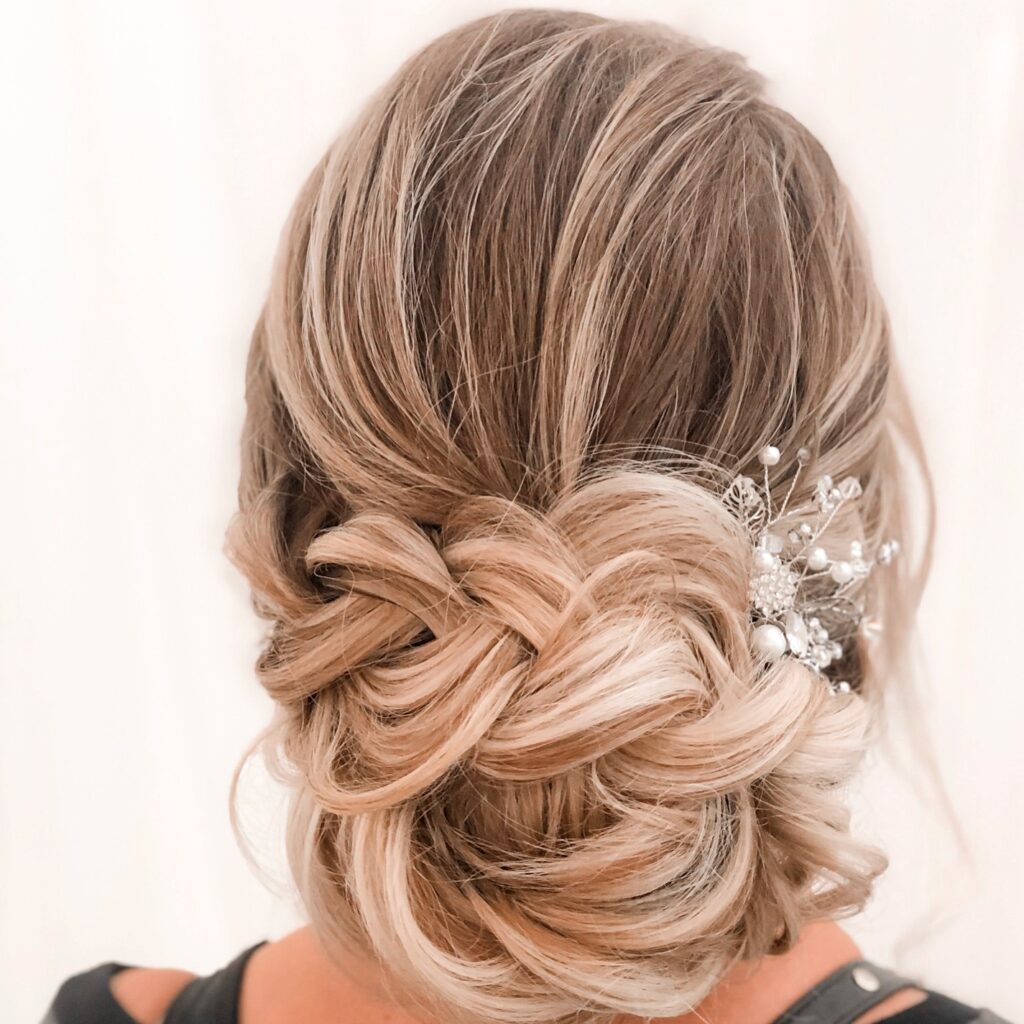
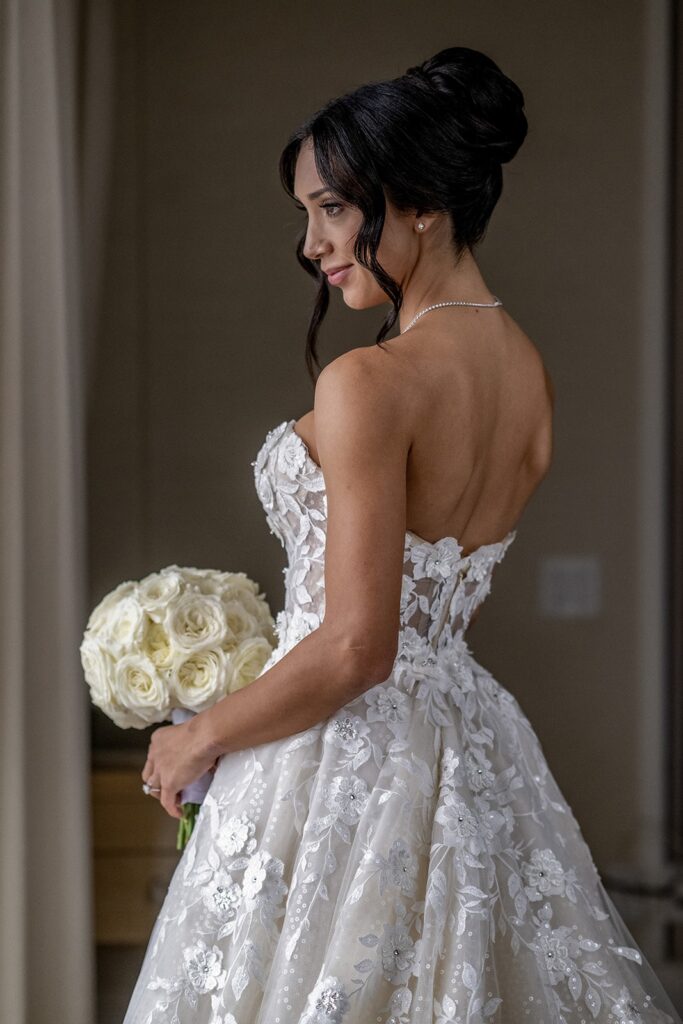
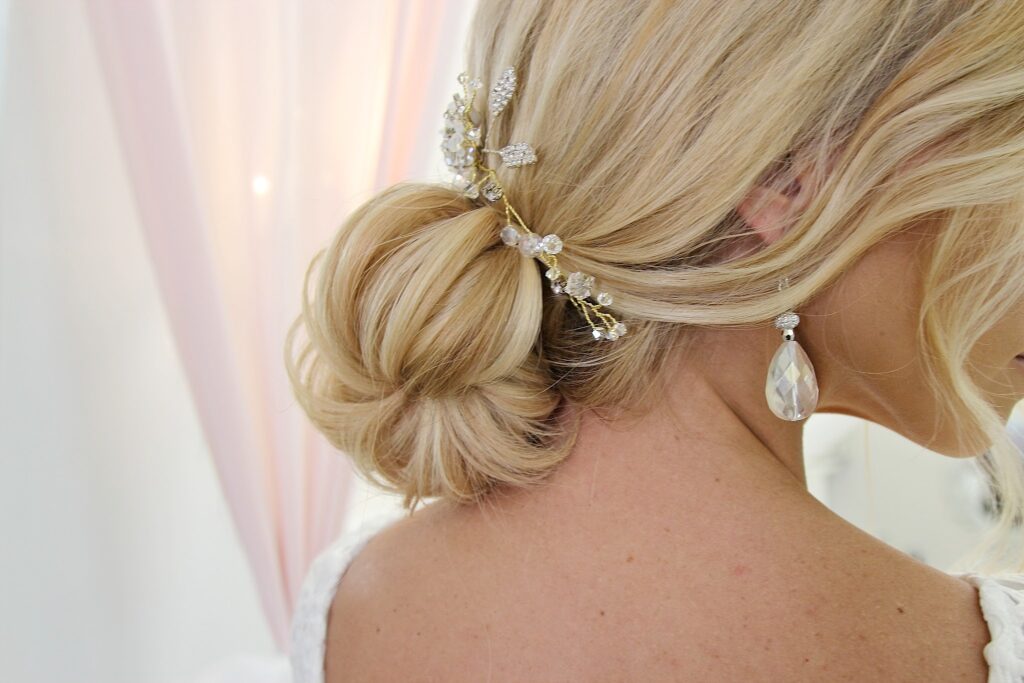
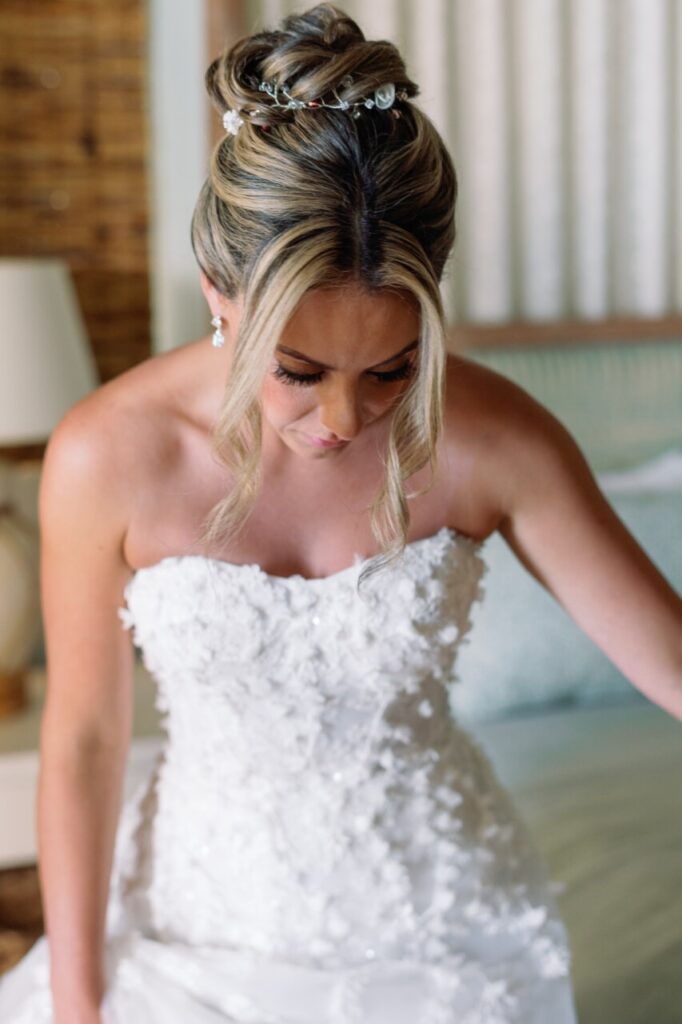
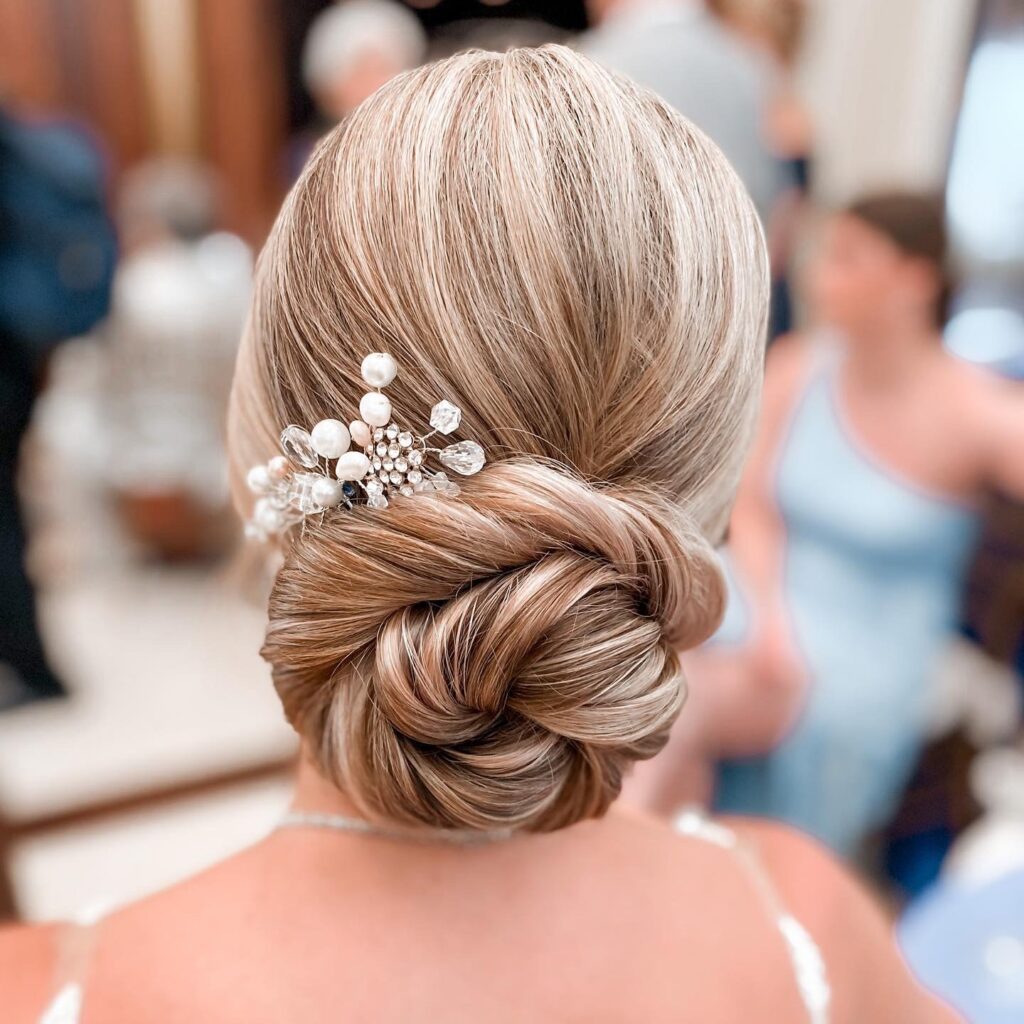
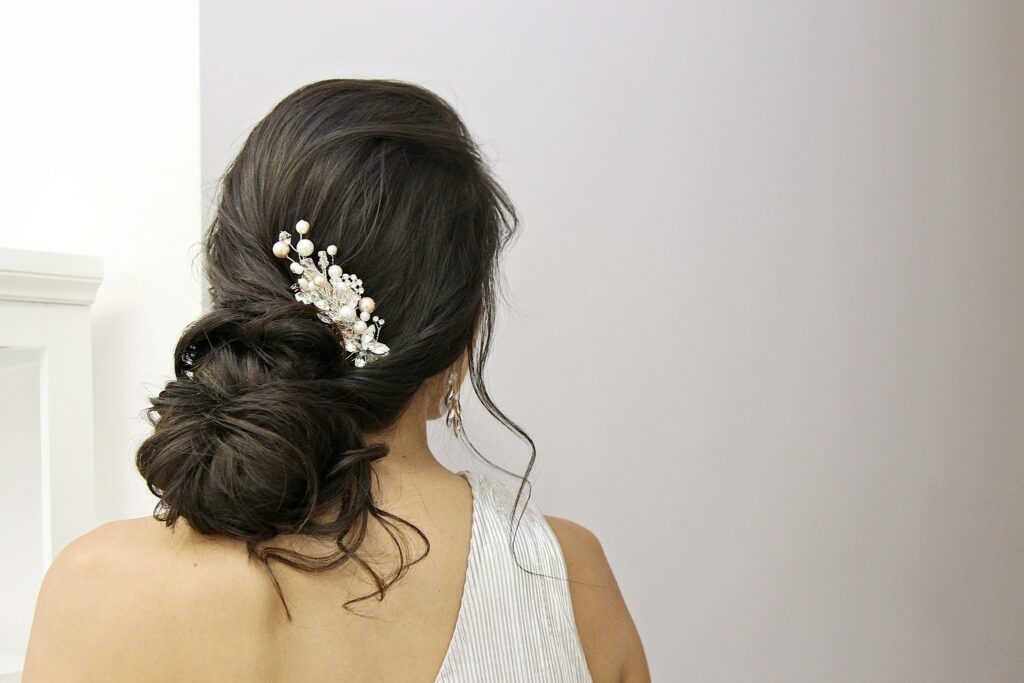
Rebecca’s known in South Florida for her effortless approach to creating the most stunning hairstyles whether it’s an updo or long flowing waves. Her talent alone sets her apart. She easily looks at her client, hears their ideas and concerns and effortlessly creates a hairstyle that’s both stunning and well balanced. Clients often look at their hair with mouths open wide because they can’t believe it’s their hair. Every face framing piece is set with intention, every section pulled back is soft and in the precise location. Her updo’s are pinned and secured without ever feeling heavy or pulling. Her pins are hidden and what’s left is a perfectly balanced and stunning hairstyle.
Her knowledge of hair products and how to use them stun a lot of her clients. She gently shows them which products to use for their hair type and sets about creating flattering looks that instantly bring out confidence and excitement.
Many local wedding hairstylists have been taught by Rebecca and many reach out frequently asking for advice on everything from creating certain styles, to making the stay, wedding etiquette and how she runs such a high valued business.
Rebecca’s team is equally as talented. Educated and immersed in the wedding hair and makeup world, they have over 75 years combined experience. They know which products to use on certain skin types, where to add bronzer to sculpt the face in the most flattering fashion and which setting sprays will set the makeup instead of making pores and wrinkles more visible.
All of this is the beginning of what the Phairis Luxury standard offers.
The Artists Trained to One Standar
The Phairis Luxury team is 12 artists handpicked and trained by Rebecca Mousseau. Every artist on the team has been selected for skill, professionalism, and the specific temperament that bridal work requires: calm, organized, highly skilled, and completely committed to the bride in front of them.
There’s no junior tier in the Phairis team. A bridesmaid at a Phairis Luxury event doesn’t receive a lesser level of care than the bride because a junior artist was assigned to her. Every person at the table gets a skilled, experienced artist who is working at the full Phairis Luxury standard.
This matters for the bride in a practical way. When a bridal party includes 10 or 14 or 16 people, the team scales to accommodate that party without the quality diluting. We don’t add capacity by assigning anyone who was available: we staff each event with artists who represent the Phairis Luxury standard.
Products and Technique — The Standard Behind the Look
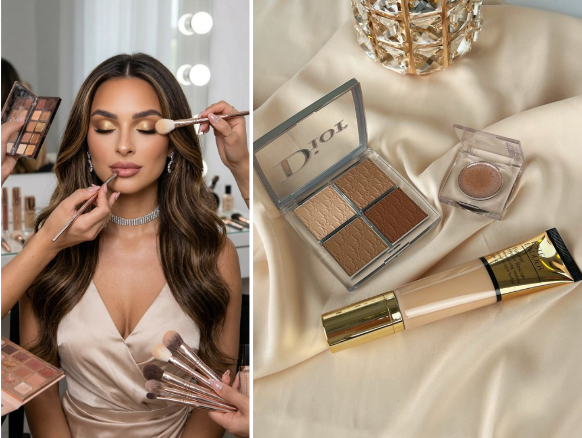
The Phairis Luxury Standard extends to the products and techniques we use. Every choice is made because it performs in real South Florida and long wedding day conditions: outdoor heat, humidity, long hours, photography under every lighting condition from morning natural light to ballroom tungsten.
Long-Wear Formulations
We use tried and tested long-wear foundation This is typically needed where full-day coverage and a seamless high-definition finish matter most, we use long-wear conventional formulas with the setting protocols that extend their performance to the full reception and into the wee hours of the evening.
The choice between airbrush and conventional application is made based on the individual bride’s skin, the venue conditions, and the look she wants to achieve. It’s not a default or an upsell. For more on how that decision works, the airbrush vs traditional bridal makeup guide covers the comparison in full.
Climate-Specific Product Selection
Our product choices for South Florida conditions are different from the choices we’d make for a winter indoor wedding in a northern city. The primer layering, the setting spray, the powder, the anti-humidity products in the finishing step: all of it is calibrated for heat, humidity, and extended outdoor time.
For brides marrying in the summer months or at outdoor ceremony venues, this calibration is the difference between makeup that’s in the photo at the first dance and makeup that slid two hours in. The climate-resistant bridal beauty guide for South Florida covers the full approach.
The Hair Finishing Standard
Bridal hair at the Phairis Luxury standard is built to hold. The products used in the set, the technique used to secure the style, and the finishing approach are all chosen for the specific combination of the bride’s hair type, the style, and the conditions of the day.
For fine hair, that means different products than for thick hair. For outdoor ceremonies in summer, that means different finishing and different style suggestions at your initial consultation, than for indoor ballroom events. The trial captures the specific approach that works for your hair and your day; the wedding morning executes it with the notes from the trial as the guide.
The Phairis Luxury Standard for Bridal Parties
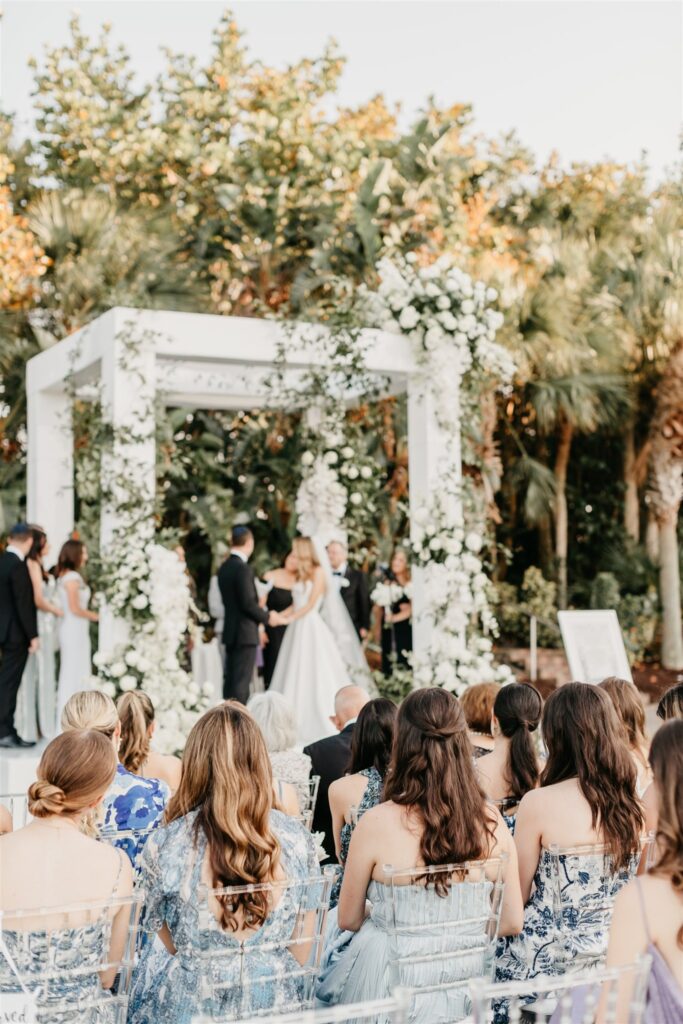
The Phairis Luxury Standard applies to every person the team works with on the wedding morning, not just the bride. Bridesmaids, mothers, flower girls: everyone receives the same focused attention and skill.
Timing Management for Any Party Size
The morning timeline is built around the party size and each person’s look. A party of 4 with all updos has a different timeline than a party of 14 with a mix of updos, down styles, and natural hair. We build the specific schedule before the wedding morning and work to it precisely.
The bride sets the call time with her venue or coordinator. We build backward from that time to determine when we need to start, how many artists the morning requires, and how the party is sequenced. This work happens in advance, not on the morning itself.
What the Bride’s Morning Actually Feels Like
When the morning is staffed and sequenced correctly, it has a particular quality: busy but calm. There’s activity and laughter and the best kind of beautiful chaos, but underneath it there’s an organizational structure that the team holds so the bride doesn’t have to. She doesn’t need to watch the clock. She doesn’t need to coordinate who sits next. She can be in the morning with her people.
That’s what the Phairis Standard produces in practice.
What Booking the Phairis Standard Looks Like
Phairis Luxury books on an appointment-only basis. The process is: inquiry, consultation call, proposal, confirmation, trial, and wedding day. The consultation is where we determine fit and availability; the proposal confirms the team, timing, and investment. We don’t hold dates without a deposit, and peak South Florida wedding season dates fill 12 to 18 months in advance.
When to Reach Out
If your wedding is at a peak-season South Florida venue (October through May, particularly November through April), the inquiry should happen no later than 12 months before the wedding date, and ideally 14 to 18 months out. Preferred dates at preferred venues fill quickly.
For off-peak dates or more flexible timelines, we can often accommodate inquiries closer to the wedding, but confirming availability early is always the right move.
What to Bring to the Consultation
The consultation is most productive when you arrive with: your venue and ceremony time, a rough count of the bridal party, any inspiration images you’ve collected (style direction, specific looks you love or want to avoid), and any relevant notes about your hair type, skin type, or product sensitivities. We definitely want to see your wedding gown and 2nd dress if you plan on changing.
If you have your veil and bridal jewelry that’s great to bring as well so you can see the full look come together. We encourage our brides to wear white for your consultation. If you are wearing a white strapless wedding gown, a white strapless top or blouse will suffice. If you have a high neck gown, a white higher neck blouse works. The more specific you can be, the more useful the consultation will be.
Frequently Asked Questions
What is the Phairis Luxury Standard?
The Phairis Standard is the name for the Phairis Luxury service model: a white-glove, all-day bridal beauty experience that includes a pre-wedding consultation, a dedicated bridal trial, wedding morning styling for the bride and bridal party, and on-site presence through the reception for touch-ups and second-look transitions. We take one event per day, which means the full team is dedicated exclusively to one wedding.
Does the team really stay all day?
Yes. Our team remains on-site from arrival through the reception. The specific timing of when we check in and provide touch-ups is built around the wedding schedule, but we don’t leave after the styling is complete. This is a standard part of the Phairis Luxury service, not an add-on.
What is included in a white-glove bridal beauty service?
White-glove bridal beauty includes: a pre-booking consultation, a dedicated bridal trial, wedding morning styling for the full bridal party, on-site presence through the ceremony and reception, touch-up service throughout the day, and second-look transitions if planned. It also means the team takes one event per day so there’s no competing priority anywhere in the morning.
How many people can the Phairis team accommodate?
Our team of 12 artists can scale to accommodate bridal parties of any size. The specific number of artists assigned to each event is determined by the party size and the morning timeline. Every artist on the team is held to the same standard regardless of whether they’re working on the bride or a bridesmaid. We’ve done bride only weddings and 30 person weddings. We can handle it all.
What is a second look and how does it work?
A second look is a change in the bride’s hair, makeup, or both between the ceremony and the reception. Common second looks include transitioning from an updo to loose waves, adding a dramatic eye for the evening, or changing from a more understated daytime look to a more glamorous reception look. The transition is executed on-site by our team, typically during the cocktail hour, before the reception entrance.
What is the difference between Phairis Luxury and a standard bridal hair and makeup booking?
Three primary differences. First, we take one event per day: the entire team is dedicated to your wedding with no competing bookings. Second, we stay all day: the team remains on-site through the reception rather than leaving after the styling is done. Third, the depth of experience: 18 years of luxury bridal specialization, 800+ brides served, preferred-artist status at South Florida’s top venues, and a team of 12 artists trained to a single high standard.
Experience the Phairis Luxury Standard
If what we’ve described here sounds like the kind of wedding morning you want, the next step is an inquiry.
Check availability for your date. We’ll confirm whether your date is open and schedule a consultation call to learn about your vision and your day.
For more on what the Phairis experience includes:
- Why Phairis Luxury is South Florida’s most trusted bridal beauty team
- What to expect at your bridal hair and makeup trial
- How to plan your wedding morning beauty timeline
- The complete bridal party hair and makeup planning guide
- How far in advance should you book your bridal stylist
- The complete guide to luxury bridal hair and makeup
To be iconic?
Ready
I'm excited to hear all about your wedding/Event day. Have a question about a booking and hair styling sessions? View our services and talk to us, also dont forget to check our portfolio
