
Summer Wedding Makeup: The Complete Survival Guide for Florida Brides

Let me be direct with you: a Florida summer wedding is one of the most demanding beauty environments in North America. June through September, you are looking at ambient temperatures of 88 to 95°F and outdoor humidity that routinely sits at 85 to 90 percent. The products that hold beautifully in a climate-controlled New York salon do not automatically work at an outdoor ceremony in Boca Raton in July.
This guide is not about trends or aesthetics. It’s a practical planning resource, written from years of working Florida summer weddings, covering exactly what happens to makeup in these conditions and exactly what you do about it: the right products, the right application sequence, the right touch-up approach, and the rainy season factor that no one else is talking to you about.
What Florida Summer Actually Means for Bridal Makeup
Florida’s June through September wedding season presents four specific threats to bridal makeup: foundation migration, foundation oxidation, blush and contour loss, and eye makeup crease. Understanding each one determines every product and technique decision that follows.
Foundation migration is what happens when sweat and elevated skin oil production in heat cause the foundation to physically move away from where it was placed. The corners of the nose, the temples, the chin: these are the first zones where coverage disappears. The underlying skin then shows through, and the perimeter of the face often shows a visible edge where the foundation stopped.
Foundation oxidation is a color shift: many foundation formulas darken or shift orange when they interact with skin oils and elevated heat over time. A shade that matched you perfectly at the 9am application can read noticeably darker or more orange by the 2pm ceremony.
Blush and contour loss is straightforward. Powder cheek products applied over a foundation that begins to migrate take the cheek color with them. By the reception, many Florida summer brides have lost most of their cheek color without realizing it.
Eye makeup crease is the specific failure of powder eye shadow in humidity. The combination of lid moisture and air humidity causes powder shadow to gather into the crease of the lid, losing its blended quality and creating a heavy line across the mobile lid area.
For the full range of makeup techniques that address the Florida climate across the year, the complete guide to making bridal makeup last in Florida heat covers the broader approach. This guide focuses specifically on the summer months, when the stakes are highest.
The Foundation Decision: What Works and What Doesn’t
Standard foundations, including many premium luxury formulas, are engineered for controlled indoor conditions. They are not designed for 90°F outdoor humidity, and in these conditions most of them fail within 2 to 4 hours.
The Florida summer foundation decision comes down to two categories: long-wear formulas and airbrush formulas.
Long-wear foundations use a higher polymer content in their formula, which maintains more structural integrity under heat and humidity than standard foundation polymer concentrations. Not every long-wear foundation is equally effective, but the category significantly outperforms standard formulas in these conditions.
Airbrush foundation is a strong option for Florida summer brides. The water-resistant airbrush formula creates a finer, more uniform film on the skin surface. Because the application is thinner, there is less product to migrate. Because the formula bonds to the skin in a more uniform layer, it holds more effectively when the skin warms and produces oil. The full airbrush vs traditional bridal makeup comparison goes deeper on when each approach is the right call.
Choosing between the two comes down to a conversation with your makeup artist. An experienced artist will be able to explain each and guide you with that they feel will work best on your skin.
The Oxidation Problem
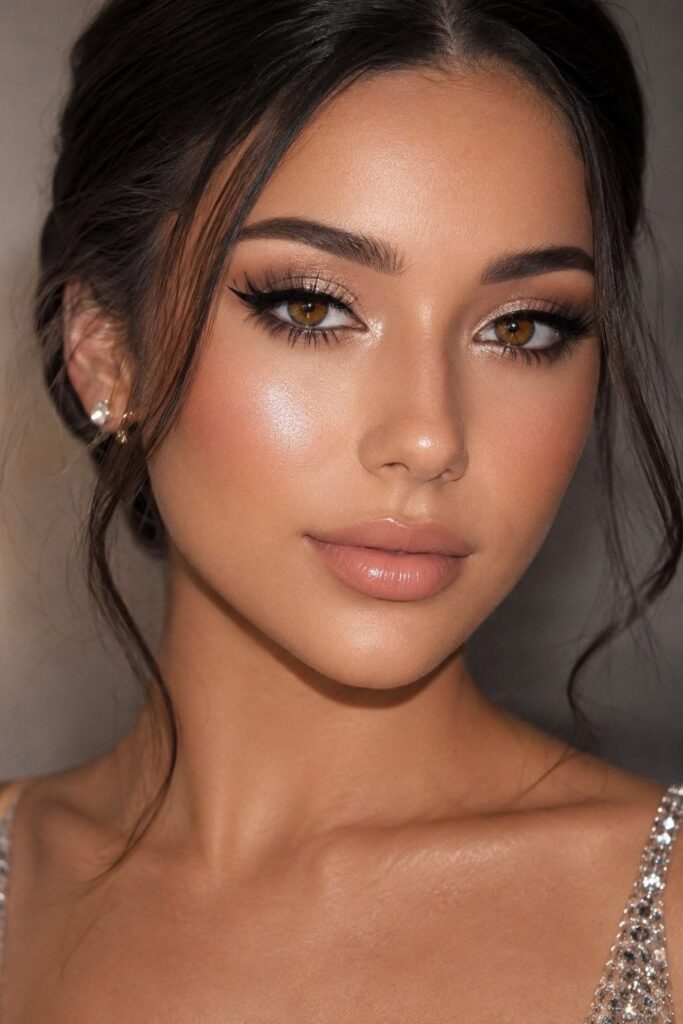
Foundation oxidation is the issue that catches Florida brides off-guard most often. It is not a product defect and it is not obvious until it happens: the shade looks right at application and shifts to something noticeably different by mid-morning.
The way to identify whether a formula will oxidize on your skin is to test it at the bridal trial. Apply the full face as planned at 9am and photograph the skin in natural light at 9am, 1pm, and 5pm. Compare the three photos: if the foundation shade is consistent across all three, you’re fine. If it has shifted, you need a different formula or a slightly lighter starting shade that accounts for the shift.
This test at the trial saves you from discovering oxidation in your wedding photos.
The Primer and Setting Strategy
The primer and setting approach is the framework that determines how long everything applied above it lasts. Getting this right matters more than which specific foundation formula you choose.
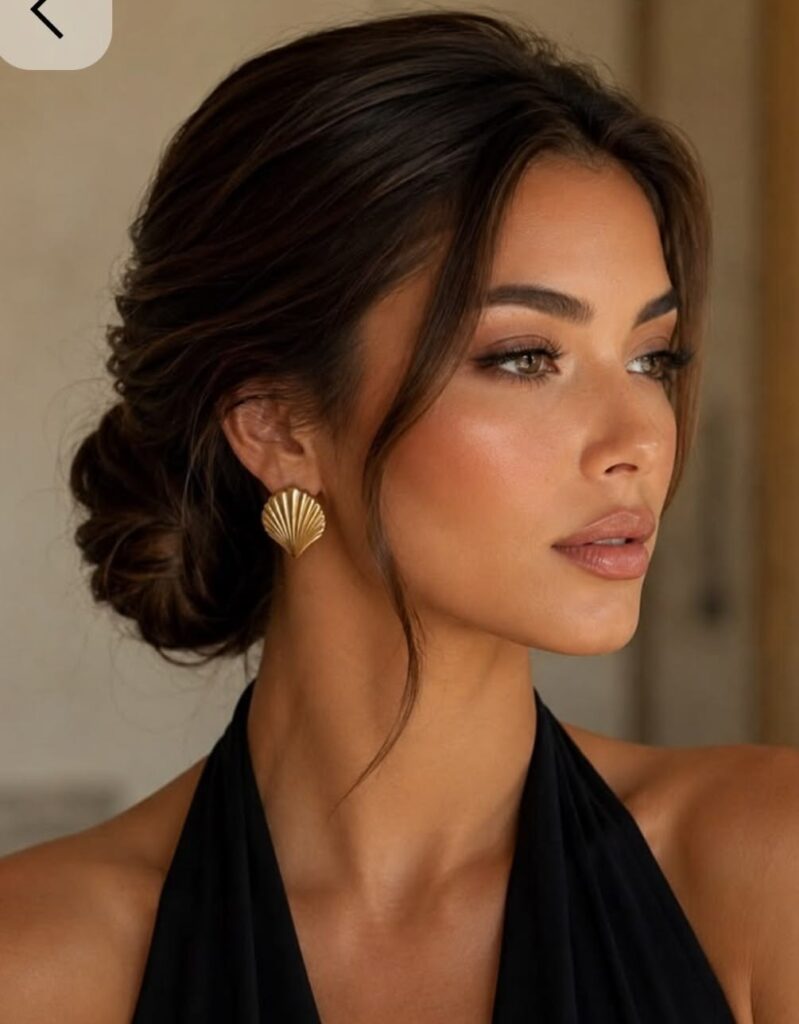
Heat-proof primer is the foundational step. Applied before foundation, it creates an adhesion layer between the skin’s surface and the formula above it, significantly slowing the migration of sweat and oil through the makeup. The primer is applied first, allowed to fully absorb, and only then followed by foundation. Primer applied over skin that hasn’t absorbed it sits between the skin and the foundation as a separate layer that can cause slipping rather than adhesion. Depending on your skin type your artist will apply the right primer. If you’re naturally oily, an oil reducing primer will be used.
Strategic setting powder is the second critical component, and how it’s applied is as important as which formula you use. Setting powder goes in specific zones: the T-zone (forehead, nose, chin) and directly under the eyes. It does not go on the cheeks, the temples, or the outer face if there is any dewy element intended. Full-face powder application is the single most common reason a Florida summer bridal look loses its intended quality within the first few hours: the powder set every area equally, removing the differential between a dewy cheek and an oil-controlled T-zone.
Heat-resistant setting spray is applied last, over the finished complete look. This is a different product from standard finishing spray: heat-resistant formulas are engineered for high-temperature, high-humidity environments and significantly extend how long the makeup maintains its original application quality. Held 8 to 12 inches from the face, two full passes, allowed to dry completely before any other product approaches the face.
Experienced bridal makeup artists in Florida understand the heat and humidity and will use the products they have tested and proven true.
Make sure your makeup artist is experienced doing makeup in this type of weather.
For more on how this interacts with the dewy vs shiny distinction in Florida conditions, the natural bridal makeup guide goes into the full skin-finish management approach.
The Eye Makeup Summer Protocol
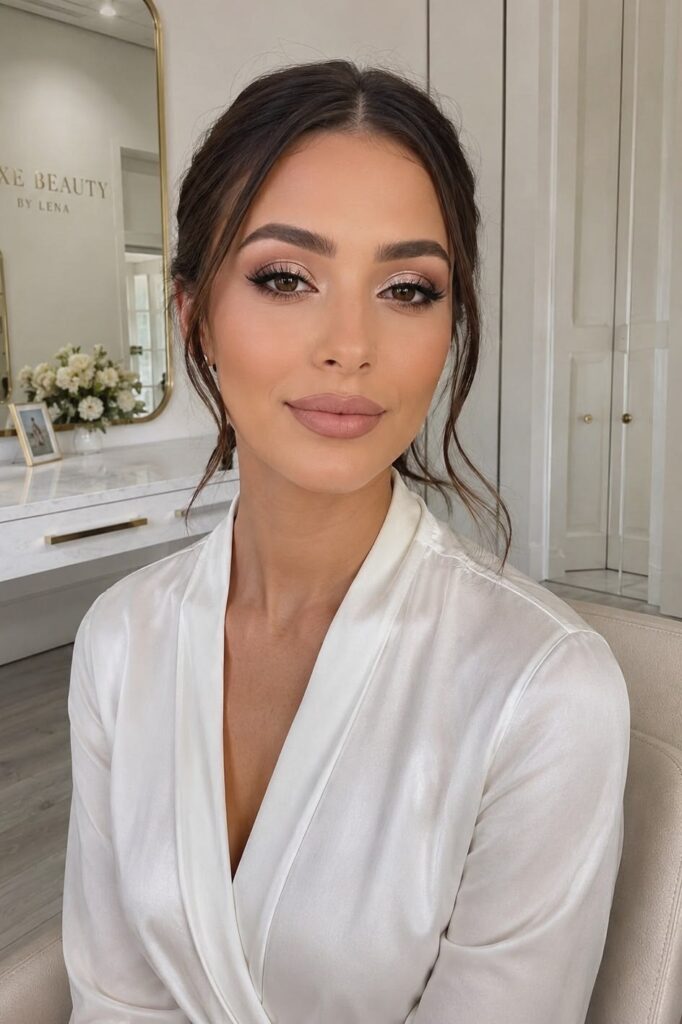
Eye makeup has its own Florida summer protocol, and it is the area where formula choices most directly determine whether the look holds through the day or collapses by the ceremony.
Sweat-proof eye primer on the lids before any shadow is non-negotiable for Florida summer. The primer is applied over the full mobile lid and slightly into the crease, then allowed to dry completely before any shadow is applied. If shadow is applied before the primer dries, the primer and shadow bond into a layer that creases at the first sign of lid moisture.
Waterproof mascara is the specific requirement here, not water-resistant. Water-resistant formulas handle light moisture; waterproof formulas handle the combination of heat, sweat, and prolonged outdoor humidity that defines a Florida summer wedding day. The distinction is real and matters in this specific context.
Eye shadow formula in Florida summer favors either pressed powder shadow applied over a sweat-proof primer, or cream-to-powder shadow that dries to a set finish. Loose powder shadows are harder to control in humidity. Pure cream shadows that don’t dry to a set finish can migrate in heat without a well-dried primer underneath.
Waterproof gel liner under the eye outperforms waterproof pencil in sustained outdoor heat. The gel formula bonds more firmly to the skin and holds its placement through the kind of extended outdoor ceremony conditions that characterize summer weddings in Florida.
Skin Prep in the Weeks Before
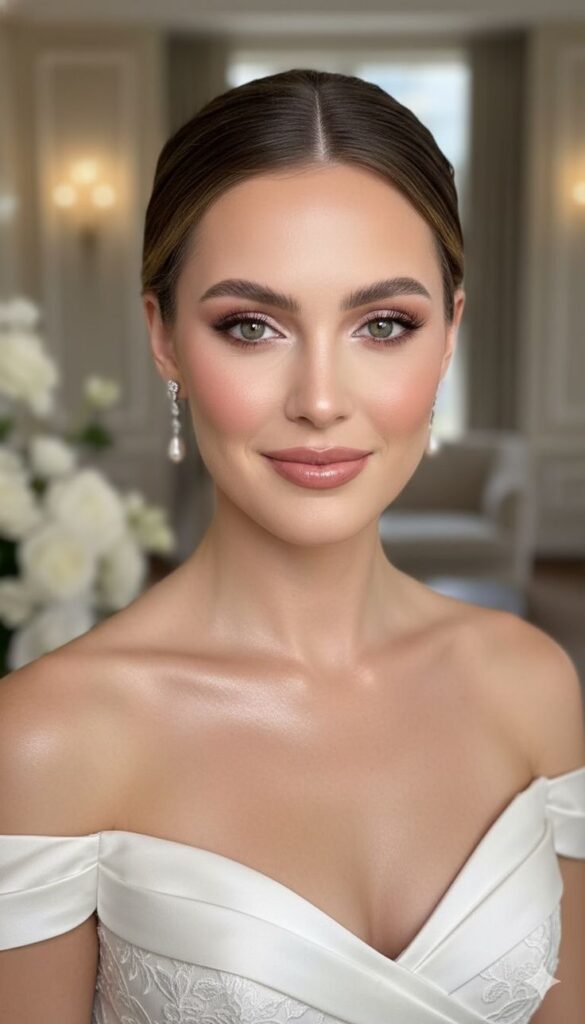
Florida summer makeup performance starts with the skin underneath it, not on the wedding morning. The quality of the skin before any product is applied determines how well everything above it holds.
Skin that is consistently well-hydrated holds makeup better than dehydrated skin: products applied to a smooth, even-moisture surface create a more uniform film that adheres more completely. The practical implication is maintaining consistent hydration for the 4 to 6 weeks before the wedding, not just the week before.
Exfoliation in the weeks before removes the surface texture accumulation that causes makeup to adhere unevenly in humid conditions. Uneven surface texture creates variations in how much product the skin absorbs in different zones, which produces visible patchiness as the makeup wears.
Take a peek at our favorites:
Aggressive treatments in the final 2 weeks before the wedding create risk without benefit for a summer bride. Retinoids, acid treatments, and in-office procedures like peels or microneedling can cause reactions, sensitivity, or surface texture changes that complicate makeup application and performance.
Sunscreen as a daily component of the pre-wedding skin prep interacts with primer placement: SPF moisturizer needs to be fully absorbed into the skin before primer is applied. SPF products that are still on the surface when primer goes on can create a barrier that reduces primer adhesion. They can also show in flash photography.
For more on the full bridal beauty planning and preparation approach, the what to expect at your bridal trial guide covers the preparation timeline from both the skin prep and the look-development angle.
The Rainy Season Factor: Planning for Florida’s Afternoon Storms
This is the section that separates a guide written by someone who actually does Florida summer weddings from general advice written without that context.
June through September is Florida’s rainy season. Afternoon thunderstorms are not a risk to manage in a worst-case scenario: they are a near-daily feature of the climate. The storms typically develop between 2 and 4pm, build quickly, and can drop intense rain for 20 to 45 minutes before clearing.
A summer outdoor ceremony scheduled for 3pm in South Florida in July faces a real probability, not a remote possibility, of encountering one of these storms. And the timeline collapses fast: a storm can go from a distant cloud bank to a full downpour within 20 minutes, which is not enough time to move an outdoor ceremony completely indoors.
Timing the ceremony is the most effective rainy season strategy: a morning ceremony, scheduled for 9 to 10:30am, exits the high-risk storm window entirely. By the time the typical afternoon storm arrives, the ceremony is done and the reception is indoors.
What waterproof formulas survive in rain: the eye makeup holds if it was applied with waterproof products correctly. The foundation holds longer than expected if the setting spray was applied properly. Powder cheek color washes off in direct heavy rain. The lip gloss disappears immediately. A waterproof formula across the full eye look (liner, mascara, shadow with primer) is the most critical component for rain resilience because visible eye makeup running is the most photographically obvious failure.
The touch-up kit for a rain contingency includes: blotting papers, a pressed powder that matches the foundation, a cream blush in the same tone as the original application, a lip product matching the original color, and a small mascara wand for any minor mascara repair needed.
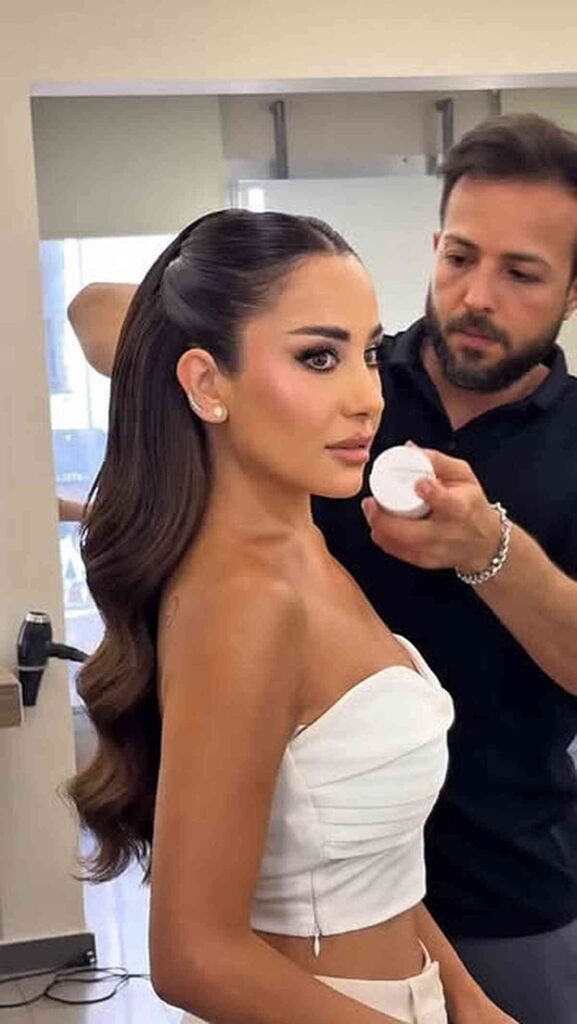
Having your makeup artist stay for touchups is almost a must. Even the most experienced makeup artists can only do so much when it comes to humidity and different skin types. A great application initially will hold up against an amateur applying makeup however to keep that gorgeous application looking fresh and dewy, we highly recommend having your artist stay onsite atleast until the ceremony.
The Full Summer Wedding Morning Application Sequence
This is the 10-step sequence for applying bridal makeup that holds through a Florida summer wedding day. Each step has a specific purpose in the overall durability system.
Step 1: Skin prep. Cleanse, apply a hydrating serum, allow to absorb, apply a very light SPF moisturizer, allow to fully absorb before primer is placed. Skin that hasn’t fully absorbed the moisturizer transfers it onto the primer layer and reduces adhesion.
Step 2: Color correcting. Apply color-correcting concealer in specific zones only (redness, dark circles, hyperpigmentation), blend fully. Color correction reduces the coverage burden on the foundation layer.
Step 3: Heat-proof primer. Apply over the full face, including lids if using eye primer as a primer base. Allow to fully absorb before any other product goes on. This is the step most often rushed, and rushing it directly reduces how long the full makeup lasts.
Step 4: Foundation. Apply long-wear or airbrush formula in thin layers. Building in thin layers produces a more even surface bond and reduces the total product weight that can migrate in heat. One thick layer holds worse than two thin ones.
Step 5: Under-eye concealer. Apply and set immediately with a small amount of translucent powder directly under the eye. Setting under-eye concealer before continuing prevents it from creasing during the rest of the application.
Step 6: Strategic setting powder. Apply to T-zone and shine-prone areas only. The cheeks, temples, and outer face stay untouched by powder at this stage.
Step 7: Eye primer on lids. Apply a sweat-proof eye primer to the mobile lid, allow to dry completely before any shadow is applied. Fully dried means the primer no longer has any tackiness when touched.
Step 8: Eye makeup. Apply shadow in the planned look, followed by waterproof liner and waterproof mascara in that order. Liner before mascara prevents mascara smudging onto the liner placement.
Step 9: Cream color products. Cream blush, cream highlight, and any other cream face products go on before setting spray. They need to be in contact with the skin when the setting spray seals the surface so they bond into the finished look rather than sitting above the seal.
Step 10: Setting spray. Heat-resistant formula, held 8 to 12 inches from the face, two full passes from forehead to chin. Allow to dry completely. This is the final step, not an optional finish: in Florida summer conditions it is the durability layer that determines whether the full application sequence holds for 6 hours or 3.
Touch-Up Strategy Through the Day
What happens to the makeup after the artist leaves depends heavily on who is managing the touch-ups and what tools they have available.
The touch-up kit for a Florida summer wedding includes: blotting papers, a translucent pressed powder, a cream blush in the same tone as the original, a lip product matching the original application, a waterproof mascara wand for any touch needed, and the setting spray used in the original application.
The blotting paper goes before any other touch-up product. Pressing the blotting paper against the oil zone removes the oil without removing the makeup below it. Adding powder over oil that hasn’t been blotted first pushes the oil and the makeup beneath it sideways, creating a patchy appearance.
The powder goes in the oil zone after blotting. A light press of a translucent powder in the T-zone after blotting refreshes the oil control without changing the surface appearance in non-T-zone areas.
Cream blush touch-up is more complex than powder blush would be: because the original application was cream, refreshing it with a cream requires blending carefully over the foundation surface without disrupting the coverage below. A very light tap with fingertip of the same cream blush tone, pressed (not rubbed) into the cheek area, refreshes the color without creating a visible edge.
The on-site bridal service that Phairis Luxury provides through the full wedding day means this entire touch-up sequence is managed by the artist who applied the original look and knows exactly where every product was placed. That specific knowledge matters when the touch-up needs to be precise rather than general.
Hair and Dress Coordination for Summer Makeup
Hair gathered away from the face and neck reduces the face temperature at the points where sweat production is highest. A half-up style with hair off the neck, or a full updo, reduces the thermal input to the face compared to loose hair worn fully down during an outdoor ceremony. The temples and the perimeter of the face are where makeup migrates first: reducing heat at those points through hair style choice adds meaningful durability to the face makeup.
Heavy-fabric gowns (duchess satin, heavy crepe, structured lace) raise body core temperature during an outdoor ceremony faster than lighter fabrics. Higher body temperature = more face sweat = faster makeup migration. If your gown is heavy, the primer and setting strategy needs to account for a higher sweat rate than a lighter fabric bride would experience.
Indoor versus outdoor reception changes the touch-up approach mid-day. If the ceremony is outdoors but the reception is climate-controlled, the most demanding conditions are the ceremony window. Makeup that survives the outdoor ceremony and transitions indoors to a controlled-humidity ballroom will hold significantly more easily through the reception.
Frequently Asked Questions
What foundation is best for a summer wedding in Florida?
Long-wear formulas with higher polymer content significantly outperform standard formulas in Florida summer conditions. Airbrush foundation is the stronger option for most outdoor summer brides: the water-resistant formula creates a finer surface bond and holds more effectively in sustained heat and humidity. The specific formula is less important than testing it at the bridal trial for oxidation and longevity.
Charlotte Tilbury Longwear is a favorite of ours
Does makeup melt in Florida heat?
It can, without the right product approach. Standard formulas applied without a heat-proof primer and heat-resistant setting spray will migrate meaningfully in 90°F outdoor humidity over a 4 to 6 hour period. With the correct primer, long-wear or airbrush foundation, strategic powder, and heat-resistant setting spray, the makeup holds through the full wedding day.
Il Makiage Poreless Primer is a proven result driven product.
Is airbrush makeup better for summer weddings in Florida?
For outdoor Florida summer conditions, airbrush foundation is generally the stronger choice depending on your artist. The water-resistant formula and thinner application layer produce a surface bond that holds better in sustained humidity than sponge- or brush-applied formulas. The caveat is that airbrush coverage is light-to-medium and not the right choice for every skin concern: your artist will assess whether airbrush is appropriate for your skin.
What is the best setting spray for a Florida summer wedding?
Heat-resistant setting spray formulas, specifically engineered for high-temperature and high-humidity conditions, significantly outperform standard finishing sprays in Florida summer. The application technique matters: 8 to 12 inches from the face, two full passes, allowed to dry completely. Some brides benefit from a second application of setting spray over the cream color products specifically.
We like Benefit Cosmetics Super Setter
Book Your Summer Bridal Trial
The Florida summer product approach is not something to figure out on the wedding morning. The trial is where the full system is tested in real conditions: primer, foundation shade, oxidation check, eye hold assessment, and 2-hour longevity photograph.
Book your summer wedding bridal trial with Phairis Luxury.
For more on the full approach to Florida bridal beauty:
To be iconic?
Ready
I'm excited to hear all about your wedding/Event day. Have a question about a booking and hair styling sessions? View our services and talk to us, also dont forget to check our portfolio
