
The Complete Bridal Party Hair & Makeup Planning Guide

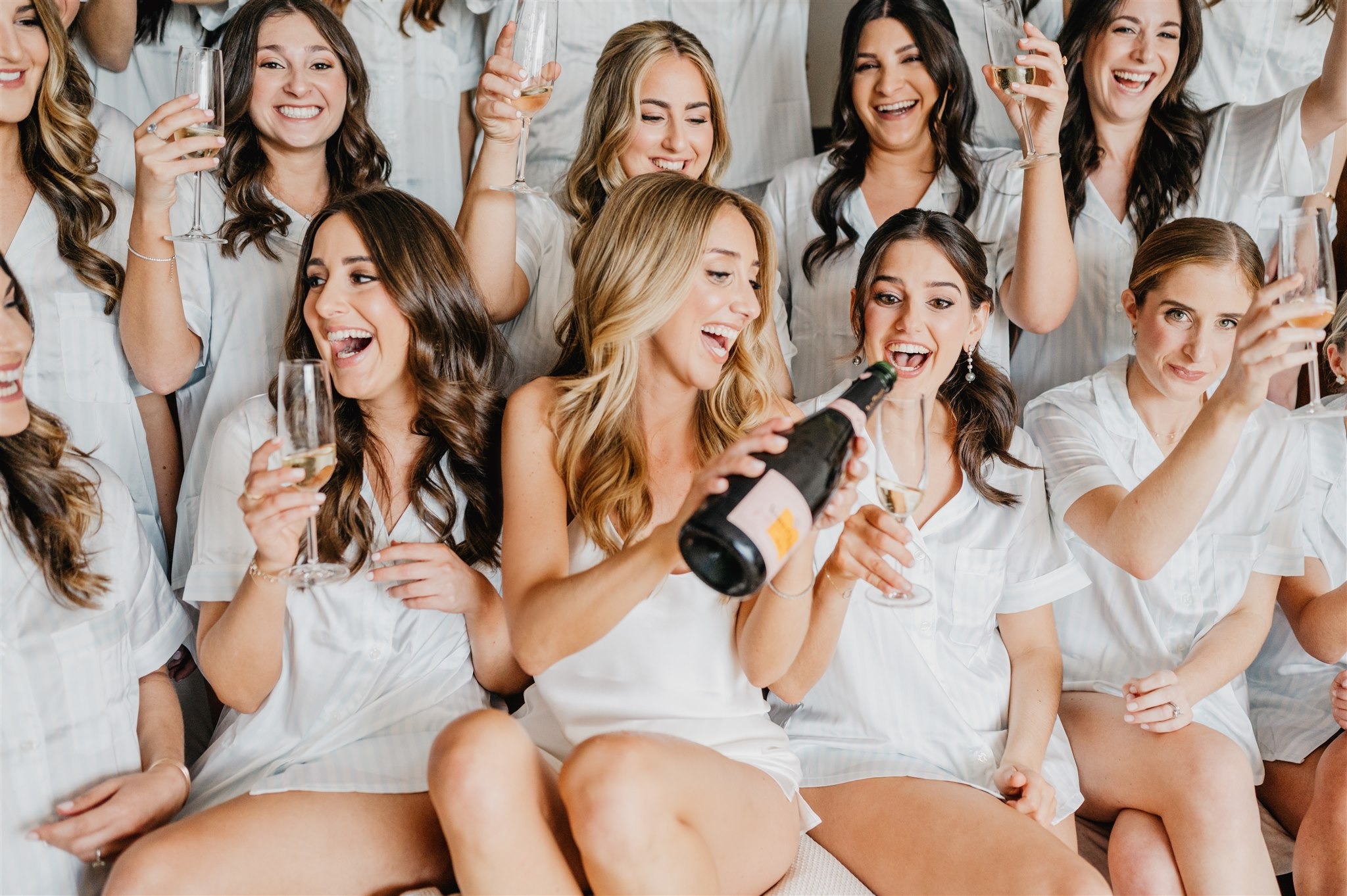
If you’ve ever been to a wedding where the morning felt chaotic, where the bride was half-done when the photographer arrived, where someone’s bridesmaid was crying in the bathroom because her hair fell apart before the ceremony, the root cause almost always traces back to the same problem: no one planned the morning properly.
Planning hair and makeup for a full bridal party isn’t just booking enough artists. It’s a logistics exercise that requires precise timing, a clear coordination strategy, and an understanding of how different people with different hair types and different skin tones get different looks without the morning feeling like an assembly line.
This guide covers everything: how many artists you actually need, how to build a timeline that works, how to coordinate looks across the whole party, what to tell your bridesmaids before the day, how to handle the mothers and the flower girls, and what to do when things go sideways.
Why Bridal Party Planning Is More Complex Than Most Brides Expect
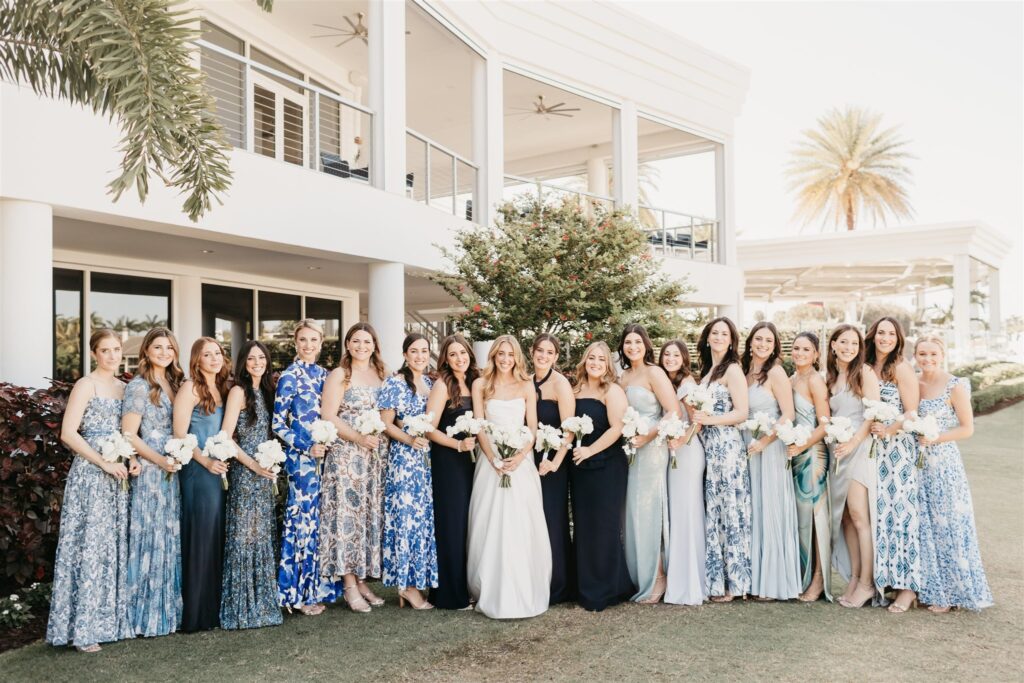
Most brides imagine the wedding morning as a few hours of getting ready together. The reality is that it’s a multi-person service operation with hard time constraints, individual needs, and very little room for error.
Every person in your party who needs hair and makeup adds real time to the morning. That time has to be accounted for precisely, not estimated. And when you’re working with a single artist, the math becomes punishing quickly: a party of six needing both hair and makeup is ten to twelve hours of service for one person. That doesn’t fit in a wedding morning.
What actually works is a team working in parallel, with a timeline built backward from a fixed endpoint, and clear communication sent to your party before the day begins. Those three things together are what create the calm, beautiful morning that brides remember fondly.
Without them, the morning creates exactly the kind of stress that has no place anywhere near a wedding day.
How Many Artists Do You Actually Need?
The Time Formula
The starting point is simple. Each artist can complete approximately one hair style or one makeup application per 45 to 60 minutes. That’s the realistic number for professional work done at a pace that doesn’t feel rushed.
So if you have a party of six bridesmaids all needing both services, that’s roughly twelve service slots. At 45 minutes each, one artist needs nine to eleven hours to work through the party, before the bride even sits down. That’s not a wedding morning. That’s a full workday.
Two artists cut that to four and a half to six hours. Three artists bring it to three to four hours. Add the bride’s time (two to two and a half hours), and you can see how the math shapes the team.
The practical minimum for a party of four or more is two artists. For parties of eight or more, three artists is the right starting point. For very large parties with fifteen or more people, four artists is appropriate.
Parallel Execution vs. Sequential Single-Artist Work
The difference between one artist working through the party sequentially and two or three artists running in parallel isn’t just speed. It’s the entire texture of the morning.
With parallel execution, no one is sitting and waiting for their turn for an hour. The suite stays calm because there’s movement and progress happening on multiple stations at once. No one feels like a bottleneck. And critically, when something takes longer than expected, the other artist can absorb it without the whole timeline shifting.
Phairis Luxury’s 12-artist team means no bridal party is too large to manage with full quality and proper pacing. Multiple artists work simultaneously, and the morning moves the way it should. You can find out more about how the team is structured on the services page.
Planning for Buffer Time
Even with the right number of artists, build a 30-minute buffer into the timeline. Not because the team will run over, but because something unexpected always happens. A bridesmaid arrives late. Someone’s hair needs more prep than expected. A flower girl has a meltdown. The buffer is what protects the bride’s slot from being affected by any of that.
Building Your Wedding Morning Timeline
The Bride Goes Last
This is the single most important rule of the wedding morning, and it’s the one that gets broken most often when brides try to schedule themselves.
The bride should be the last person in the chair. Not because she’s more important than everyone else, but because her look needs to be the freshest when she walks out of the suite. If she sits down first at 7am and the ceremony is at 2pm, seven hours of wear have accumulated before she’s even been photographed.
Being last in the chair means she’s done at 11am for an 11:30 first look. That’s ideal.
Working Backward from Your Fixed Endpoint
Start with your first look or ceremony time, whichever comes first. Work backward from there, adding the bride’s time (two to two and a half hours), then your buffer (30 minutes), then the rest of the party’s time divided by your number of artists.
The result is your team’s call time. That’s when your artists arrive and set up, which is typically 15 to 30 minutes before the first party member sits down.
Here’s a simple example for a party of six with two artists, first look at noon:
- Noon: First look
- 11:15: Bride is done (45 minutes before first look, accounting for dressing and photos in the suite)
- 9:00: Bride begins (hair and makeup: two hours)
- 8:45: Buffer window ends
- 7:00: Artists arrive and set up, first bridesmaid in the chair immediately
That’s a 7am call time to deliver a calm, on-schedule morning for six people plus the bride.
For a complete breakdown of how to structure your timing, read the wedding morning beauty timeline guide.
Setting Call Times for Your Party
Once you know your timeline, convert it into individual arrival times for your bridesmaids. Don’t send one group arrival time. Send individual instructions: “You’re scheduled to sit down at 7:30, please arrive by 7:15.”
This small change prevents more delays than almost anything else. When everyone is told to arrive at the same time, the ones who don’t care about punctuality treat that as flexible. When each person has a specific slot, there’s a real reason to be on time.
Coordinating Looks Across Your Bridal Party
Unified Look vs. Common Thread
There are two broad approaches to coordinating bridal party beauty.
A unified look means every bridesmaid wears a version of the same style: the same updo shape, the same soft wave, the same glam eye. The result is visually cohesive in photos and has a tailored, intentional feel. The challenge is that identical looks rarely look truly identical across different faces, and sometimes the same style that suits one person doesn’t suit another.
A common-thread approach means each bridesmaid wears a look that suits her individually but shares a connecting element: the same hair accessories, a similar softness or boldness level, a cohesive color family in the makeup. The result feels personal while still reading as unified in group photographs.
Neither is wrong. The decision usually comes down to the size of your party, how different your bridesmaids are from each other in terms of features and personal style, and your own aesthetic preference.
Adapting Hair Styles Across Different Textures and Lengths
The same hairstyle doesn’t look the same on fine straight hair and thick curly hair. It doesn’t look the same on shoulder-length hair and waist-length hair. A good artist adapts the concept to each person’s actual hair rather than forcing an identical result.
This is why range in a portfolio matters so much. When you’re evaluating an artist, look for evidence that they’ve produced cohesive bridal party results across people who look different from each other. That’s the skill you’re hiring for.
If you have bridesmaids with significantly different hair textures, including natural hair or curly hair that requires different techniques, make sure your artist knows this before the wedding day. Discuss it at your trial. Make sure the team has experience with the specific textures in your party.
Adapting Makeup Across Different Skin Tones and Preferences
The same principle applies to makeup. The same “soft glam” look takes on a different character depending on skin tone, eye shape, and facial structure. A skilled luxury artist translates the brief rather than applying one formula.
For bridesmaids who are uncomfortable with heavy makeup or who have strong personal preferences about how they look, the common-thread approach tends to work better. A connected aesthetic with room for individual interpretation is more comfortable than asking someone to wear a look that doesn’t feel like them.
How to Brief Your Party on the Look in Advance
Send your bridesmaids reference images before the wedding. Show them what direction you’re going, what you’re hoping their looks will feel like, and whether there’s anything specific you’d like them to request or avoid.
This isn’t micromanagement. It’s communication that prevents the morning surprise of a bridesmaid who expected a natural look sitting down for something bolder, or vice versa.
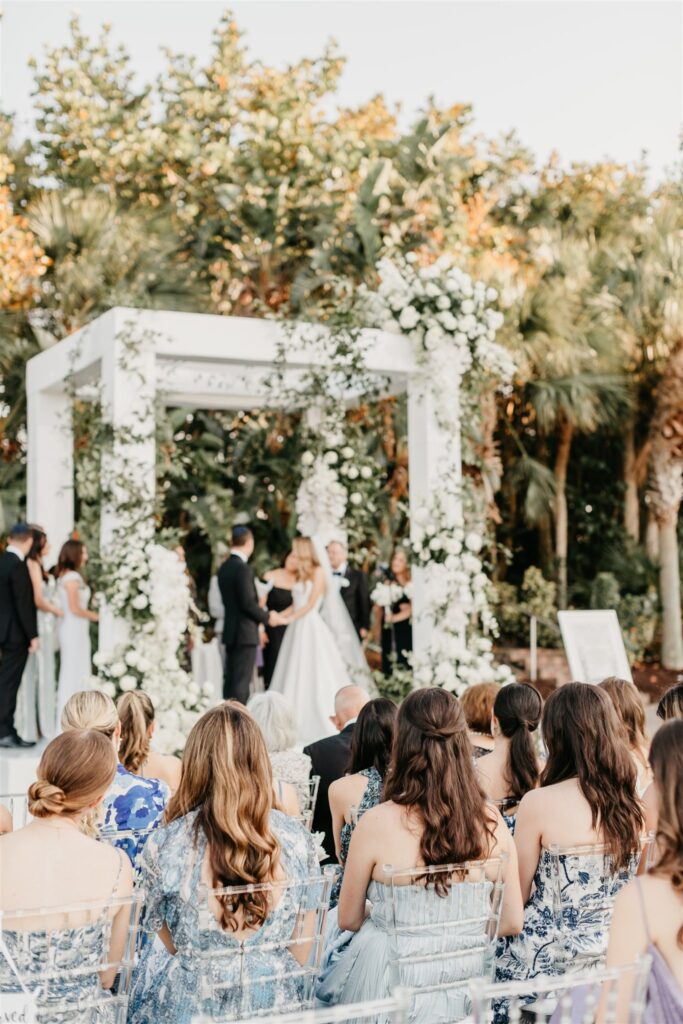
Hair and Makeup for Mothers of the Bride and Groom
Mothers of the bride and groom sometimes get scheduled as afterthoughts, slotted in wherever time allows. This is a mistake.
Both mothers are in the front row of your ceremony photographs. They’re in every family portrait. They deserve the same level of attention as your bridesmaids, and that attention is best given early in the morning when your artists are fresh and the timeline isn’t under pressure.
Schedule the mothers in the first third of the morning, before the main bridal party slots. This placement has two advantages: the mothers are done and composed long before any timeline stress builds, and they’re available to help manage the room or handle logistics while the bridesmaids are still being styled.
For the look itself, the goal is elegant, polished, age-appropriate, and camera-ready. The mothers shouldn’t feel overdone or like they’re dressed for someone else’s wedding. A conversation with each mother before the day about what makes her feel most beautiful is time well spent.
Flower Girls and Junior Bridesmaids
For very young flower girls, the approach is always simple and gentle. A neat updo, a soft braid, or a clean blown-out style with a hair accessory matches the wedding aesthetic without making a child sit still for 45 minutes. Heavy styling products and heat tools should be minimal on young hair.
Makeup for children is a question of parental preference and the child’s comfort. For very young girls, typically nothing more than a tinted lip balm, if anything at all. For older junior bridesmaids who want to feel special, a light mascara or a subtle lip gloss can be appropriate if both the child and their parents are on board.
The goal is that the child feels included and special, not like a miniature adult who has been made up for a show.
One practical note: schedule flower girls early. Young children have a limited window of patience for sitting still, and that window is better when the morning is calm rather than rushed. Get them done, let them go play, and have the accessories to finish their look ready to add right before the ceremony.
Managing Different Hair Types in the Same Party
Fine Hair
Fine hair requires lightweight products and techniques that add volume without weighing the hair down. If a bridesmaid with fine hair wants to wear a full updo, the artist needs to know in advance so they can work with what’s there and potentially recommend extensions or volume-adding techniques.
Thick or Coarse Hair
Thick hair takes longer to style, holds heat differently, and may require more product and more time. If you have a bridesmaid with particularly thick or coarse hair, factor in slightly more time for her slot. Fifteen extra minutes per person doesn’t sound like much, but across a party of three or four, it adds up.
Natural and Curly Hair
Natural and curly hair requires specific preparation the night before and the morning of. Bridesmaids with natural or curly hair should be given specific prep instructions: how to wash and condition, how to detangle, what products to apply overnight if relevant, and what state their hair should be in when they arrive.
Forcing a curly texture into a straight style or a tight updo it wasn’t designed for creates look results that don’t hold and don’t flatter. The better conversation is: what looks can this person’s natural texture support beautifully? That’s where the best results come from.
When Bridesmaids Need Extensions
If your vision for the bridal party involves long flowing hair and a bridesmaid has a bob, extensions may be worth discussing. Not every bridesmaid will be open to this, and it should never be a mandate. But if it comes up, discuss it early so there’s time to source, purchase, and trial the extensions before the wedding morning.
For a full guide on extensions, visit the bridal hair extensions guide.
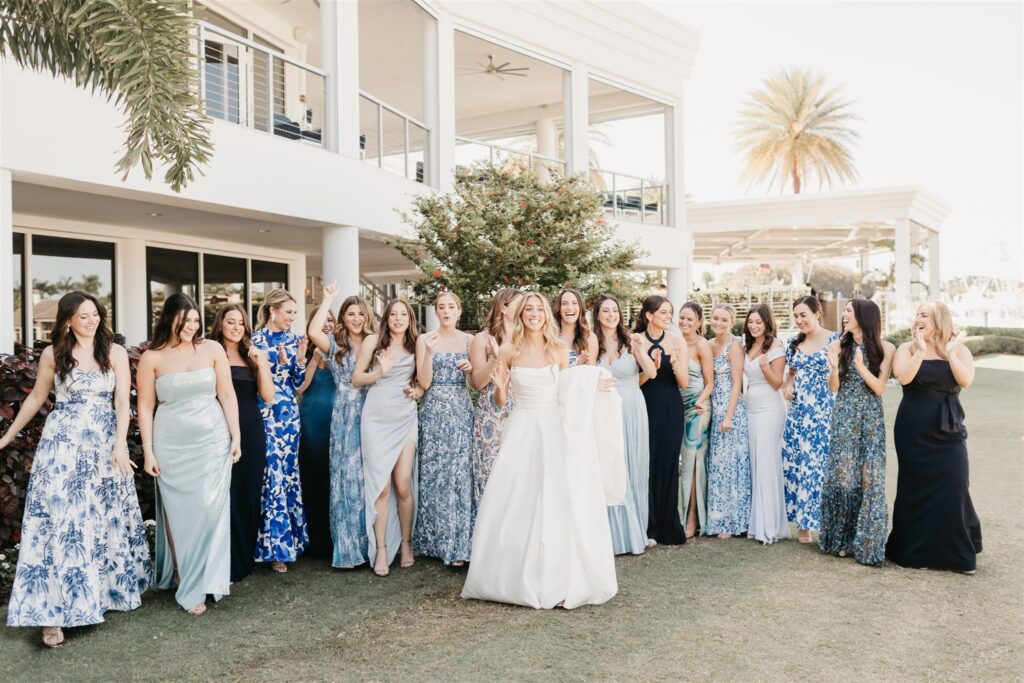
Preparing Your Bridesmaids Before the Wedding Morning
Hair Prep Instructions
Send these to your bridesmaids at least a week before the wedding:
Night before the wedding: wash and condition your hair. Apply any leave-in conditioning treatment your artist recommends. Sleep with hair down or in a very loose braid. Do not sleep in a tight ponytail.
Morning of: arrive with hair clean, dry, and product-free, unless your artist has specified otherwise. No heavy oils or serums. Bring any accessories, pins, or hair pieces you plan to wear.
Skin Prep Instructions
Morning of: arrive with face freshly washed. No heavy moisturizer. No self-tanner applied within 24 hours. No heavy perfume before makeup is applied.
If any bridesmaid has sensitive skin or is allergic to specific ingredients, they should let the artist know when they sit down, not after the product is already on their face.
Timing and Arrival
This bears repeating because it matters so much: give everyone a specific arrival time, not a general one. “Be there by 7:30” for a 7:45 chair time means the person who runs five minutes late doesn’t throw the schedule.
Tell your bridesmaids what will happen if they’re significantly late. Not as a threat, but as real information: if you arrive after your scheduled slot, we may not have time to do both services. That’s usually enough motivation.
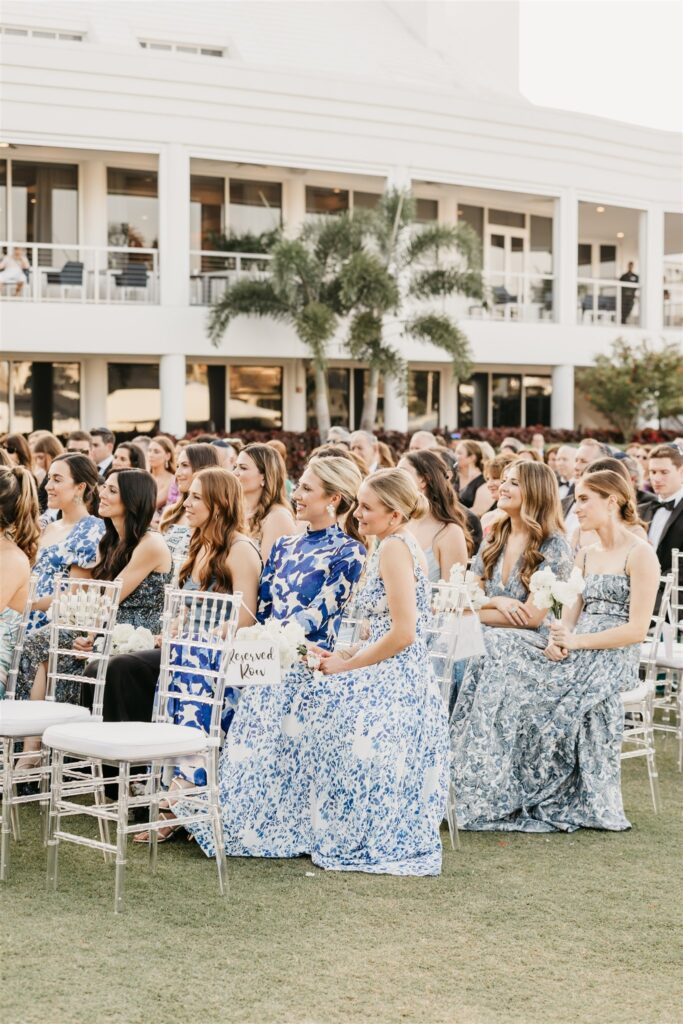
Setting Up the Getting-Ready Suite
Space and Station Requirements
Each artist needs a dedicated station with good lighting, a mirror, enough table space for their kit, and access to an electrical outlet. Two artists need two stations. Three artists need three.
Before the wedding, confirm with your venue that the getting-ready suite has adequate outlets. Hotel suites typically do. Private homes and venue prep rooms sometimes don’t, and an extension cord shortage on the morning of the wedding is not something you want to discover at 7am.
Lighting
Natural light is ideal for makeup application. If the suite has good window light, position the makeup stations to use it. If natural light is limited, your artist will likely bring ring lights or LED panels. Discuss this in advance so there are no surprises about space requirements.
One thing to avoid: overhead bathroom lighting as the only light source. It’s unflattering for application and doesn’t reflect how the makeup will photograph.
Managing the Room
Keep non-essential people out of the getting-ready suite during peak styling hours. Vendors who need photos (photographers and videographers are welcome, they’re working), but well-meaning relatives who just want to hang out can dramatically disrupt the calm of the morning.
The bride should be able to designate someone, a maid of honor or a trusted family member, to manage the room and handle any logistics so she doesn’t have to.

What to Do When Things Don’t Go as Planned
A Bridesmaid Doesn’t Like Her Look
Stay calm and say so immediately. The artist can adjust. Tell them specifically what you’d like changed. “Can we soften the eye” or “I’d like a lighter lip” gives them something to work with. A good artist will not take this personally and will not make you feel bad for asking.
If the issue is more fundamental (the entire direction feels wrong), say that too. There’s usually room to adjust, especially early in the appointment.
Someone Runs Late
The timeline has buffer built in exactly for this reason. If one person’s lateness is contained, the buffer absorbs it. If it’s significant, your artist will adjust the party order to skip to the next person who’s ready and come back if time allows.
A Last-Minute Addition
It happens. A sister flies in unexpectedly and needs to be styled. A mother who said no decides she wants to participate. Let your artist know as soon as you know. If they have capacity to absorb it, they will. If not, they’ll tell you honestly and you can adjust expectations accordingly.
Tipping Your Bridal Hair and Makeup Team
Tipping is standard in this industry and is separate from the package cost. The general guideline is $20 to $50 per artist per service. At the luxury level, the higher end or above is appropriate for an excellent experience.
Tips are best given in cash, individually to each artist, at the end of the morning. If you don’t want to handle this yourself on the wedding day, hand envelopes to your maid of honor and ask her to distribute them once everyone is done.
You can also add gratuity to your invoice if your studio allows it, but many artists prefer cash because it comes directly to them rather than through a payment system.
Frequently Asked Questions
How many hair and makeup artists do I need for my bridal party?
One artist can complete approximately one service per 45 to 60 minutes. For a party of six needing both hair and makeup (twelve service slots), you need at least two artists to finish in a reasonable morning window. For parties of eight or more, three artists is the right starting point.
In what order should bridesmaids get their hair and makeup done?
Mothers first, then bridesmaids in whatever order works logistically, and the bride always last. Being last ensures the bride’s look is freshest for the first look photography window and the ceremony.
How do you coordinate looks across bridesmaids with different skin tones?
A skilled artist adapts the same aesthetic brief to each individual’s coloring and features rather than applying an identical formula. The goal is visual cohesion in photographs, not uniformity in execution.
What should bridesmaids do the night before to prepare?
Wash and condition hair, sleep with it down or in a loose braid, avoid heavy oils or serums, and arrive the morning of with hair clean, dry, and product-free. Arrive on time or early, with any accessories they plan to wear.
Should flower girls get professional hair and makeup?
For young children, a simple and gentle approach is always best: a neat braid or updo, minimal or no makeup, and styling done early so the child doesn’t have to sit still for long. For older junior bridesmaids, a light touch of mascara or lip gloss can be appropriate with parental consent.
How much should I tip my bridal hair and makeup team?
The industry standard is $20 to $50 per artist per service, with the higher end appropriate for luxury service. Tip in cash, individually, at the end of the morning.
Planning Your Bridal Party Beauty with Phairis Luxury
The Phairis Luxury team is built for exactly this kind of morning: large parties, complex timelines, diverse looks, and the kind of calm execution that makes everyone’s experience feel individual and unhurried.
Reach out to check your date’s availability and start the planning conversation. Or explore the full services overview to understand what all-day concierge bridal beauty looks like from start to finish.
For more planning resources:
To be iconic?
Ready
I'm excited to hear all about your wedding/Event day. Have a question about a booking and hair styling sessions? View our services and talk to us, also dont forget to check our portfolio
