
Bridal Hair Styles for Every Hair Texture: Your Complete Style Guide

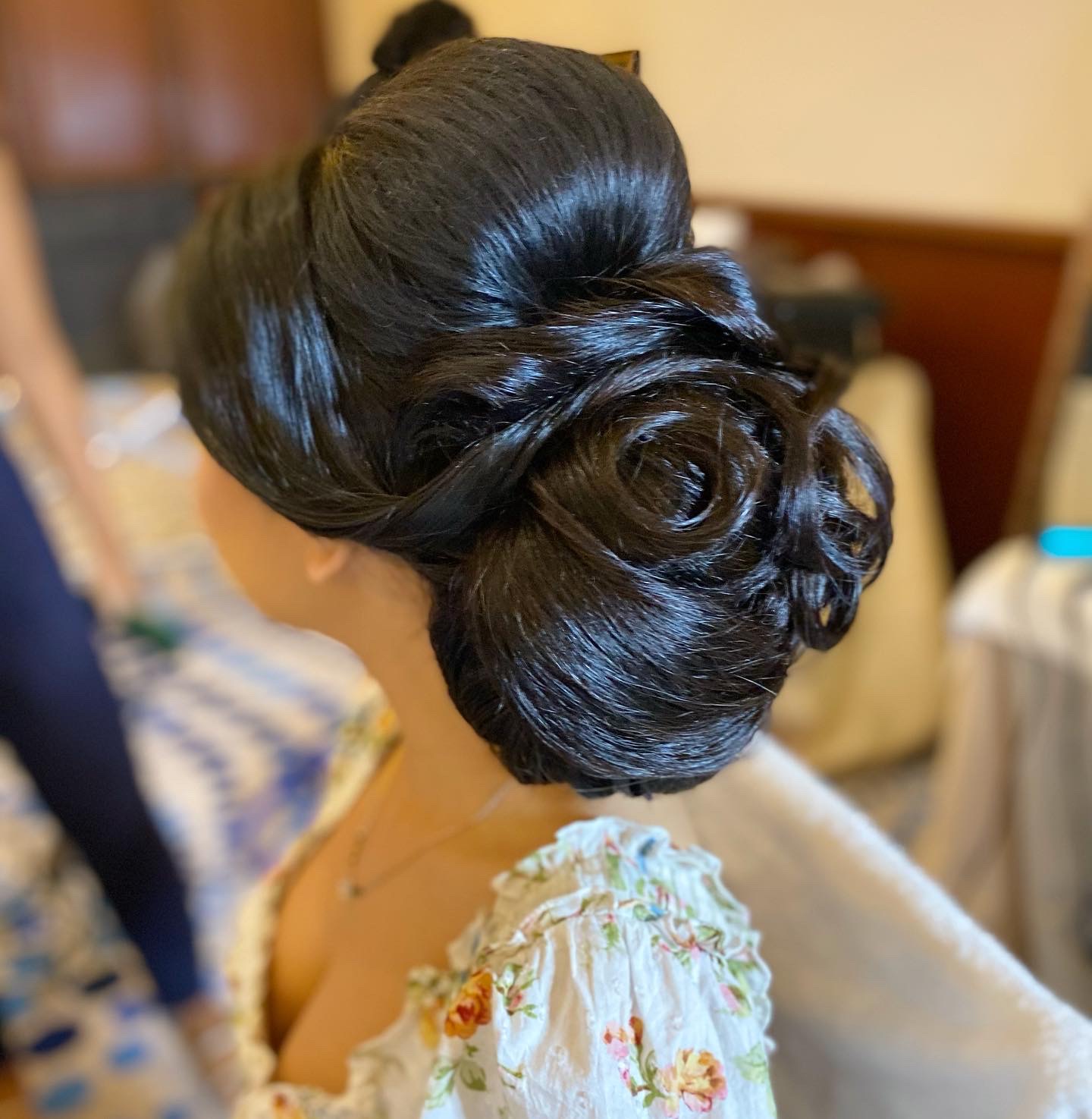
The most common mistake brides make when researching bridal hairstyles is starting with the style rather than the texture. You find an image you love on Instagram, you bring it to your trial, and then you discover that your fine, straight hair doesn’t hold that cascading half-up look the way the model’s thick, textured hair did. Or your naturally coily hair has been set for an updo that pulls at the edges and starts releasing within the first hour.
The right approach is the reverse: start with your actual texture, understand what it can and can’t do, and then find the styles that work with what you have. When you do that, your bridal hair holds, it looks like you, and it photographs beautifully regardless of the conditions. When you work against your texture, you’re fighting the hair all day.
This guide covers every major texture category with specific style options, preparation approaches, South Florida climate considerations, and what to watch out for, so you walk into your trial knowing what to look for rather than hoping it works out.
Why Texture Comes First in Bridal Hair Planning
Hair texture is the single most important variable in bridal hairstyling, and it’s the one that gets discussed least in the research process. Most bridal hair content is presented as if the style choices are universal, when in reality the same style can look completely different, hold completely differently, and require entirely different preparation depending on the texture of the hair it’s applied to.
What Texture Actually Determines About Your Style Options
Your texture determines which styles can hold through a full wedding day. It determines which products your stylist will choose, which techniques they’ll use to build the look, and how much time your slot in the morning timeline will require. Fine hair and thick hair have different structural properties that respond to heat, humidity, and product completely differently. Natural and coily textures require preparation protocols that straight hair doesn’t.
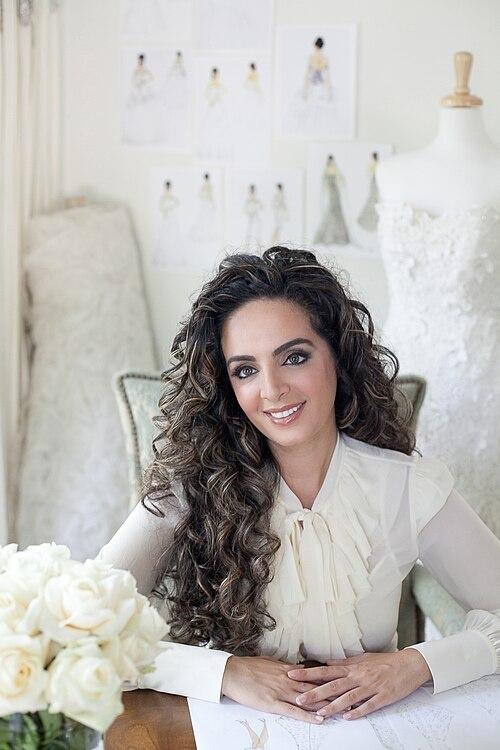
This is why, as a bridal hairstylist of 18 years, I encourage my curly haired brides to embrace their curls. With humidity, your hair, (no matter how much we prep), will always try to poke through and frizz becomes inevitable. You’d be shocked at how beautiful curls can look once they’re tamed and polished.
The Texture Classification System and How to Use It
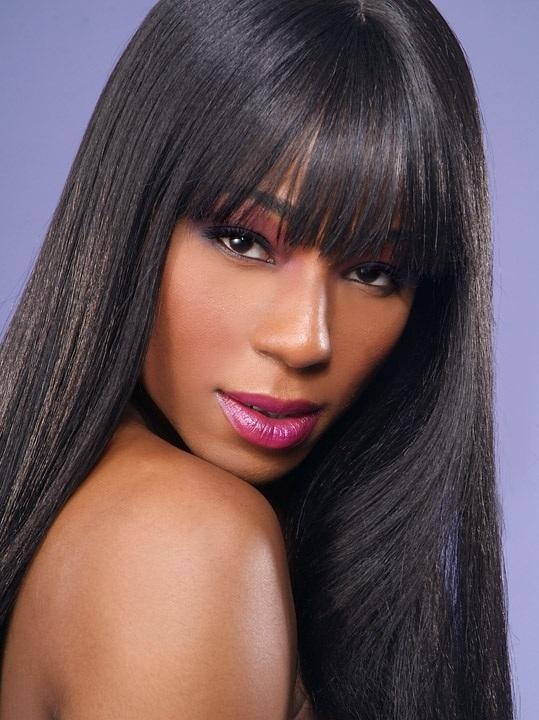
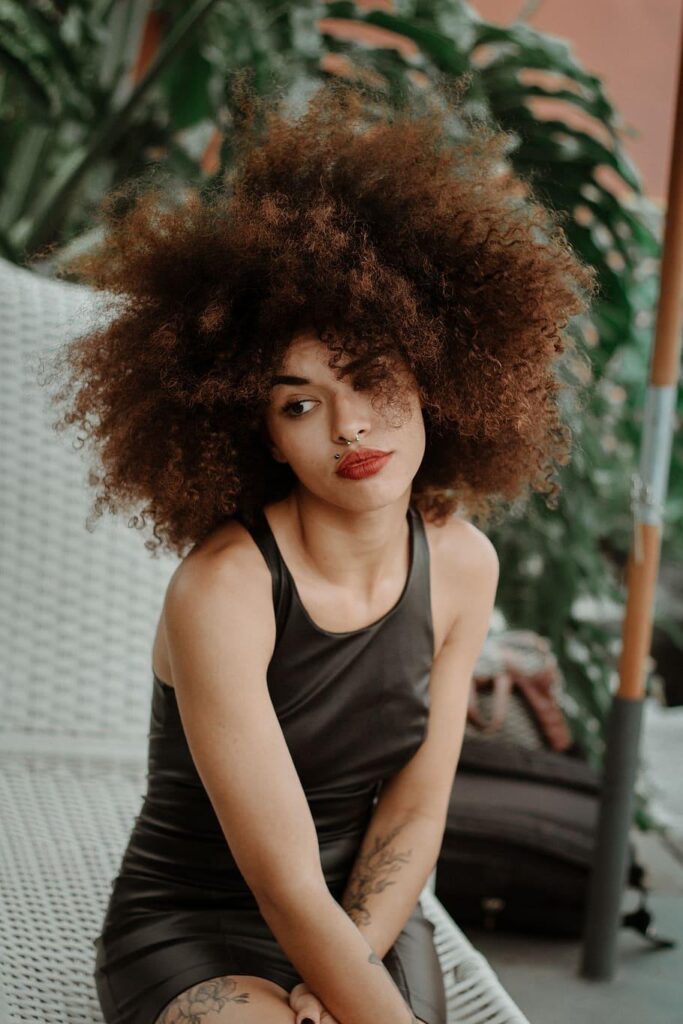
Hair texture is typically classified on the Type 1–4 system: Type 1 is straight, Type 2 is wavy (with subcategories 2A through 2C), Type 3 is curly (3A through 3C), and Type 4 is coily (4A through 4C). Most people have a general sense of where they fall, even without knowing the specific subtype.
The classification is useful vocabulary for your conversation with your stylist, not a rigid prescription. What matters practically is density (fine/medium/thick), porosity (how your hair absorbs moisture and product), and natural pattern (the degree of wave or curl). These three characteristics together determine what works for your hair, more than any category label.
How Texture and Structure Together Predict What Will Hold
When a stylist builds a bridal updo, they’re creating an internal structure of pins, braids, and wrapped sections that maintains the shape of the look regardless of what happens to the surface texture. The texture of the hair determines how that structure needs to be built. Fine hair requires a different kind of “building up” than thick hair. Coily hair needs different product and technique for the structural pins to anchor without slipping.
Understanding this helps explain why the same “pinned updo” can look completely different and hold completely differently across different hair textures. It’s not the same style built on different materials; it’s essentially a different construction process each time.
Why South Florida Climate Makes Texture Even More Important Here
In a controlled indoor environment, you can almost make any style work. However if you’re outside at all on your wedding day, this plays a big part in how you’re hair will really hold up. And this is where texture is important to consider for your bridal hairstyle.
This is the same bride. The photo on the left is when we first styled her hair. The photo on the right is after an outdoor ceremony. You can see how much her curls loosened up. Our bride had fine hair in these photos.
Bridal Hair Styles for Fine Hair
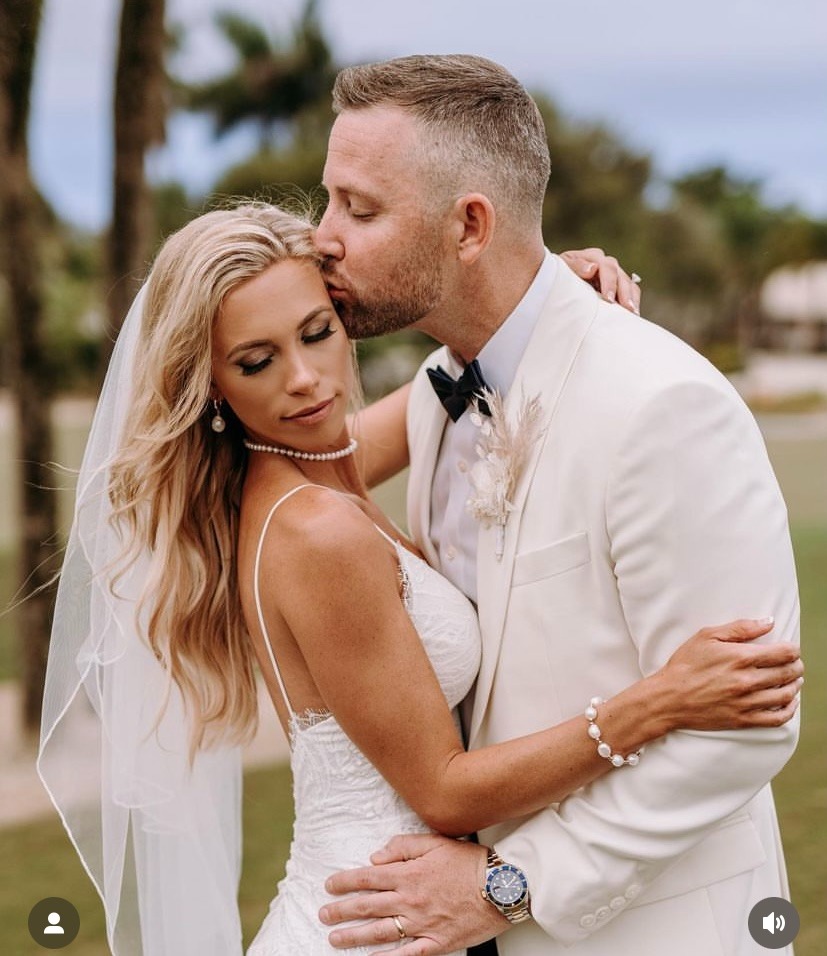
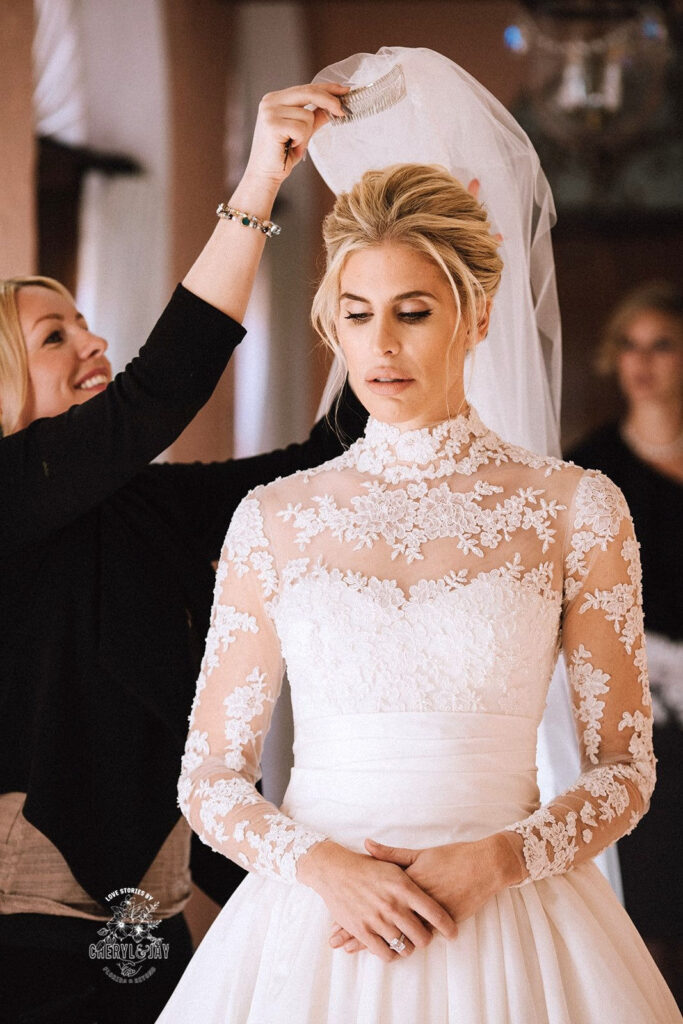
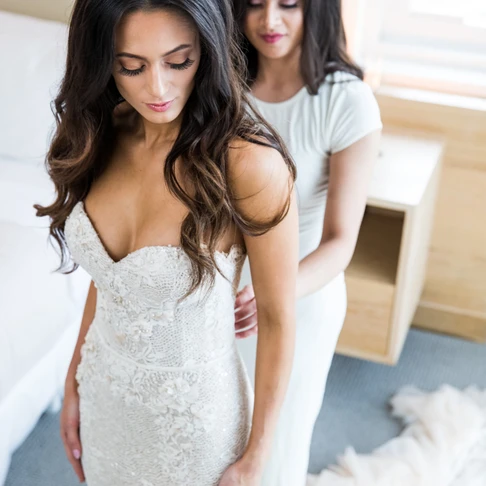
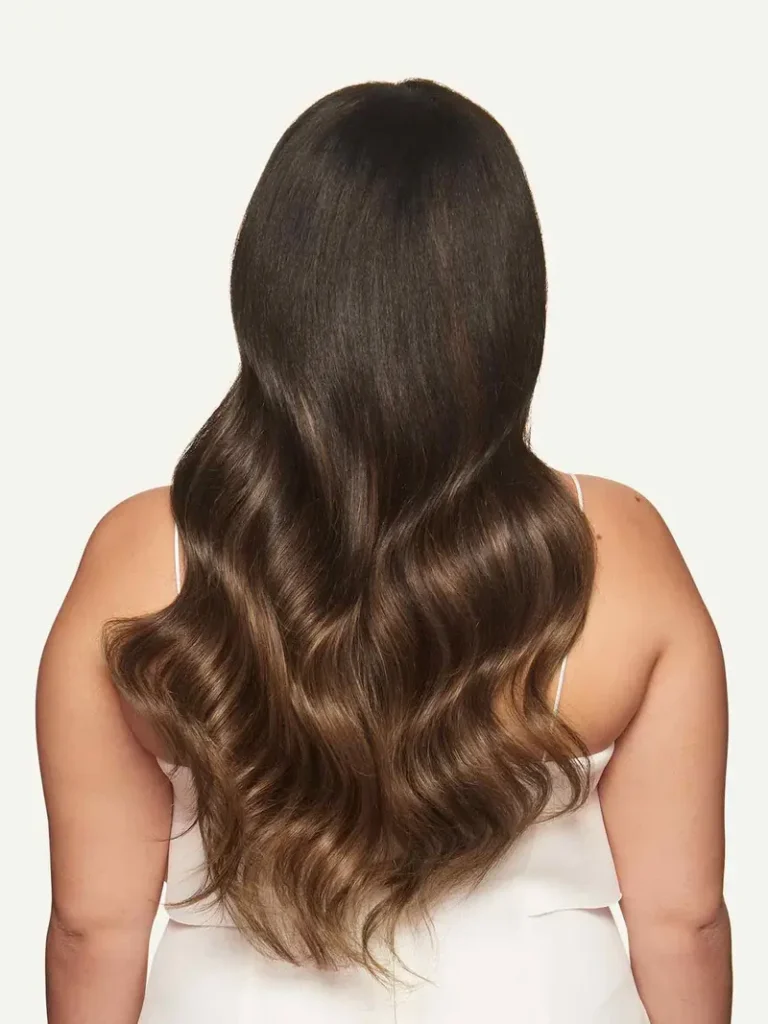
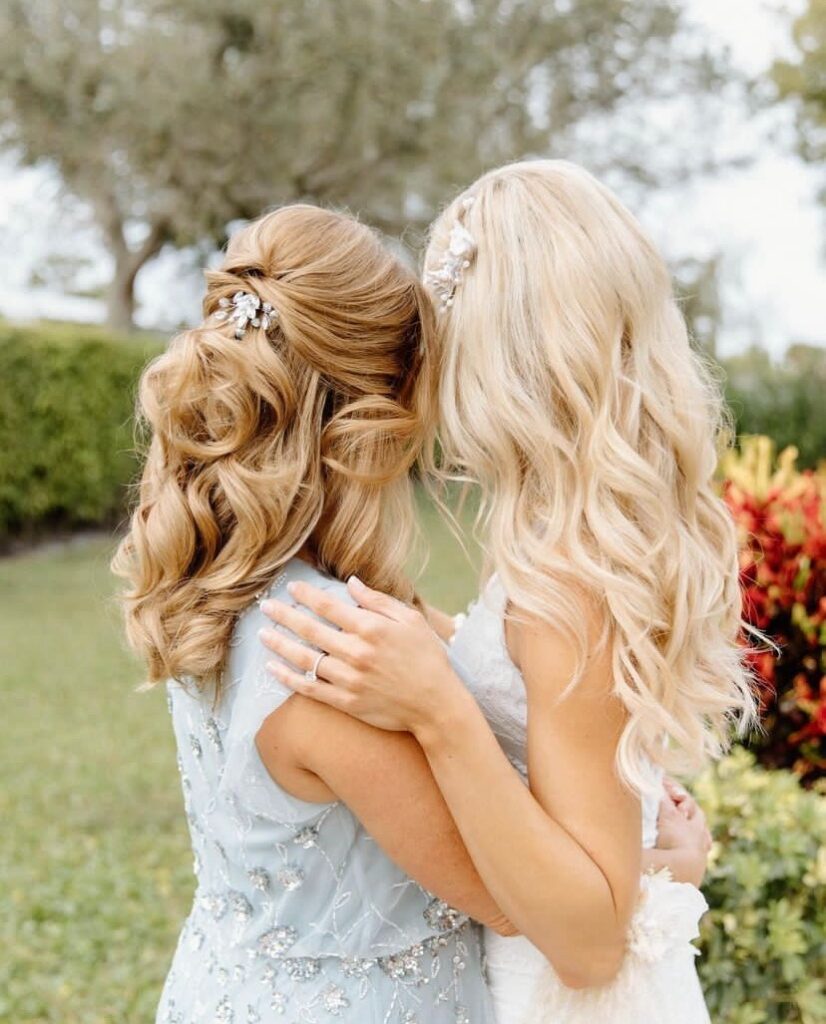
Fine hair has individual strands with a smaller circumference than average. Coarse hair has thicker strands.
What Fine Hair Can and Can’t Do (and Why)
Fine hair is versatile and can look genuinely beautiful for bridal styling, but it has real limitations. It loses volume quickly under its own weight, which means styles that depend on body and fullness need structural support to maintain it. Heavy products weigh fine hair down and make it appear thinner and flatter than it actually is. And in humidity, fine hair loses the volume and structure that styling created as the strands absorb moisture from the air.
What fine hair does well: it accepts heat styling beautifully, it takes product evenly, and it looks clean and elegant in structured styles that work with its natural lightness rather than trying to make it look like something it isn’t.
The Best Updos for Fine Hair: Creating Volume and Hold
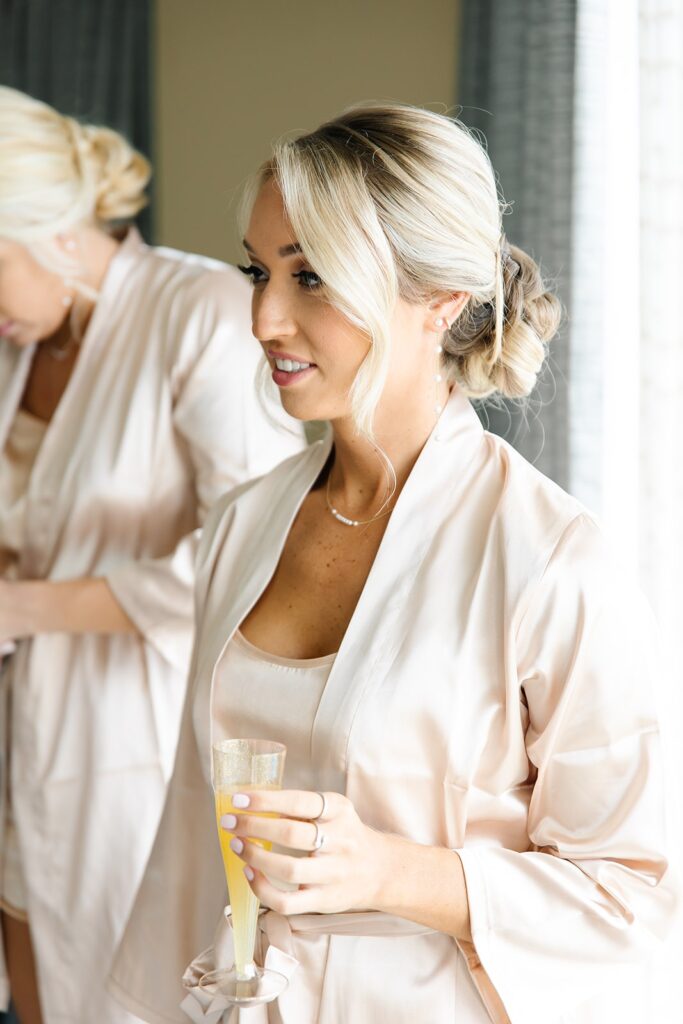
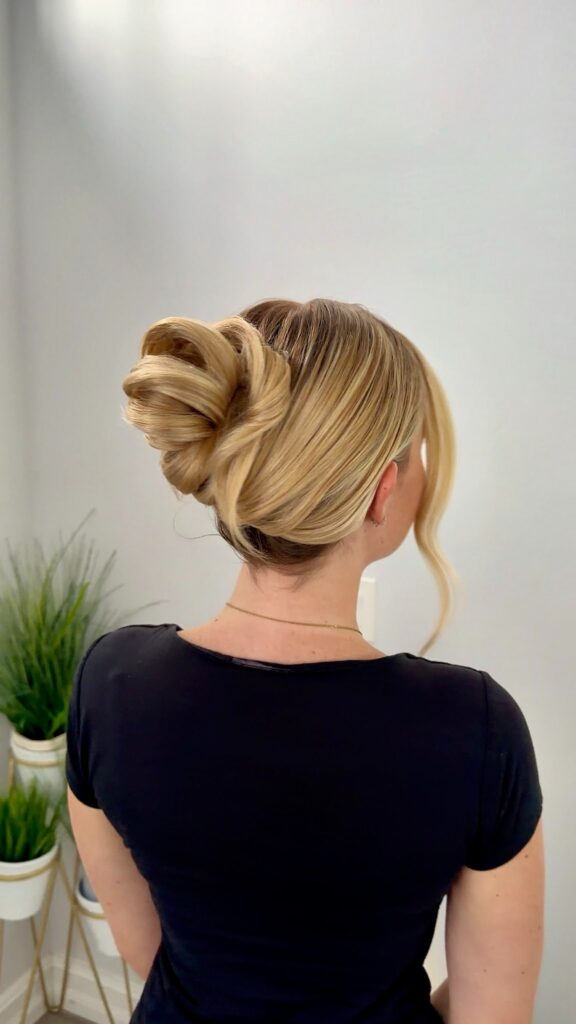
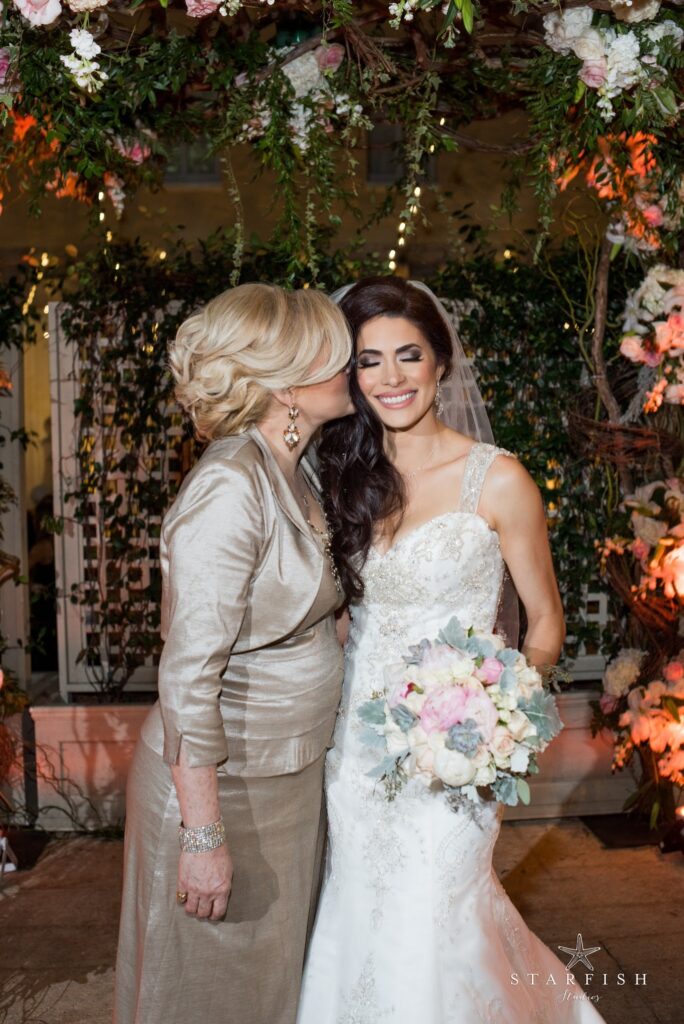
Structured updos are an excellent choice for fine hair precisely because the internal architecture creates the illusion of more volume and density than is actually present. A French twist, a rolled chignon, or a pinned updo built with strategic backcombing at the crown and smoothed at the surface can look full and elegant without requiring the kind of natural volume thick hair provides.
Adding fillers or hair extensions to fine hair is a great idea because it gives the extra fullness and thickness needed to create a beautiful full updo.
Loose Styles for Fine Hair: When They Work and How to Make Them Hold
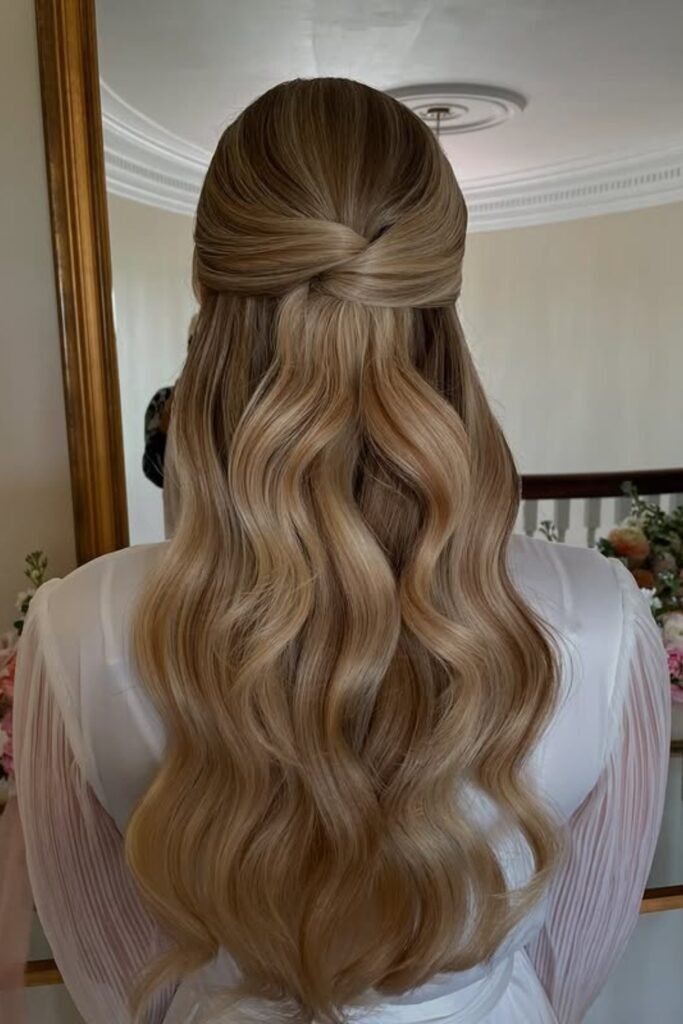
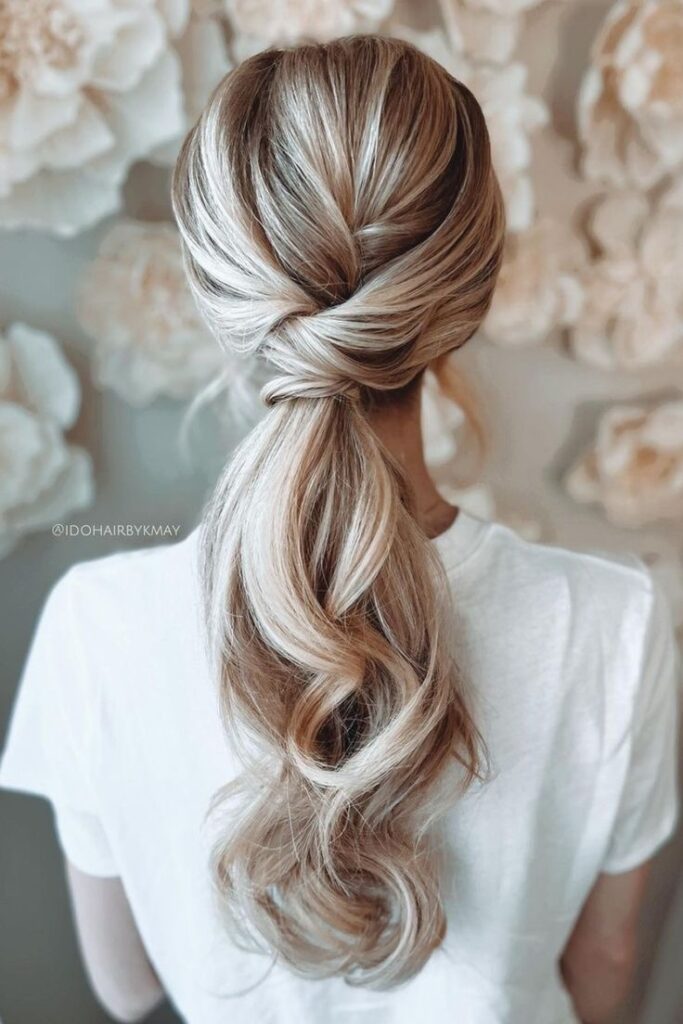
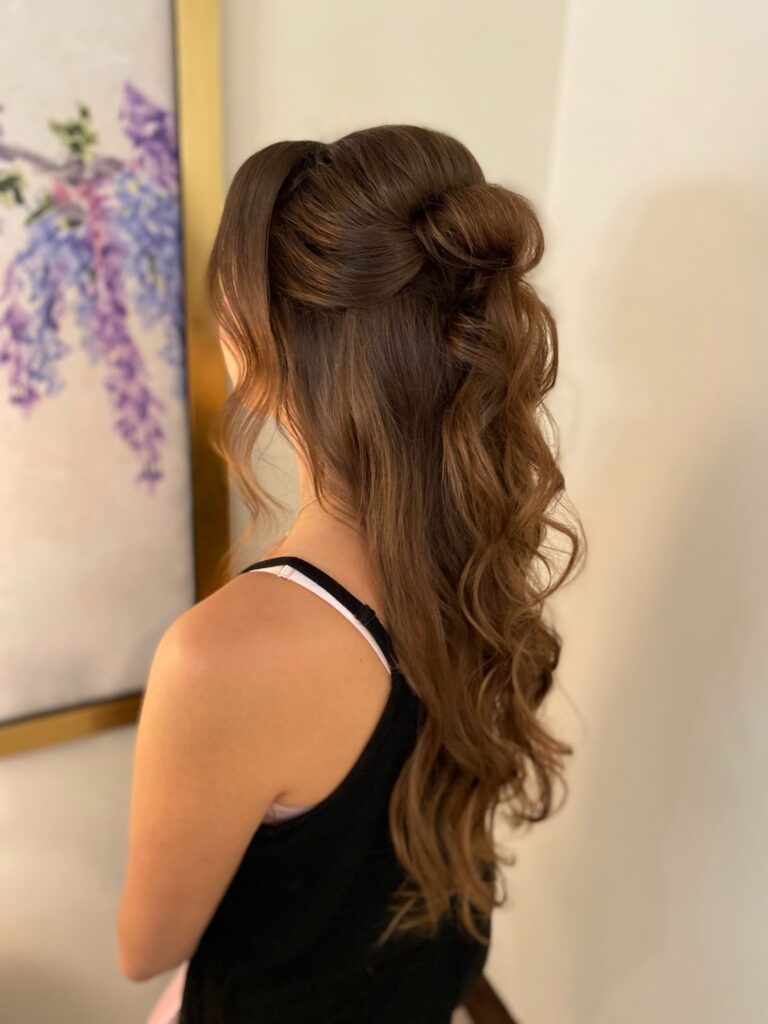
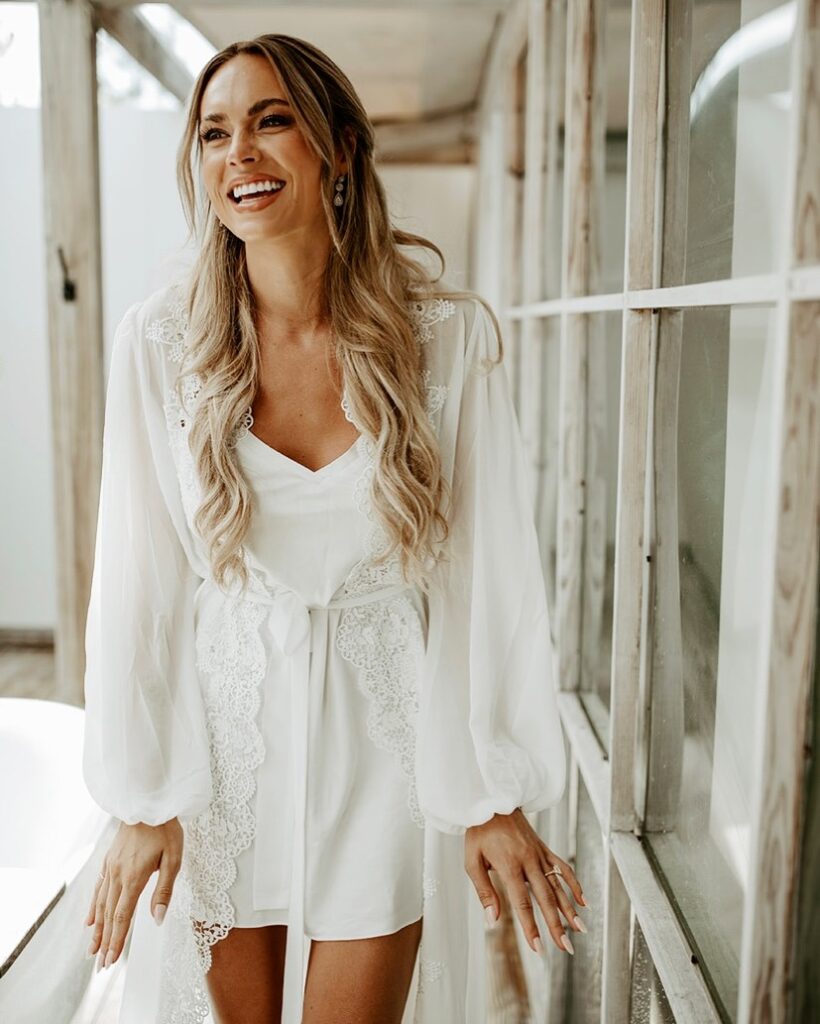
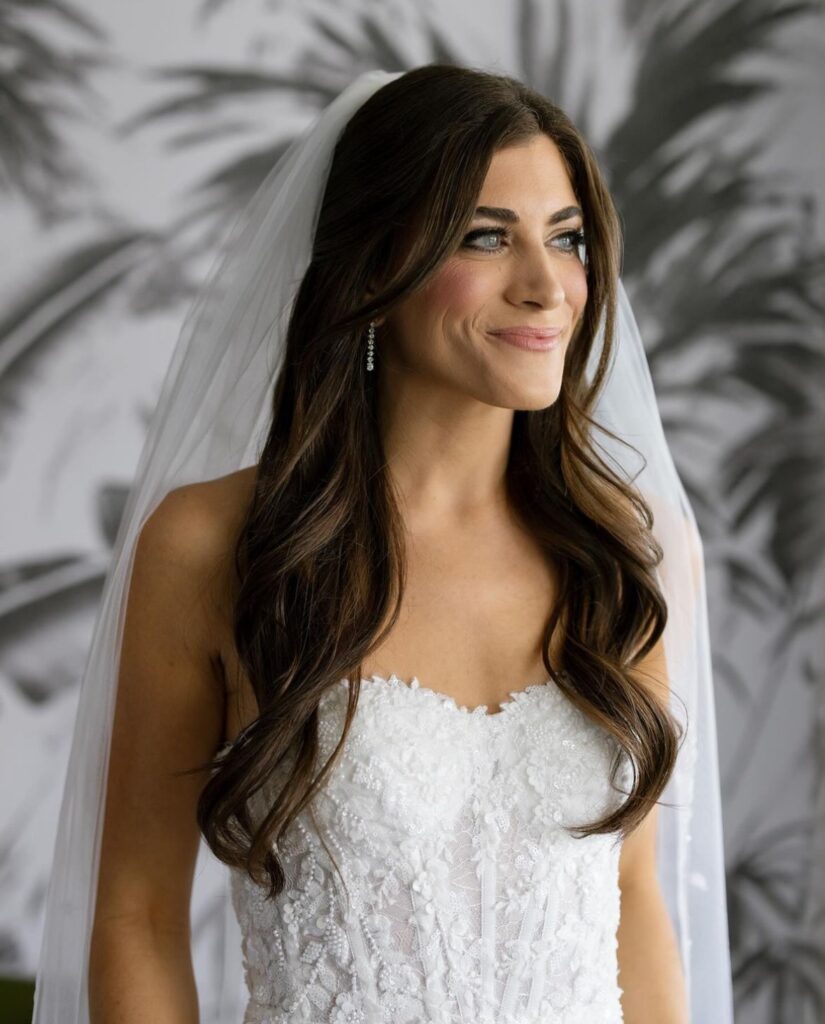
Loose styles are achievable with fine hair, but they require specific preparation and setting techniques to hold through a full day. A beach wave or half-up look in fine hair needs an artist who knows how to work with fine hair first and foremost. For products, I always start with a heat shield cream that has a light hold. I then build up fine hair by using a working hairspray on each section before curling, then clipping the curls up to cool, adding more flexible spray and a texturizing powder as I let each curl down. Again hair extensions for styles like this are almost a must with fine hair. Hair extensions add the fullness most fine haired ladies don’t have but they also hold a curl really well, so mixed in with your natural hair, it allows your curls to hold better throughout the day. I then finish with a firm-hold hairspray to maintain it.
In South Florida conditions, loose styles in fine hair are best suited to indoor or shoulder-season outdoor events. In outdoor summer conditions, the humidity typically overwhelms the setting products for loose fine hair within an hour or two.
Preparation and Product Strategies That Help Fine Hair Perform
The day before the wedding, fine hair often benefits from a blowout (not wet hair going to bed, which can cause the hair to set in whatever position it sleeps in). Clean, freshly styled hair with some volume built in is easier to work with and holds better than hair that hasn’t been prepared.
The morning of, fine hair should arrive clean and dry.
When Extensions Are Worth Considering for Fine Hair
If your desired style involves a fullness or length that your natural fine hair can’t realistically produce, extensions are worth discussing with your stylist. Clip-in extensions for bridal use, properly color-matched and properly placed, can add the visual density that allows your style vision to be achieved without fighting against the hair’s natural properties.
This conversation needs to happen well before the wedding day, including a dedicated extension trial where both the placement and the performance can be evaluated. Extensions also behave differently in South Florida humidity, which is one more reason to test them in the actual conditions before relying on them on the wedding day.
What Fine Hair Does in South Florida Humidity and How to Counter It
Humidity causes fine hair to absorb ambient moisture, which adds weight and reduces the volume built into a styled look. The hair also tends to lose any curl or wave pattern as the moisture works on the styling product. It also creates a frizzy look that only gets frizzier throughout the day without the proper preparations or onsite touchups by your stylist.
The most effective counter strategy is: strong-hold setting spray over the completed style, applied in two passes rather than one light pass. Anti-humidity finishing products designed to block the moisture absorption that causes this can extend performance, and your stylist will know which formulas work in South Florida conditions.
Bridal Hair Styles for Thick Hair
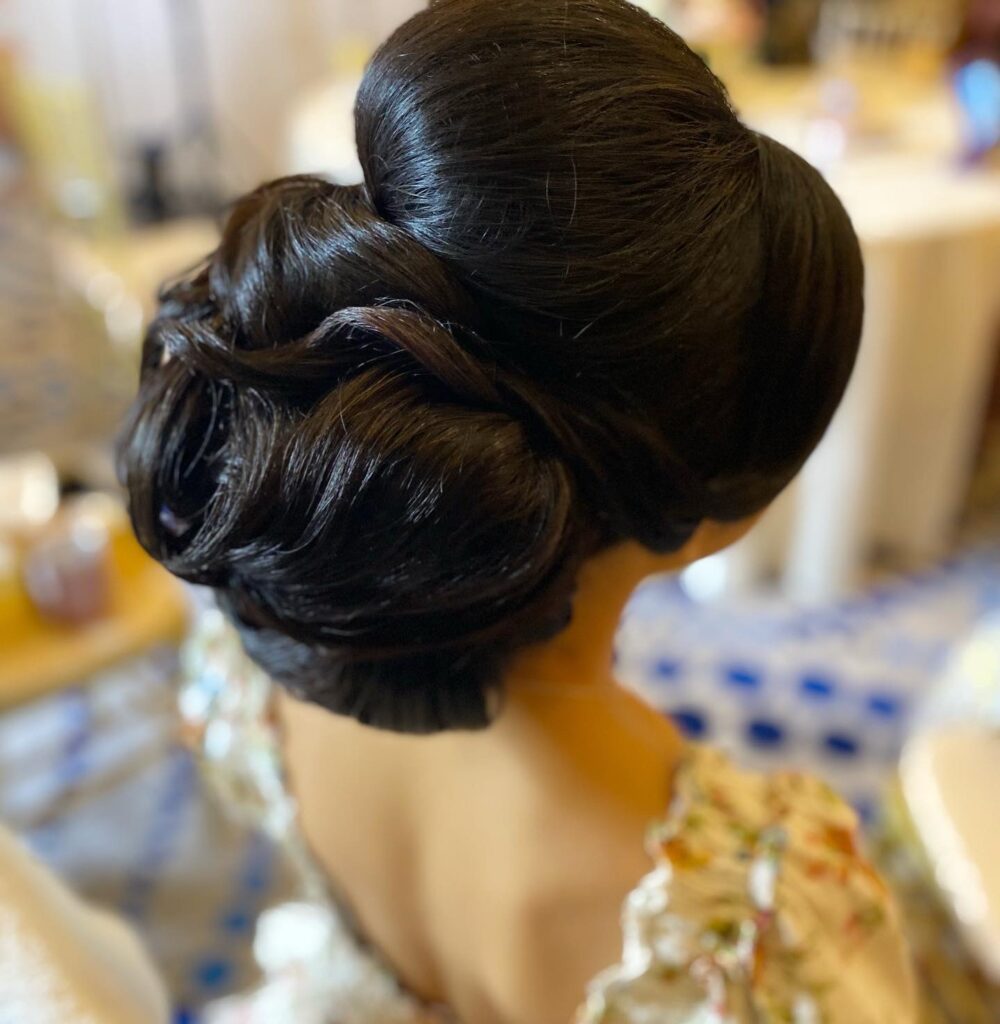
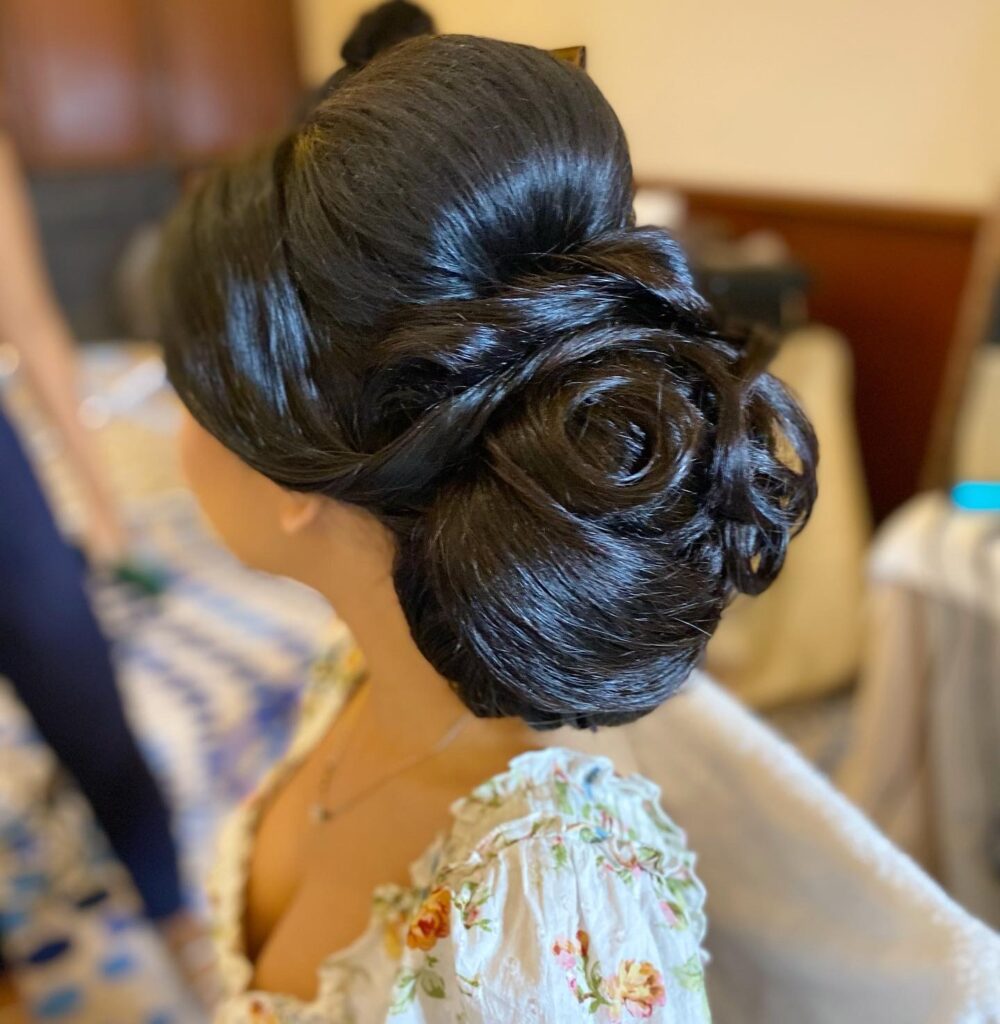
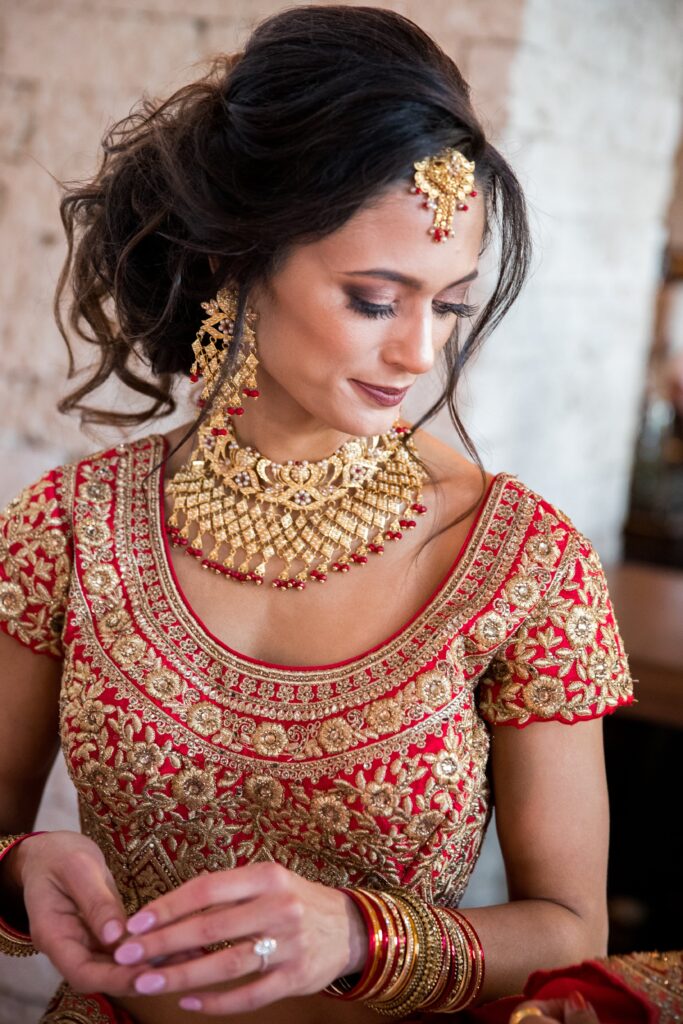
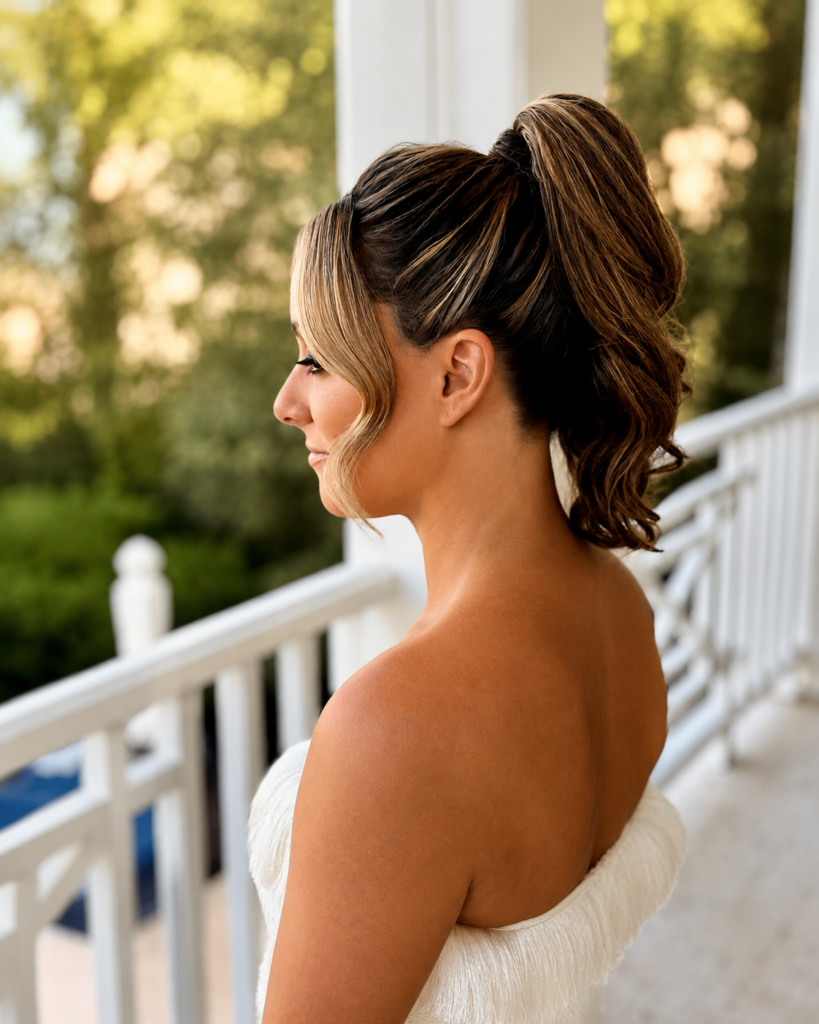
Thick hair is its own category of challenge and opportunity. Individual strands are coarser, the total density of the hair is often substantial, and the sheer volume of hair requires specific approaches to manage both during styling and in final appearance.
Working With Volume: The Advantage and the Challenge
Thick hair photographs beautifully. It has natural body, natural movement, and a lushness that photographs register clearly. The challenge is that the same properties that make it photograph well also make it resist some styling structures and take longer to prepare.
The advantage is real: thick hair can support loose styles in conditions where fine hair couldn’t, holds curls and wave patterns well (especially in drier conditions), and has the volume to support dramatic bridal updos that would require extensive padding or extension work for fine hair.
Structural Updos That Handle Thickness Beautifully
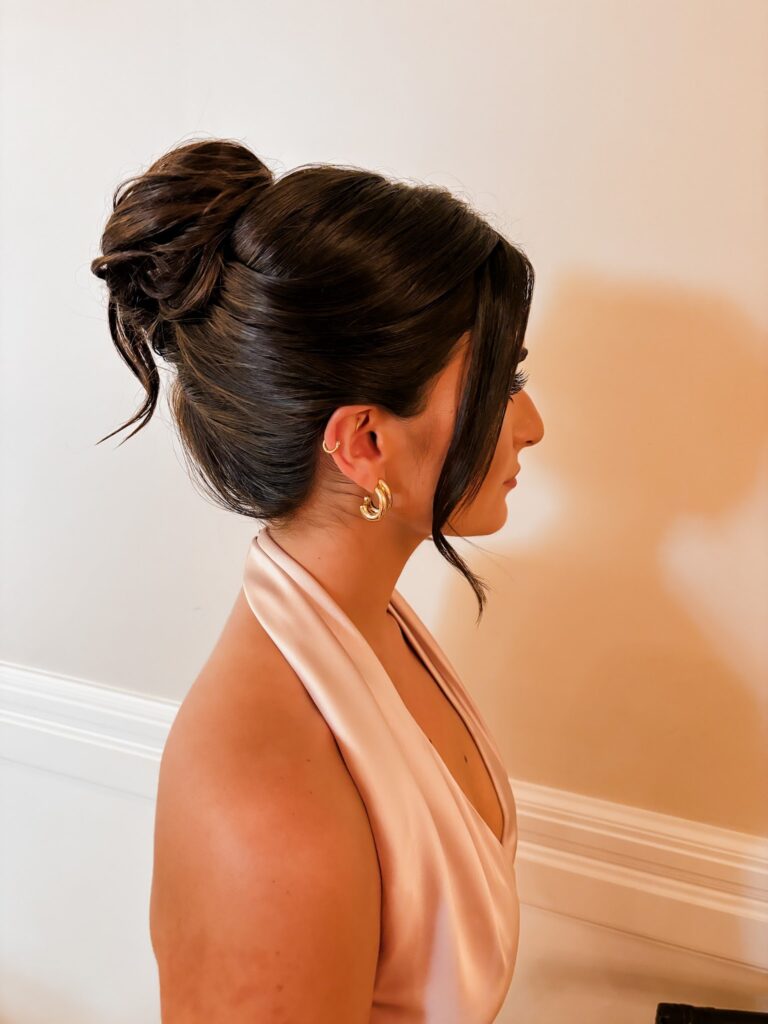
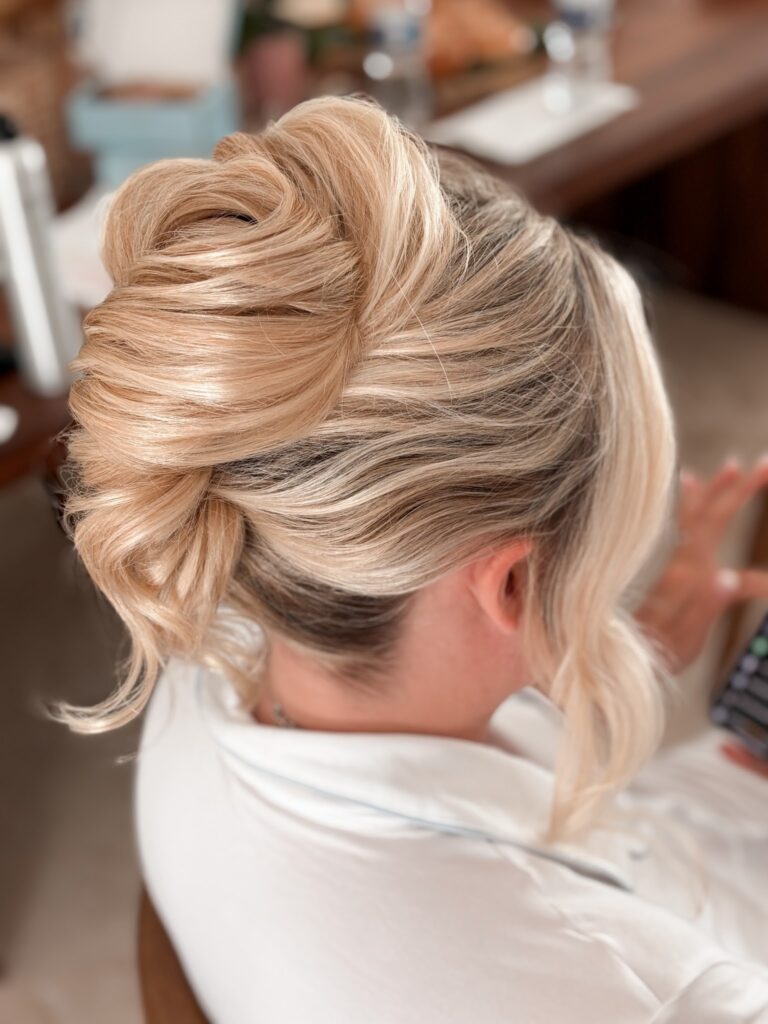
The best updos for thick hair use the volume intentionally. A grand, full low bun that incorporates all the hair’s natural density rather than compressing it. A textured chignon that distributes the thickness into a shape with visual interest. A structured updo with visible volume and a clean finish that communicates “intentionally full” rather than “barely contained.”
An artist experienced with thick hair knows how to build updo structure that distributes the weight evenly across the hairstyle, looks balanced from every position and doesn’t feel too heavy for the client to wear all day long.
Loose Styles for Thick Hair
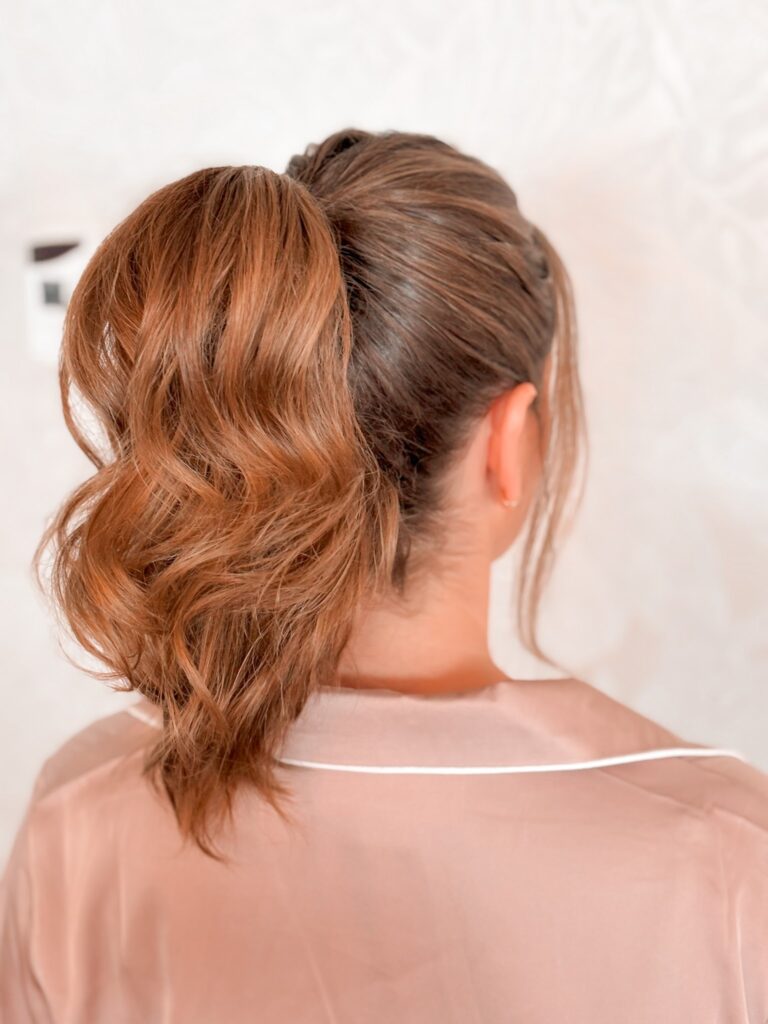
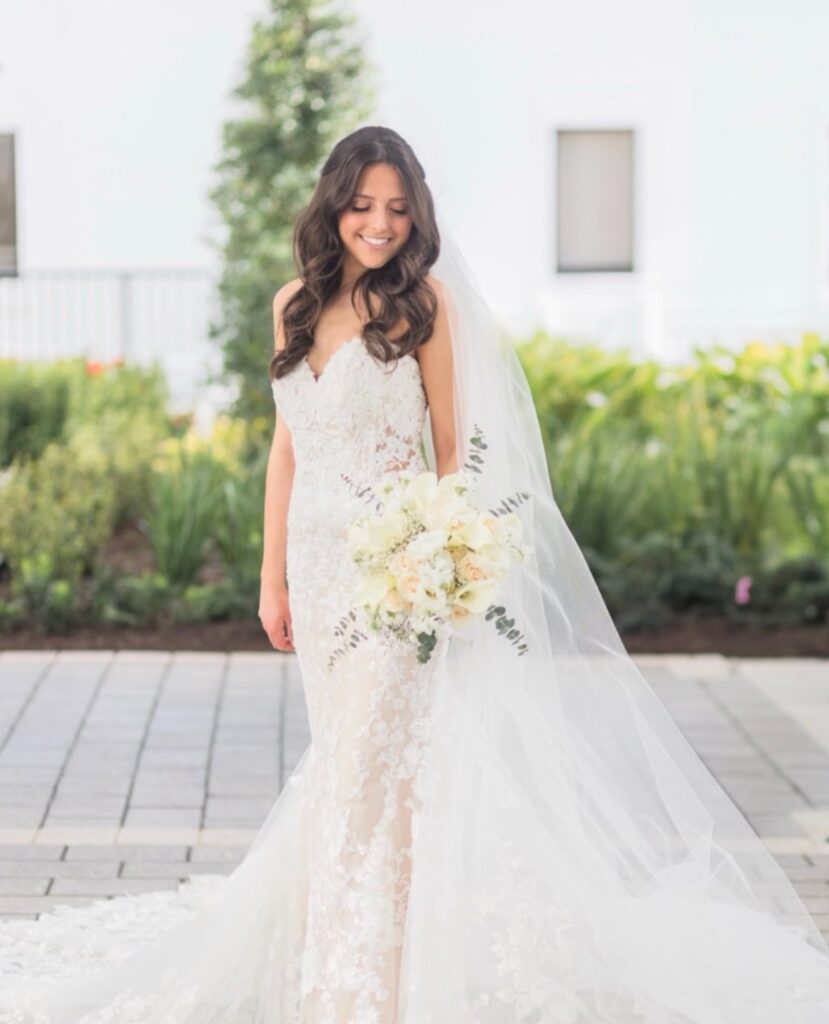
Loose styles in thick hair can be genuinely stunning. The natural volume creates wave and curl patterns with depth and movement that fine hair simply can’t produce. In South Florida conditions, thick hair holds loose styles better than fine hair because the individual strand weight creates more resistance to humidity-driven deflation.
Timing Reality: Why Thick Hair Services Take Longer
This is one of the most practically important things to communicate to your stylist before booking: thick hair takes approximately 15 to 20 minutes longer to style than average hair for an equivalent style, sometimes more. For a blowout-and-updo combination, the additional time can be 30 minutes or more.
Across a bridal party where multiple people have thick hair, this adds up significantly. A party of five where three members have thick hair might need an additional hour or more built into the morning timeline compared to a party where everyone has fine to medium hair.
Tell your stylist what your hair thickness actually is at the initial booking conversation. This is not something to find out the morning of the wedding when the timeline is set and there’s no room to absorb it.
Product and Technique Considerations for Thick Hair
Thick hair often needs stronger holding products in greater quantity than fine or medium hair. It also absorbs product differently: what creates a light, touchable finish on fine hair can disappear into thick hair without leaving any visible effect. Your stylist will adjust product quantity and formulas based on what they see when they assess your hair, but understanding that thick hair typically needs more product helps calibrate expectations.
Bridal Hair Styles for Wavy Hair
Wavy hair is one of the most workable textures for bridal styling. The natural wave pattern can be curled or straightened, polished or teased: artist can work with it, enhance it, or set it in a different direction depending on the desired outcome.
Embracing vs. Controlling the Wave Pattern
The most important early question for wavy-haired brides is: do you want a style that embraces your natural wave pattern, or a different curl/wave all together?
Embracing the wave means enhancing what’s already there: building on the natural pattern with texturizing products and diffusing, creating loose waves or a textured updo that works with the hair’s natural tendency. This produces the least styling stress on the hair, holds the best in humidity (because the style is working with what the hair naturally does), and often photographs beautifully.
Controlling the wave means using heat and product to either straighten the hair or set it in a more deliberately structured curl or wave. This is absolutely achievable, but it requires more time, more product, and in South Florida conditions, more maintenance over the course of the day as the natural pattern reasserts itself.
Styles That Showcase Natural Waves
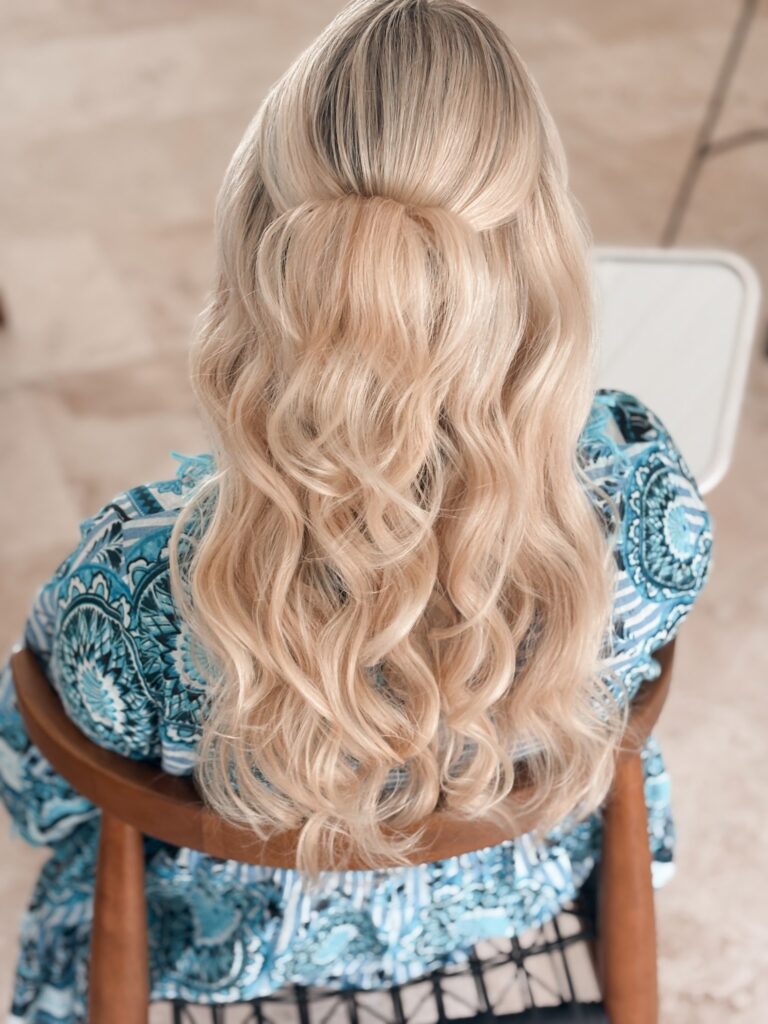
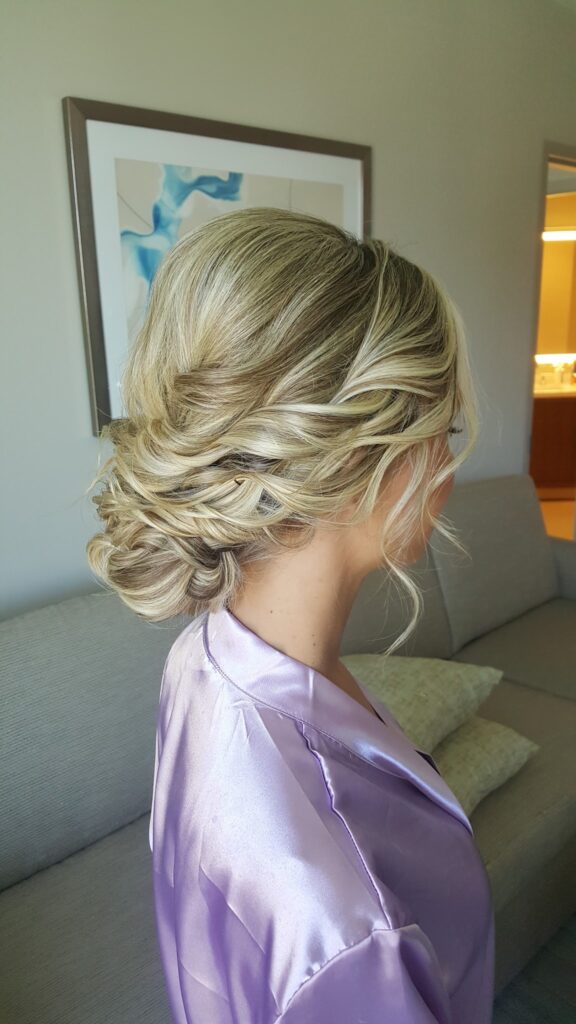
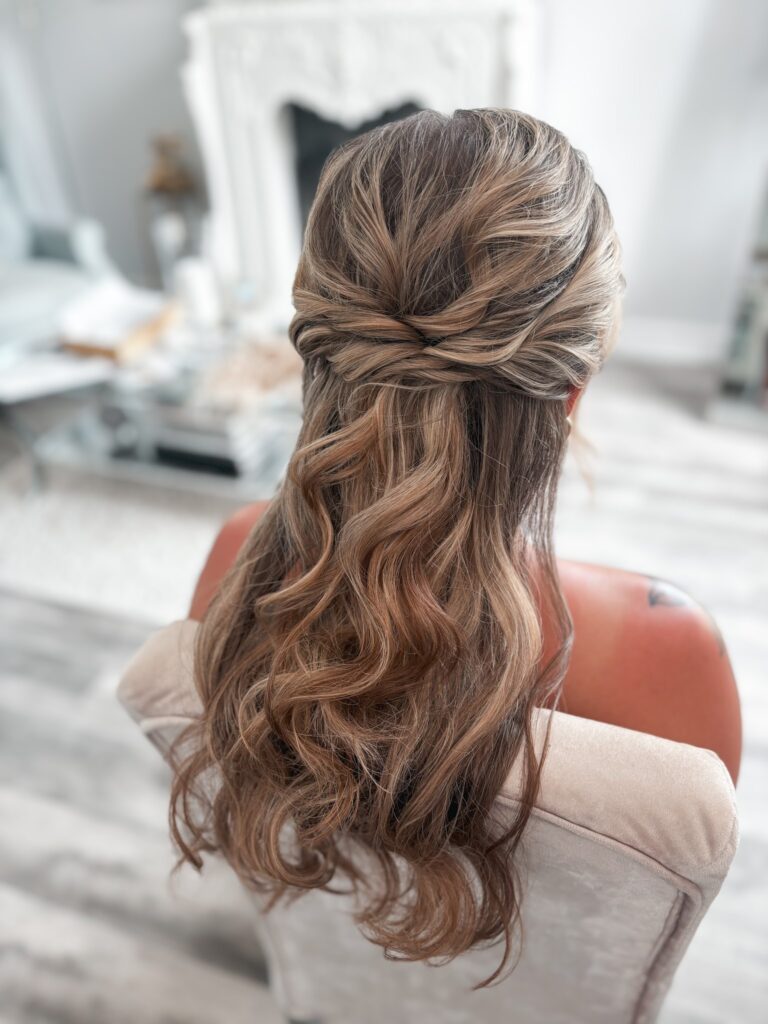
A loose, textured half-updo that frames the face and lets the natural wave flow. A low bun with intentionally undone pieces around the face. A textured braid that picks up the wave pattern in its structure. These styles read as effortless and natural-looking in photography, which is increasingly what modern bridal images favor, and they hold well because they’re working with the hair rather than against it.
How Wavy Hair Responds to South Florida Humidity
Wavy hair’s natural pattern will reassert itself in humidity, even with strong-hold products. This isn’t necessarily a problem: if the style was designed to embrace the wave, the humidity simply enhances the look. If the style was designed to appear smooth or to hold a very specific wave pattern, the humidity will move the style toward the hair’s natural default over the course of the day.
Planning a second look for the reception, where the hair can be refreshed or transitioned to match the evolved texture rather than trying to restore the original style exactly, is often a better use of touch-up time than fighting the humidity’s effect on wavy hair throughout the day.
Bridal Hair Styles for Naturally Curly Hair (Type 2C–3C)
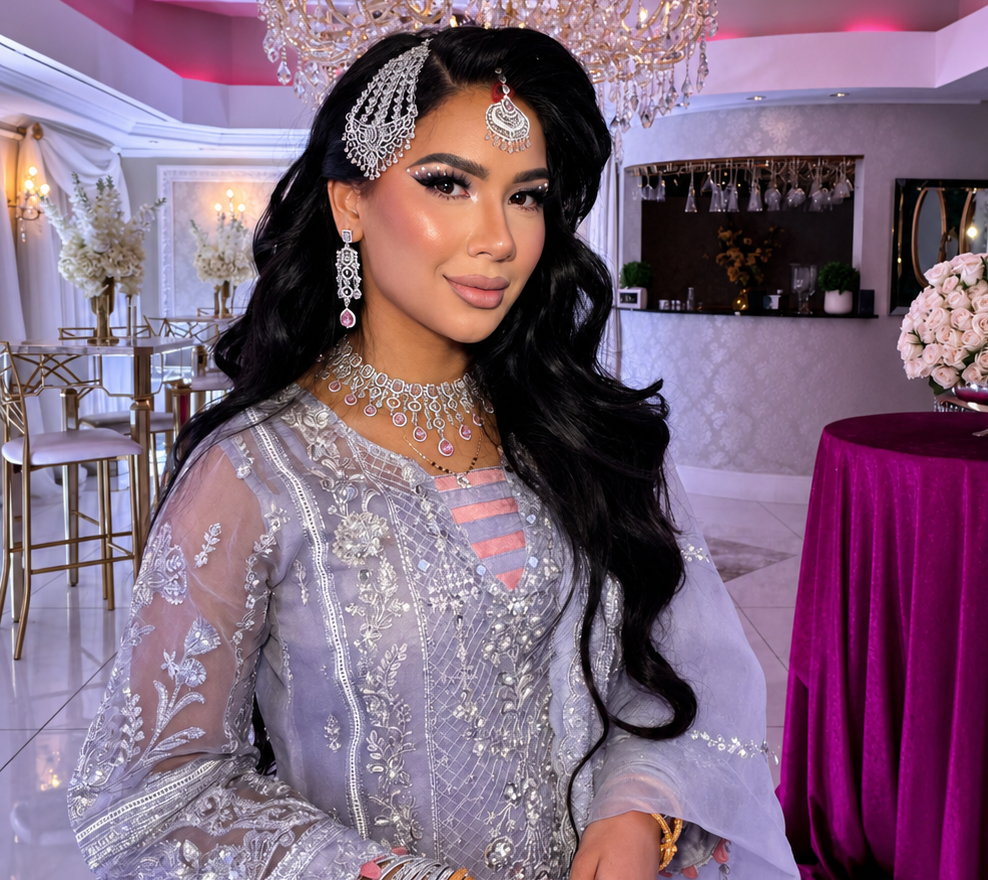
Curly hair in the 2C through 3C range has a defined curl pattern with significant natural movement and texture. Styles that honor that pattern and work within what the curl naturally does produce the best results; styles that fight against it create tension, damage potential, and looks that don’t hold.
Working With the Curl Pattern: Why It Produces Better Results
A naturally curly bride who tries to achieve a fully smooth blowout for her wedding day is asking her hair to be something it isn’t for ten to twelve hours in South Florida conditions. That’s a losing proposition. The curl pattern will reassert itself with humidity, the heat styling required is significant, and the result rarely looks as clean in photographs at hour five as it did at hour two. You will need constant touchups which gets in the way of enjoying your day and takes time out of your day as well.
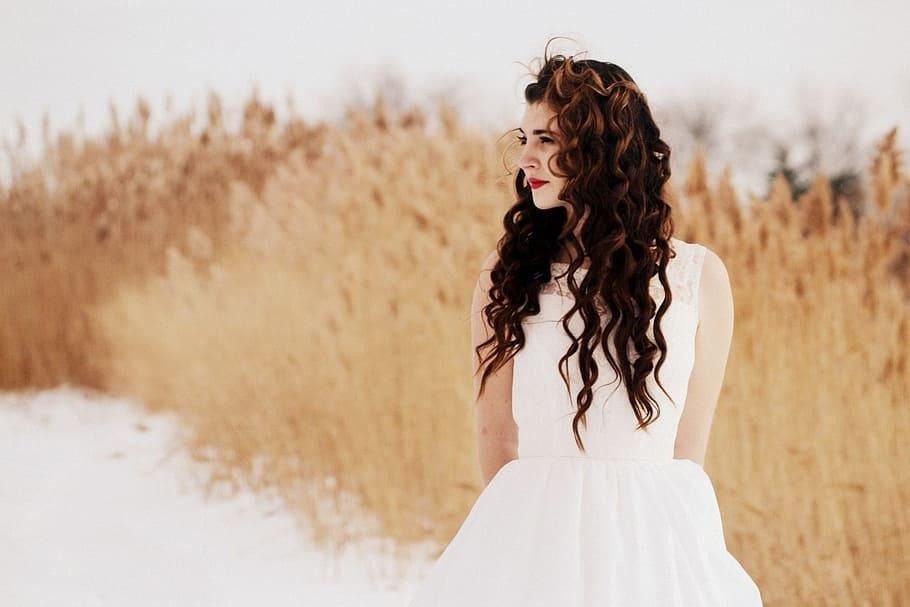
Working with the curl, by contrast, means building on what’s already there. Curl-enhancing styles look intentional, beautiful, and modern. They hold well because the style is aligned with the hair’s natural behavior. Natural curls can be polished with a small barrel curling iron and curly hair texture creams and oils. This gives a natural curl a more polished, beautiful and structured look.
Updo Options That Honor Natural Curl Texture
A curly updo, built with the natural texture as part of the design rather than smoothed into invisibility, is one of the most striking bridal hairstyles available. Twisted and pinned sections that show the curl pattern. A gathered low bun that uses the curls’ natural formation as part of the texture of the style. A framed half-up with defined curls flowing down the back.
These styles require a stylist who knows how to work with curly texture specifically: how to define the curl without frizz, how to pin curly sections so they hold without distorting the curl pattern, and which products support curl definition while also providing hold.
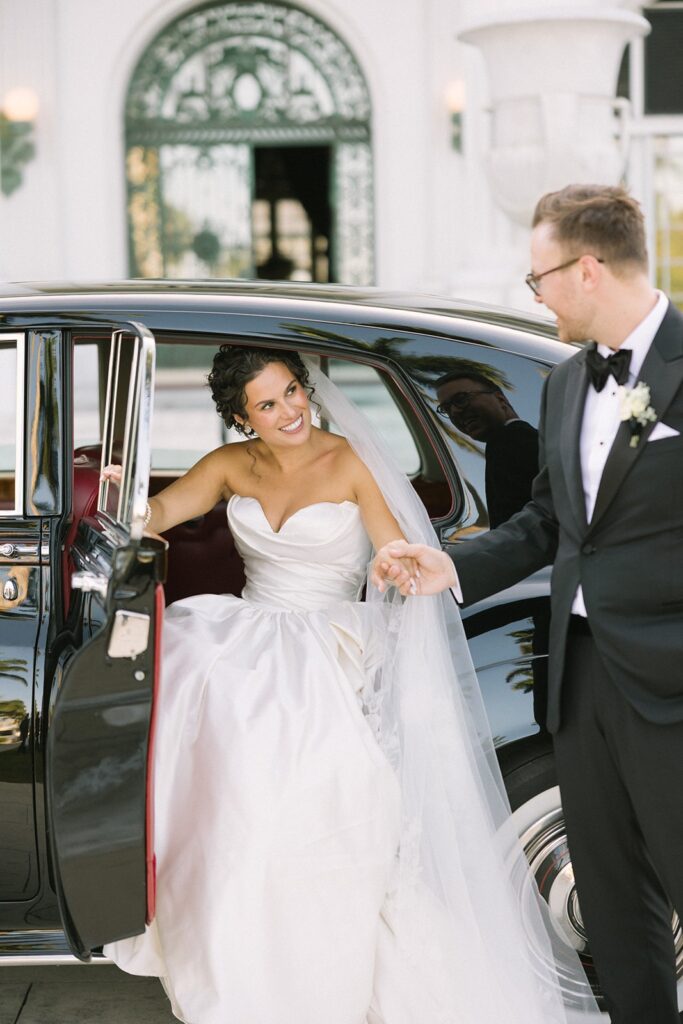
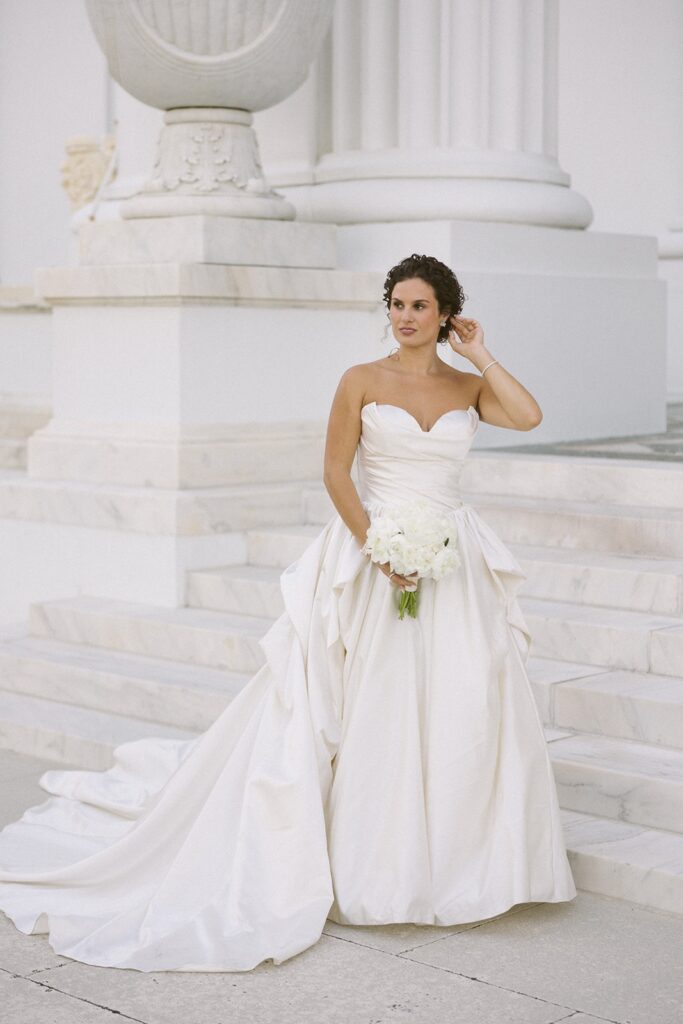
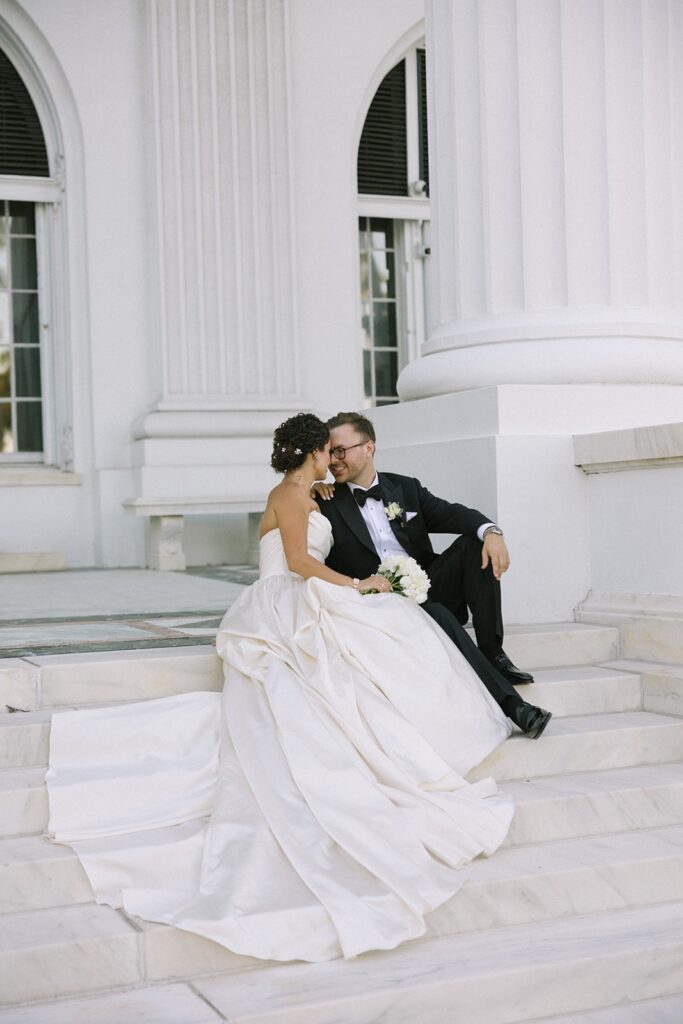
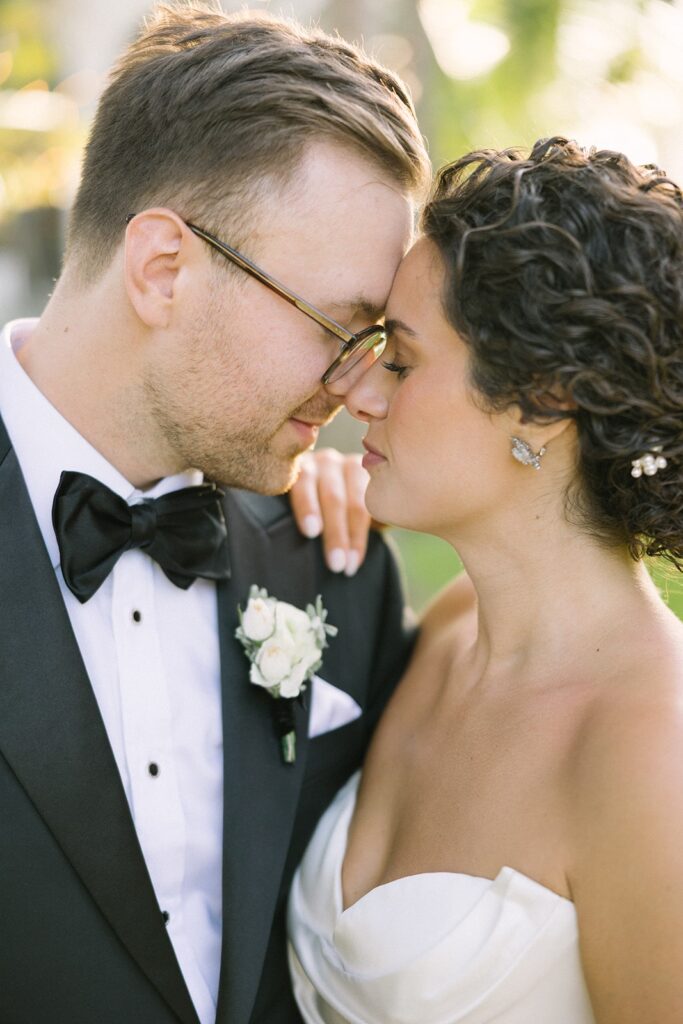
Loose Curly Styles for the Reception or All Day
Loose, defined curls worn down or half-up photograph beautifully and are increasingly popular for brides who want to wear their natural texture on their wedding day. In South Florida conditions, they hold best in drier months and with strong anti-humidity finishing products. In summer outdoor conditions, a loose curly style should be accompanied by a plan for the reception: either a professional touch-up to refresh the definition, or a planned transition to an updo for the evening.
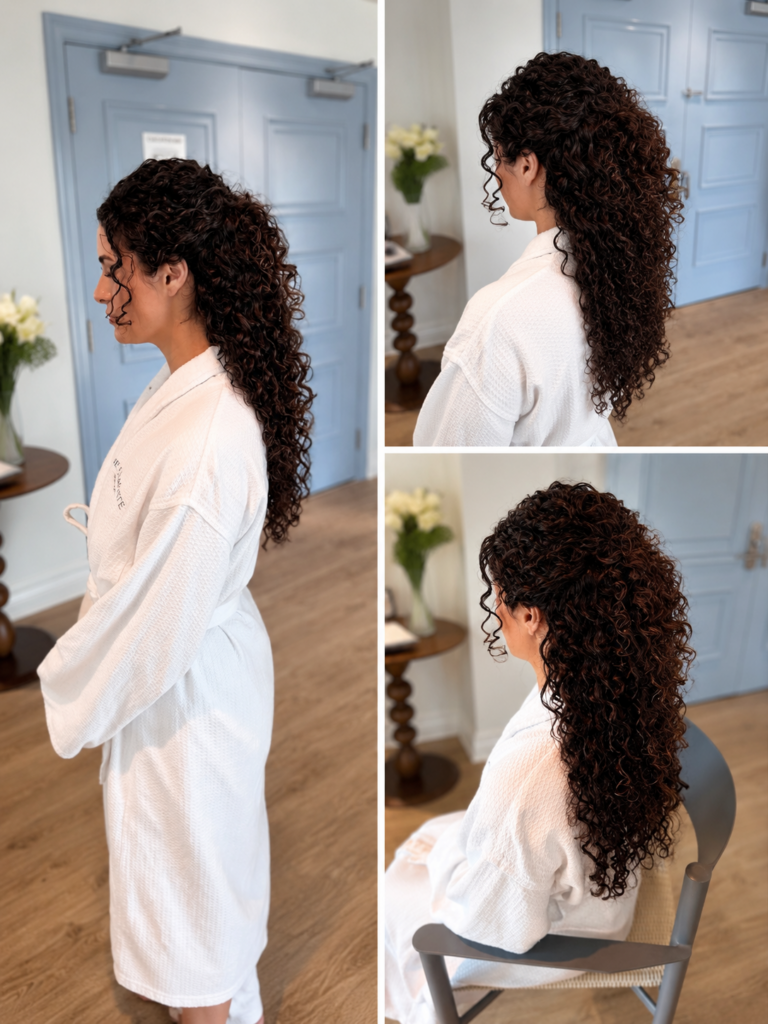
Curl-Specific Preparation: The Night Before and Morning Protocol
The night before: wash and condition with products designed for your specific curl type. Apply a leave-in conditioner and a curl-defining cream or gel Typically I tell my brides to do their normal hair routine, using products they normally use every day depending on what your curl needs for definition. Style loosely: either air dry or diffuse, then sleep in a loose protective style (a loose bun or a scrunchie, not a tight band that leaves a crimp). Do not sleep on a cotton pillowcase; silk or satin reduces friction-related frizz.
The morning of: arrive with hair that is fully dry and has the night’s product already in it. Do not arrive with wet hair expecting it to be styled from scratch in the morning timeframe. There’s just not enough time on the wedding morning for this, unless otherwise discussed with your stylist. The stylist will refresh and rework the curl pattern, not start over from wet. This is an important logistics point that many curly-haired brides miss.
Products That Curl Needs vs. Products That Weigh It Down
Curly hair needs moisture-supporting products that enhance definition without adding weight: curl creams, lightweight gels that define and hold without crunch, and finishing products that seal the cuticle to reduce frizz. It does not need heavy waxes, heavy oil-based products applied to the surface, or anti-frizz serums with silicones that coat the strand and prevent moisture balance.
Your stylist who specializes in curly texture knows the product categories that work. If you’ve been managing your own curls for years, you likely have some sense of what your hair responds well to. Share that information at the trial.
What Humidity Does to Curly Hair and How to Seal Against It
Without a humidity-sealing product, curly hair in South Florida absorbs ambient moisture and expands. The curl pattern becomes frizzy, the definition loosens, and the volume increases beyond what it was when it was freshly styled. This is the humidity effect on curly hair, and it’s very visible.
The primary counter is sealing: applying a product that creates a barrier on the hair strand to slow the rate of moisture absorption. This can be a finishing serum, a hold spray with humidity-blocking properties, or a product designed specifically for this purpose. The seal doesn’t eliminate the humidity effect entirely but slows it significantly and extends the definition’s hold.
Bridal Hair Styles for Coily and Tightly Coiled Hair (Type 4A–4C)
Type 4 hair has the tightest curl pattern and the most specific preparation and styling requirements of any texture category. It is also some of the most striking and versatile hair for bridal styling when a stylist who knows what they’re doing is involved.
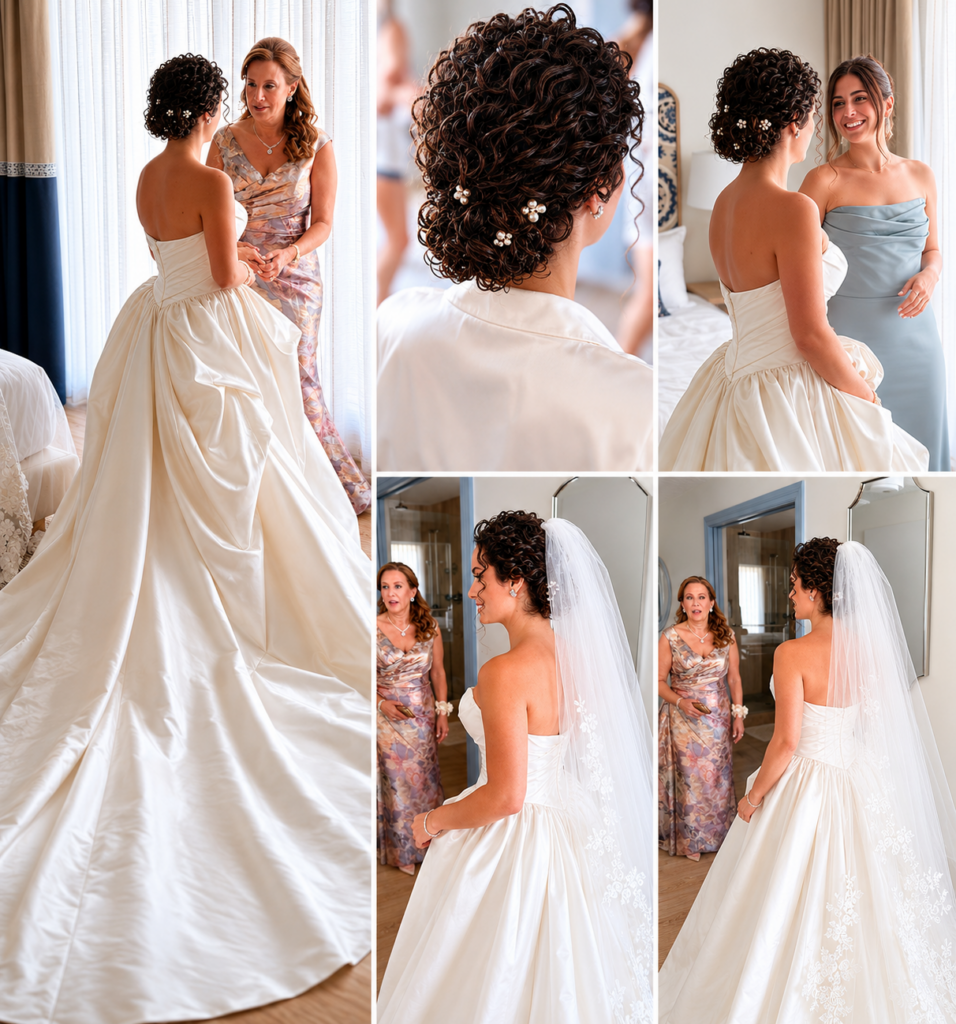
The Style Landscape for Coily Hair at Weddings
Coily hair supports a wide range of bridal styles: elaborate updos natural texture looks that celebrate the coil fully.
What doesn’t work: forcing Type 4 hair into styles designed for straight or wavy hair without the preparation and product knowledge specific to this texture.
The Preparation Timeline for Coily Textures
Type 4 hair often needs to begin its preparation 24 to 48 hours before the wedding day. The night before: wash with a moisturizing shampoo, deep condition, detangle carefully with a wide-tooth comb, apply a leave-in conditioner and a sealing product (butter or oil), and set the hair in whatever overnight style supports the next morning’s look (loose braids, twists, etc).
The morning of: arrive with hair that has been through the overnight protocol and is in its prepared state. Do not arrive with day-old dry hair that hasn’t been moisturized, or with freshly washed hair that doesn’t have the overnight preparation time. Both scenarios require the stylist to solve problems before styling begins.
Finding a Stylist With Real Natural Hair Experience
For Type 4 hair, stylist selection is more critical than for any other texture. Not every bridal artist has genuine experience with coily textures, and the difference between someone who does and someone who doesn’t is visible in both the styling process and the result.
Ask to see portfolio images specifically of Type 4 natural hair, bridal updos on coily texture, and natural texture-forward bridal styles and their curly haired brides they’ve previously styled. Ask about their experience with your specific subtype. An artist who regularly works with natural hair will have confident, specific answers. One who doesn’t will be less specific.
Bridal Hair Styles for Straight Hair
Straight hair (Type 1) has no natural wave or curl pattern, which means the style depends on what’s built into it through heat and product rather than what’s natural in the texture. This is both a flexibility advantage and a structural challenge.
The Structure Challenge: Why Straight Hair Needs Architecture
Because straight hair has no natural texture pattern to contribute to the style, the architecture of the look must be built entirely through technique. A loose updo in straight hair is held by its pinning structure alone; there’s no natural wave to help the sections stay in place. A curl set in straight hair holds by product and setting alone, without the natural memory that wavy or curly hair contributes.
This means preparation matters even more for straight hair than for textured hair, and that styles need adequate internal structure to hold through the day.
Updos for Straight Hair: What Holds Best
Polished, sleek updos play to straight hair’s natural properties: clean lines, smooth surfaces, and an elegant, formal aesthetic. A classic French twist, a sleek low chignon, or an architectural high bun with a smooth finish all photograph beautifully on straight hair.
For styles with a more textured or loosely curled updo look, your stylist will use heat styling to create curl or wave into the sections before pinning them. The holding ability depends heavily on product application before and after heat styling, and in South Florida conditions, on anti-humidity finishing.
Loose Styles for Straight Hair: Adding Movement Without Losing Hold
Straight hair can hold a beautiful wave or curl for a loose bridal look, but the hold depends on setting technique. Curling iron or wand waves set into straight hair typically last four to six hours in a dry indoor environment with appropriate product. In outdoor South Florida conditions, the duration shortens significantly.
For loose straight-hair styles in warm, humid conditions, either plan for a touch-up during the reception transition or consider a half-up structure that pins the most important framing sections and lets the back sections evolve with the day more naturally.
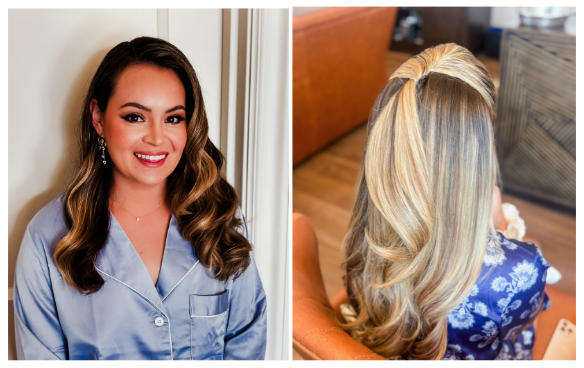
Preparation That Gives Straight Hair Something to Hold Onto
Straight hair that has been freshly washed with a light shampoo and blow-dried with a volumizing product is easier to style and holds curls and waves longer than flat, product-free hair or heavy-conditioned hair that’s too slippery for any structure.
Some straight-haired brides benefit from washing the night before rather than the morning of, as second-day hair has a slight natural texture that gives styling products and heat styling something to grip. This is a texture-specific choice worth testing at the trial.
What Humidity Does to Straight Hair and the Anti-Frizz Strategy
Straight hair, especially hair that’s been heat-styled into curls or waves, can frizz in humidity as the cuticle swells from moisture absorption. It can also revert toward its natural flat pattern as the heat-styling effect is challenged by the ambient moisture.
Anti-humidity finishing products, applied over heat-styled sections before they cool, help lock in the style before humidity can affect it. Setting spray with anti-humidity properties is the same first defense here as for other textures.
Color-Treated Hair: How It Affects Texture and Styling
Color-treated hair, whether lightened, highlighted, or permanently colored, often has different texture properties than the same hair untreated and gives the hair a better hold for any type of curl.
Bleached and Highlighted Hair: Texture Changes to Know About
Bleaching and highlighting processes open and damage the hair’s cuticle layer, making the hair more porous (it absorbs and releases moisture more readily), potentially more fragile, and sometimes coarser or drier in texture. This can change how the hair holds a curl, how it responds to product, and how it behaves in humidity Typically this type of hair holds a curl and style really well but it more prone to frizzing.
When to Time Your Last Color Service Before the Wedding
The general guideline is to complete any significant color service two to three weeks before the wedding and a toning or gloss service one to two weeks before. This timing allows the color to settle to its final result.
If you’re getting your first highlights or making a significant color change, do it at least six to eight weeks before the wedding so you have time to evaluate the result and adjust if needed.
Extensions: When They Help and What to Know
Which Textures Benefit Most from Extensions
Fine and shorter hair benefit most from extensions for bridal styling. Extensions can add the length needed for an updo that the natural hair alone can’t support, or add volume density that creates a fuller appearance in loose styles. They can also help create texture consistency across a bridal party where members have significantly different lengths.
For thick and textured hair, extensions are less commonly necessary and can actually add complexity to the styling process rather than simplifying it.
Types of Bridal Hair Extensions
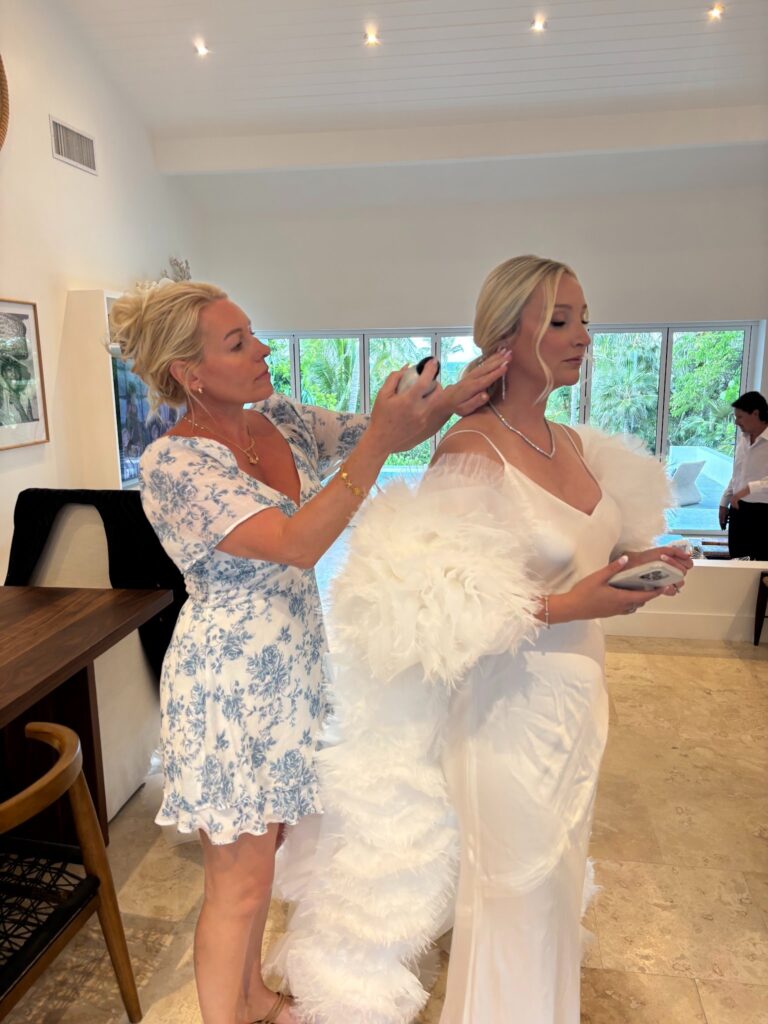
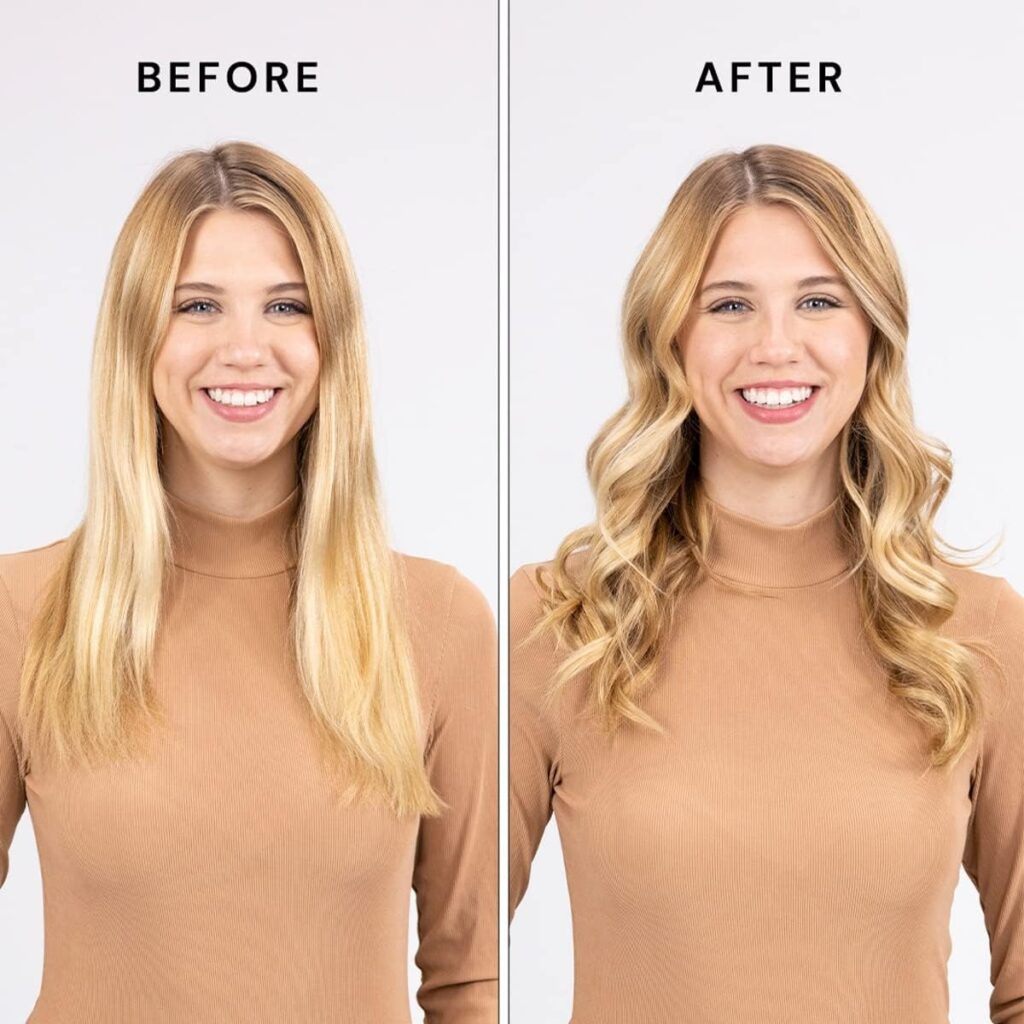
Clip-in extensions are the most common for bridal use: they’re applied and removed easily with tiny clips and they are generally quite light and comfortable to wear. They can be color-matched precisely, and work for most hair types and lengths. Tape-in or bonded extensions are a more permanent option but require professional placement and are typically more involved for a single-day bridal application. Not all hair extensions are just for length. In the photo below you can see they are used to add a little bit of volume but keep our clients length the same.
The Extension Trial: Why It Has to Happen Before the Wedding
Extensions, if they are a premium brand, hold up really well in humidity. They are also mixed with your natural hair so they help the entire style to hold up and your curls to stay curled longer.
How to Photograph Both Looks at the Trial
At the trial, photograph the finished look from multiple angles in multiple lighting conditions. Your stylist will normally do this. Take a photo at the beginning of the trial, and plan to take another at the two-hour mark of wearing your hairstyle, and again at the four-hour mark if possible. This shows you what the style actually looks like as time passes, in real conditions, which is the information that matters for your wedding day expectations.
Pre-Wedding Hair Care by Texture
Timing Your Last Cut, Color, and Treatment
For all textures: complete any significant cut or color service two three weeks before the wedding. Final trim two to three weeks before. Toning or gloss service one to two weeks before.
For Type 4 natural hair: complete any significant treatments (protein treatments, deep conditioning regimens) three to four weeks before and maintain the established regimen without introducing new products.
The Month Before: What to Do and What to Avoid
The month before the wedding is not the time to try new products, new treatments, or new color processes. It’s the time to maintain what’s working and keep the hair in the condition your stylist assessed at the trial.
Avoid over-processing with heat styling in the weeks before the wedding. For straight and wavy hair that will be heat-styled on the wedding day, keeping heat exposure moderate in the preceding weeks preserves the hair’s health and styling responsiveness. Applying hair masks and moisturizing masks a few times a week will help the hair to stay in optimal shape for the big day.
Frequently Asked Questions
What bridal hairstyle works for every hair texture?
Soft, free-flowing, romantic updos are the most adaptable bridal hairstyles. An updo can be built to suit fine hair, thick hair, natural and coily hair, and straight or wavy hair. The shape, technique, and product choices are different for each texture, but the updo category adapts to all of them.
What bridal hairstyles work best for natural and coily hair?
Natural looking updos built with twisted or polished sections, are the strongest choices for Type 4 textures. The most important factor is a stylist with genuine Type 4 experience and a preparation protocol that begins the night before.
How do I choose bridal hair if I have fine hair?
Start with styles you’re drawn too and you love. Have them on hand to talk through with your hairstylist. An experienced hairstylist will be able to explain tips and techniques we use, that can re-create the look you want. Extensions are worth considering if your desired look requires more fullness than your natural hair provides.
What should I do with thick hair for my wedding?
Thick hair is versatile and can support grand updos, cascading loose styles, and textured chignons. The key consideration is timing: thick hair takes 15 to 20 minutes longer to style on average, and the morning timeline needs to account for this from the initial booking conversation.
Should I get hair extensions for my wedding?
Extensions are worth considering if you have fine or shorter hair and your desired style requires more length or volume than your natural hair provides. The requirement is a dedicated extension trial: not just a try-on, but a full test of how the extensions integrate, how they hold in South Florida conditions, and whether they suit your hair type. This trial should happen weeks before the wedding, not on the day.
Book Your Texture-Specific Bridal Hair Consultation with Phairis Luxury
Rebecca Mousseau and the Phairis Luxury team work with every hair texture, including natural and coily textures, fine hair, thick hair, extensions, and everything in between. Every styling decision starts from your actual hair and your actual wedding conditions, not from a style that was beautiful on someone with different hair in a different climate.
If you’re ready to start the conversation about your bridal hair, reach out to check availability for your date.
For more on planning your wedding day beauty:
To be iconic?
Ready
I'm excited to hear all about your wedding/Event day. Have a question about a booking and hair styling sessions? View our services and talk to us, also dont forget to check our portfolio
