
Mobile Wedding Hair and Makeup Artist: The Questions That Actually Matter

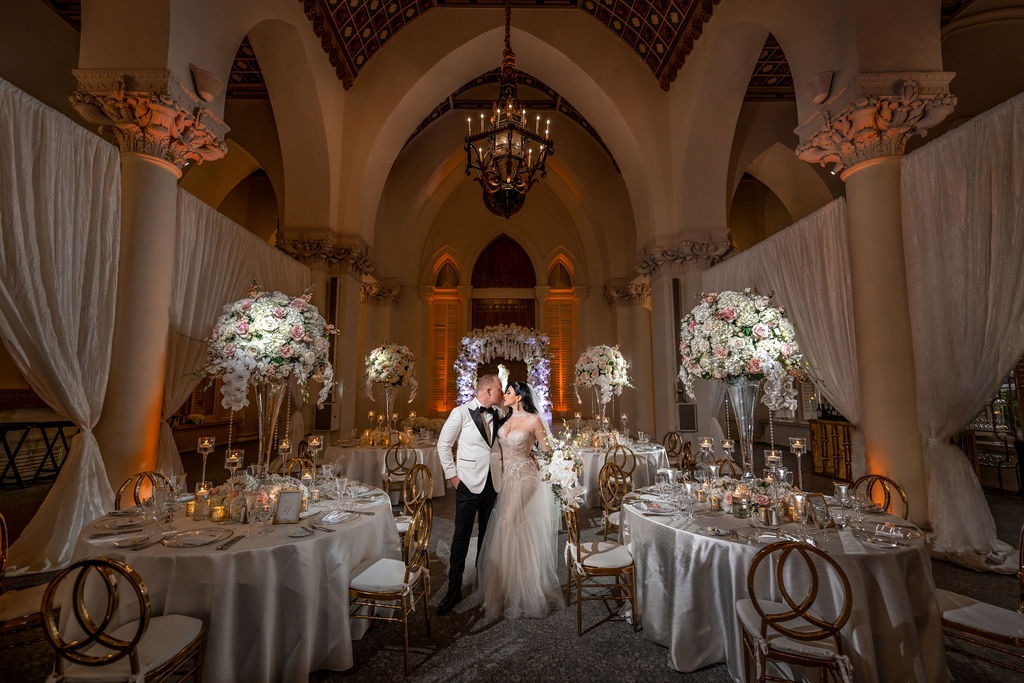
A mobile wedding hair and makeup artist travels to you instead of hosting you at a salon. Before booking one, confirm five things in writing: how the travel fee is calculated, how many named artists will attend, whether they take more than one wedding per day, what happens if the artist cancels, and whether they carry liability insurance.
Most brides book a mobile artist on the strength of a portfolio. That’s understandable — the work is what you’re paying for, and a beautiful feed is persuasive. But a portfolio tells you what an artist can do on a good day with a cooperative client and unlimited time. It tells you almost nothing about whether five artists will arrive at your venue on the correct morning, with the correct equipment, in time to finish before your photographer walks in.
That second thing is a logistics problem. And logistics is where mobile bookings actually go wrong.
This guide is the vendor-side version of the conversation. It covers the twelve questions worth asking before you sign anything, what a solid answer sounds like, and what should make you pause.
What a Mobile Wedding Hair and Makeup Artist Actually Is
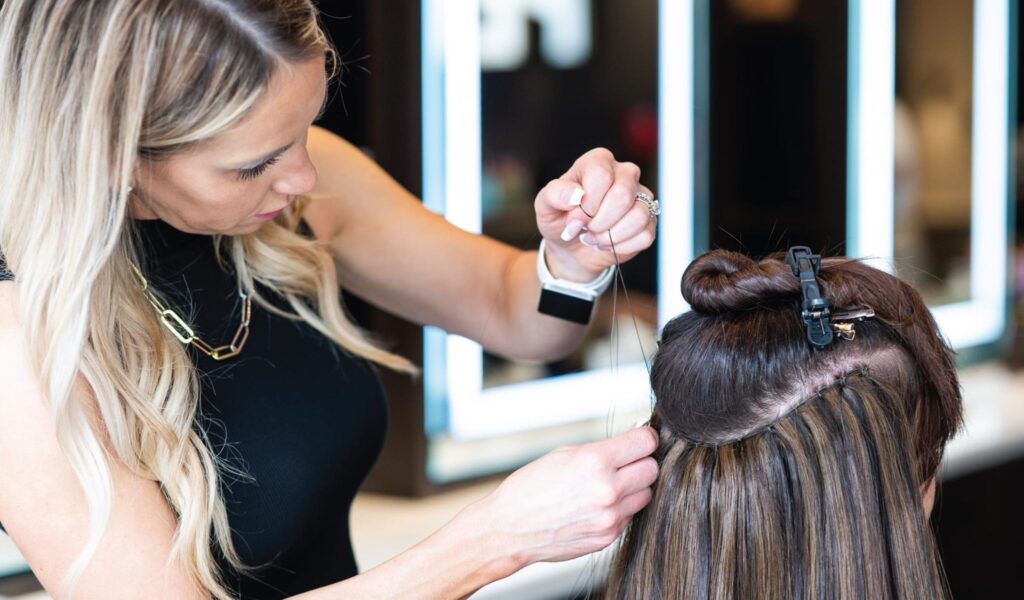

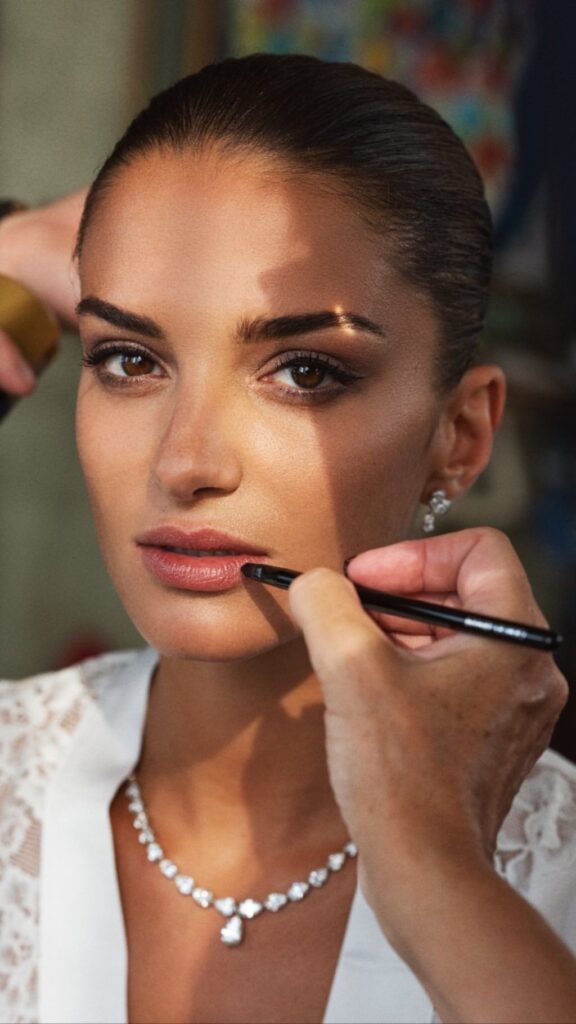
A mobile artist brings the salon to your location. Instead of the wedding party driving to a studio at six in the morning, the artist arrives at your hotel suite, your venue’s bridal room, or the house you’ve rented, sets up temporary stations, and works there for the duration of the morning.
That’s the whole model, and it’s now the default for weddings. The reason is simple: moving eight people across town on a wedding morning is a scheduling risk nobody needs. Traffic, parking, one person running late — any of it collapses a timeline that was already tight. Keeping everyone in one room removes that variable entirely.
Mobile vs. Salon-Based: What Changes for You
The service itself is largely the same. The differences are practical.
You control the environment, which is a mixed blessing. A salon has good lighting, proper chairs, and outlets everywhere. A hotel suite may have one window, a bathroom mirror, and two outlets behind the bed. A good mobile artist will ask about the room before the day, and will bring portable lighting and extension cords. An artist who never asks about the space is an artist who has not thought about your morning.
You also control the schedule more directly. There’s no salon appointment slot to fit into, so the running order is built around your ready-by time rather than around the studio’s booking calendar.
And you’re paying for travel time in some form. Every mobile artist prices this in, whether it appears as a separate line or is folded into the service rate.
Solo Mobile Artist vs. Mobile Team
A solo artist who does both hair and makeup works beautifully for a bride alone, or a bride plus one or two others. Past that, the arithmetic stops working — and it’s arithmetic, not preference. One artist completes roughly one to two people per hour. A party of eight needing both hair and makeup is sixteen services. A solo artist would need most of a working day.
A team runs parallel stations: hair on one side of the room, makeup on the other, people rotating between them. That’s how a party of eight finishes in four or five hours instead of ten.
The question isn’t which model is better. It’s which one matches your headcount.
The 12 Questions to Ask Before You Book
Ask these on the enquiry call or in the first email exchange. An experienced artist will have crisp answers to all twelve, because they get asked constantly. Hesitation on several of them is information.
1. How is your travel fee calculated?
A good answer: A specific method — mileage at a stated rate, a flat fee by zone, or a minimum service spend that waives travel entirely. Plus whether parking, valet, or resort access charges are included or billed on.
What should worry you: “We’ll figure that out closer to the date.” Travel is the easiest thing in the world to quote once the venue is known.
2. How many artists will actually be on site, and who are they by name?
A good answer: A number tied to your headcount and timeline, and either names now or a commitment to confirm names a set period before the wedding.
What should worry you: “We’ll send whoever’s available.” Agencies with deep benches are a strength, but you should still know who is coming and be able to see their work.
3. How many people can each artist complete per hour?
A good answer: Roughly one to two per hour, with the artist explaining what moves the number — hair length, texture, whether extensions are involved, how elaborate the style is.
What should worry you: An implausibly high number. If someone tells you one artist can do eight faces in three hours, they are describing rushed work.
4. Do you take more than one wedding per day?
A good answer: Either “no, one event per day,” or an honest explanation of how a second booking is staffed and why it won’t compress your timeline.
What should worry you: Vagueness. A second wedding on your date means someone is watching a clock while they finish your bridesmaids.
5. What happens if you get sick or have an emergency?
A good answer: A named backup, or a written commitment to provide a comparable artist from a defined roster. Agencies handle this structurally; solo artists should have a reciprocal arrangement with peers.
What should worry you: “That’s never happened.” It’s not a prediction question. It’s a contract question.
6. Do you carry general liability insurance, and can you issue a certificate of insurance to my venue?
A good answer: Yes, with a policy already in place and a straightforward process for issuing a COI when the venue requests one.
What should worry you: Confusion about what a COI is. Many luxury properties will not admit an uninsured vendor, and you do not want to discover that on the morning.
7. Is everyone on the team licensed?
A good answer: Yes, and a willingness to confirm it. In Florida, cosmetology licences are publicly verifiable through the state’s Department of Business and Professional Regulation.
8. When and where does the trial happen, and is travel charged separately for it?
A good answer: A clear location — studio or your home — and a clear fee structure. Trials are usually scheduled eight to twelve weeks before the wedding, close enough that your hair length and colour reflect the wedding day, far enough out that there’s time to adjust.
What should worry you: An artist who doesn’t offer a trial at all, or who wants to do it a year in advance.
9. What do you need from the venue — space, outlets, lighting, seating?
A good answer: Specifics. Window light, several accessible outlets, table-height surfaces, armless chairs. An artist who has thought about rooms will tell you exactly what makes a morning run smoothly.
What should worry you: “Anywhere is fine.” Anywhere is not fine, and you’d rather learn that now than at 7 a.m.
10. Do you stay for touch-ups, or leave after the morning?
A good answer: Either is legitimate — but it must be explicit. All-day presence is a genuinely different service from a morning appointment, and it is priced differently.
What should worry you: An assumption on either side. Brides regularly assume the team stays. Most teams don’t.
11. What exactly is in the contract?
A good answer: Deposit amount, balance due date, cancellation terms in both directions, rescheduling policy, named artists, services covered per person, travel fees, overtime rate.
What should worry you: No written contract, or a one-paragraph email treated as one.
12. Can I see three full real weddings, start to finish?
A good answer: Yes — full galleries, not curated highlights. Real weddings show you range across skin tones, hair textures, and lighting conditions, and they show you consistency.
What should worry you: A portfolio composed entirely of studio shoots and single close-ups.
How Travel Fees Really Work
Travel pricing is where quotes diverge most, and where brides most often compare two proposals that aren’t actually comparable.
Mileage, Zone Fee, or Minimum Spend
Mileage-based pricing charges a rate per mile beyond a free radius. It’s transparent and it scales predictably.
Zone pricing sets flat fees by geographic band — one figure for the immediate area, higher figures further out. Simpler to quote, and usually easier for you to budget against.
Minimum-spend models waive travel once your total booking passes a threshold. Common with team-based artists, and often the most economical structure for larger parties.
None is inherently better. What matters is knowing which one you’re being quoted.
The Fees Nobody Mentions
Parking and valet at resort properties. Day-pass or vendor-access fees that some venues charge. Toll roads. These are real costs and legitimate to pass through — but they should appear in the quote, not on the invoice afterward.
Overnight Stays and Early Call Times
Two situations trigger additional cost. A venue far enough away that the team can’t reasonably arrive by call time means accommodation the night before. And an unusually early call time — driven by a morning ceremony or a very large party — may carry a surcharge because it changes the artist’s entire day.
Both are reasonable. Both should be quoted upfront once your venue and timeline are known.
Per Artist or Per Booking?
This is the single question that most changes a total, and the one brides most often forget to ask.
If travel is billed per booking, one fee covers the team. If it’s billed per artist, a five-artist team means five travel fees. The difference between those two structures on the same wedding can be substantial. Ask directly.
Team Size Is a Math Problem, Not a Preference
The Artist-to-Person Ratio and Your Ready-By Time
Work backwards. Your photographer wants everyone finished by a certain hour. Count the services — every person needing hair, every person needing makeup. Divide by what a single artist completes per hour. That gives you artist-hours. Divide by the hours available, and you have the number of artists required.
A party of eight needing both services is sixteen services. At roughly ninety minutes per person for both, that’s twelve artist-hours. Across a five-hour morning, you need at least three artists — and that’s before buffer.
Any artist quoting you a team size should be able to show you this arithmetic. If they can’t, they haven’t done it.
Why a Solo Artist Stops Working Past a Certain Size
There’s no dishonesty involved when a solo artist takes a large party — usually just optimism. But the failure mode is predictable: the last two or three people get rushed, and one of them is often the bride.
Hair and Makeup Running in Parallel
Parallel stations are what make a large morning feasible. One person is having hair done while another is in the makeup chair; they swap. This roughly halves the elapsed time compared with sequential service, and it’s the reason team bookings are structured around at least one hair specialist and one makeup specialist rather than two generalists.
Contracts, Insurance, and Backup Artists
What Must Be Named in Writing
Your wedding date, venue address, and confirmed call time. Every person receiving services and what each is receiving. The number of artists and, where possible, their names. The deposit, the balance, and when the balance is due. Cancellation terms covering both your cancellation and theirs. The rescheduling policy — which matters more in Florida than most places, given hurricane season. Travel fees and any additional charges. An overtime rate, in case the morning runs long for reasons outside anyone’s control.
Why Luxury Venues Ask for a Certificate of Insurance
A COI is a document from the artist’s insurer confirming coverage, often naming the venue as an additional insured party. Many high-end properties require one from every vendor before granting access. It protects the venue, and by extension it protects you from a vendor being refused entry.
An artist who works luxury venues regularly will handle this as routine paperwork. One who’s never heard of it may not have worked those properties.
The Backup Clause — The Most-Skipped Term
Nobody enjoys discussing what happens if the artist can’t make it. It is nevertheless the most consequential clause in the contract, because it’s the one scenario you cannot solve yourself on the morning.
Ask for it in writing. A team-based artist can name a substitute from an existing roster. A solo artist should be able to name a peer with a reciprocal arrangement. “It won’t happen” is not a plan.
Your Trial, When You’re Hiring Mobile
Where It Happens and Whether Travel Is Billed
Most mobile artists run trials at their own studio, which keeps the cost down. Some will come to you for an additional fee. Either is fine — just confirm which, and confirm whether the trial fee is separate from or credited against the wedding-day balance.
When to Schedule It
Eight to twelve weeks before the wedding is the window. Earlier and your hair length, colour, and skin may have changed by the day. Later and there isn’t room to refine anything or, in the rare case it’s needed, to reconsider.
What to Bring and Wear
Wear a white top with a neckline similar to your gown. This matters more than it sounds. White changes how every colour on your face reads, and the neckline changes how a hairstyle sits and how the whole look is framed. A black crew-neck tells you very little about how you’ll look on the day.
Bring your veil or hair accessories if you have them, a photo of your gown, and reference images of looks you like — and, just as usefully, looks you don’t. Bring your extensions if you’re using them.
A Note on Airbrush
Airbrush is often presented as a premium mobile add-on, and it’s worth understanding before you pay for it. Airbrush foundation is close to unblendable once it’s on the skin — which makes it difficult to adjust, and unforgiving if you cry or if the day turns warm. It can read dry or slightly cakey on some skin types. Traditional application blends continuously, adapts to what your skin is doing on the day, and gives the artist far more creative range.
Airbrush had a strong run of five to eight years, and many artists have since moved back toward traditional application for bridal work. If an artist recommends traditional, that isn’t them cutting a corner.
Red Flags
No written contract, or an email exchange offered in place of one.
No trial offered, or resistance to the idea.
An unnamed team — “one of our artists” with no further detail, and no way to see their work.
No liability insurance, or no understanding of what a certificate of insurance is.
A portfolio made entirely of studio shoots, heavily filtered images, or single close-ups with no full-wedding galleries.
Pressure to pay the full amount upfront, particularly with a vague or missing cancellation policy.
Refusal to put the travel fee in writing before the deposit.
Booking multiple weddings on your date without a clear explanation of staffing.
Any one of these is worth a question. Several together is worth walking away.
How Phairis Luxury Answers These 12 Questions
We think the fairest thing to do in a guide like this is answer our own list.
We book one event per day. No second wedding, no compressed timeline, no clock-watching. That’s the single biggest structural decision we’ve made, and everything else follows from it.
Our team is twelve artists, led by Rebecca Mousseau, who has spent more than eighteen years in luxury bridal and editorial styling across 800+ brides and 5,000+ hairstyles. Team size for your wedding is calculated from your headcount and your photographer’s ready-by time, and we’ll walk you through that arithmetic rather than just quoting a number. Artists are named and licensed.
We are insured, and we issue certificates of insurance to venues as a matter of routine. We work regularly at properties including The Breakers, Four Seasons Palm Beach, The Addison, the Biltmore, and The Colony Hotel, all of which expect vendor documentation handled properly.
We stay all day. Not the morning — the day. Ceremony touch-ups, portrait touch-ups, second-look transitions. That’s the part of our service that differs most from a standard booking, and it’s why the word “concierge” appears in how we describe it.
Travel, trial arrangements, deposit and balance schedule, cancellation and rescheduling terms, and backup provision are all set out in the contract before any deposit is taken.
Frequently Asked Questions
Do mobile wedding hair and makeup artists charge a travel fee?
Almost always. It’s billed as mileage, a flat zone fee, or a minimum spend that waives it. Ask whether the fee is per booking or per artist — with a five-artist team, that distinction can change the total significantly.
How many people can one mobile artist do in a morning?
Roughly one to two people per hour for hair, and similar for makeup, depending on length, texture, and complexity. A party of eight with a single dual-skill artist is not realistic. You need parallel hair and makeup stations. Ourbridal party planning guide breaks the timing down in detail.
What happens if my mobile makeup artist cancels?
That depends entirely on your contract. A solo artist may have no substitute; a team-based artist can send a named backup. Ask for the backup clause in writing before you pay a deposit.
Does a mobile bridal artist need insurance?
Many luxury venues require a certificate of insurance before letting any vendor on site. An artist who can’t produce one may be turned away at the door. Check this at booking, not the week of the wedding.
Where does the trial happen with a mobile artist?
Usually at the artist’s studio or your home. Some charge travel for the trial separately. Book it eight to twelve weeks before the wedding, and wear a white top with a neckline similar to your gown. Our guide onwhat to expect at your bridal hair and makeup trial covers the appointment itself.
Is a mobile artist more expensive than going to a salon?
The service rate is often comparable. The difference is travel and the artist’s time on site. What you’re paying for is that nobody in your party leaves the venue on the wedding morning.
Ready to Learn More?
Once you’ve booked, the next thing worth understanding is how the morning itself unfolds — arrival, room setup, running order, and touch-ups. Our guide to on-site wedding hair and makeup walks through it hour by hour.
If you’re still deciding who to approach, how to choose a wedding hair and makeup artist in Florida covers how the state’s four regions differ and what that means for your venue.
To talk about your own wedding, check availability here or browse the full wedding hair and makeup service overview.
To be iconic?
Ready
I'm excited to hear all about your wedding/Event day. Have a question about a booking and hair styling sessions? View our services and talk to us, also dont forget to check our portfolio
