
Clip-In vs Tape-In vs Hand-Tied Extensions for Weddings: Complete Guide

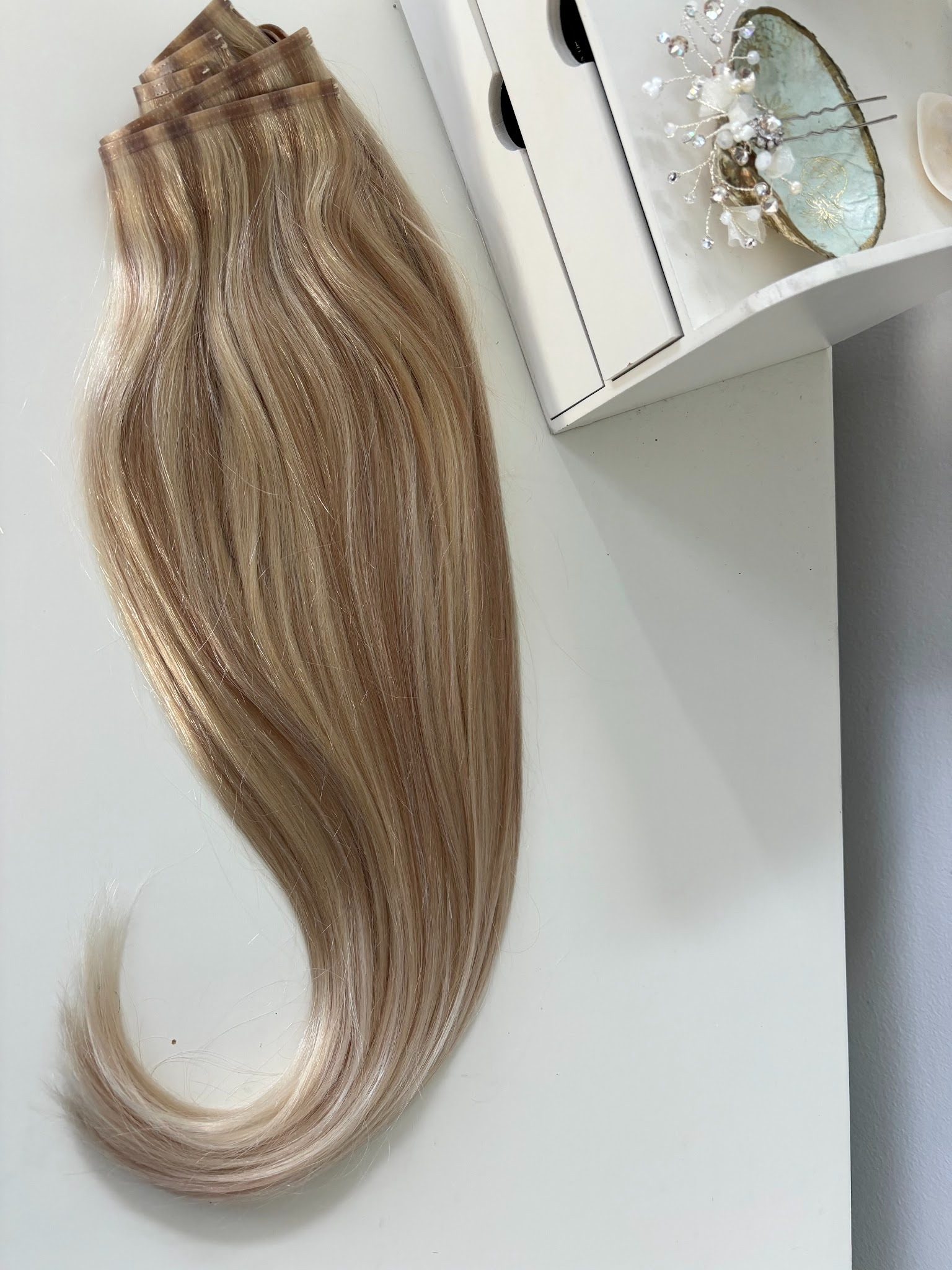
If you’ve already done some research on bridal hair extensions, you know the basics: there are different types, they work differently, they cost different amounts. What’s harder to find is a clear, honest breakdown of how those differences actually play out in a wedding context, where the stakes are higher than a regular event, and the conditions are more demanding than a normal day.
This guide does exactly that. It compares the three most common bridal extension methods, clip-in, tape-in, and hand-tied weft, across every dimension that matters for a wedding: cost, hair type suitability, how they feel and move, how they photograph, how they hold in outdoor conditions, and what they require from you before, during, and after the day. It ends with a decision framework so you can identify which method fits your specific situation.
If you haven’t read the foundational overview yet, the complete bridal hair extensions guide covers all five extension types including keratin bond and halo, with full cost ranges and a who-needs-extensions assessment.
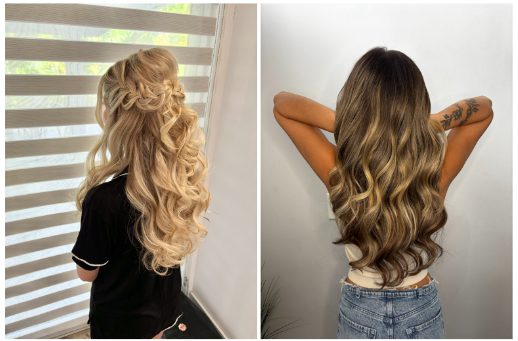
Understanding the Three Methods First
Before comparing them, it helps to understand what makes each method technically distinct.
How Clip-In Extensions Work
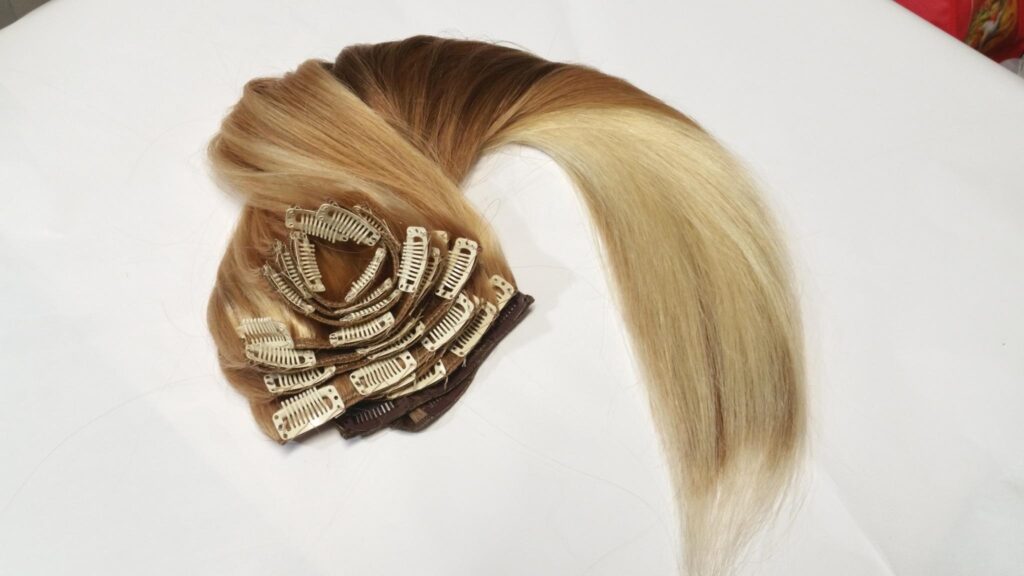
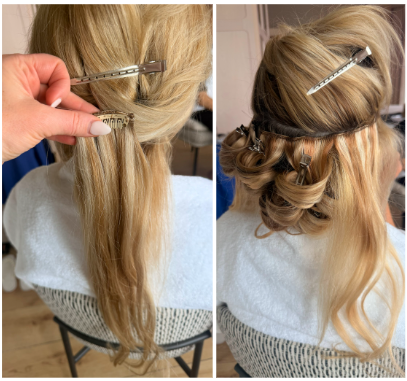
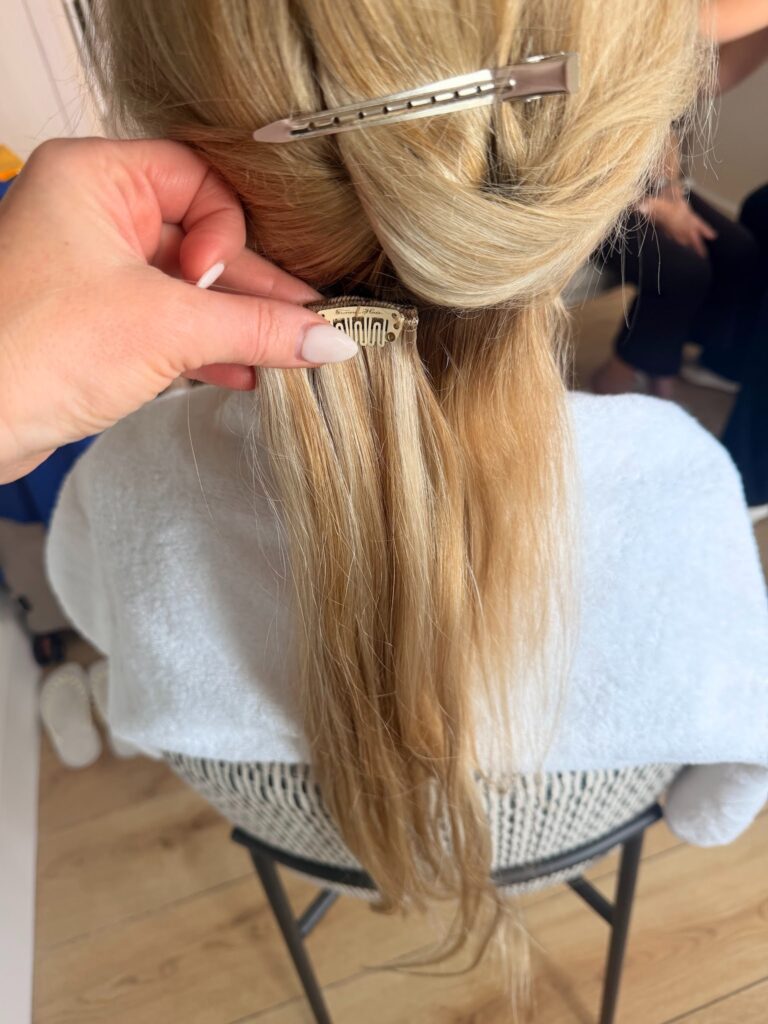
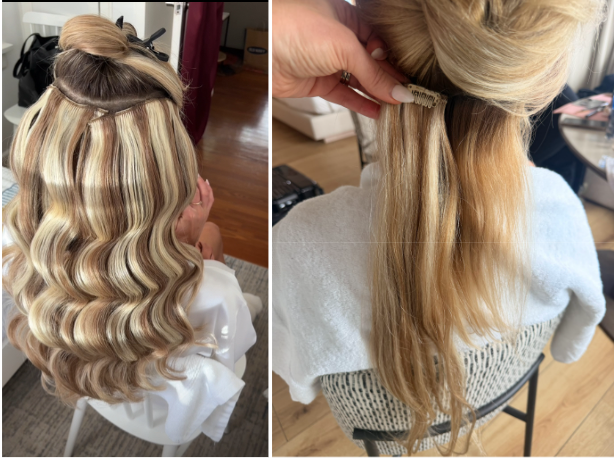
Clip-in extensions are wefts of hair, strips ranging from about half an inch to several inches wide, attached to small pressure clips. The stylist creates a horizontal parting in the natural hair, opens the clips along the weft, presses them closed around the parting, and releases the natural hair above to cover the clips and the top of the weft.
A full clip-in application for bridal use typically involves 6 to 12 individual wefts placed strategically across the head: two at the nape, two or three in the middle section, and one or two near the top crown area depending on where volume is needed. The placement is dictated entirely by the style being created, not by a standard pattern.
The clips hold through friction and a small comb-like grip at the clip opening. In fine hair, they need to be positioned carefully so there’s enough hair above each clip to conceal the hardware and provide enough grip for the clip to hold through the day.
How Tape-In Extensions Work

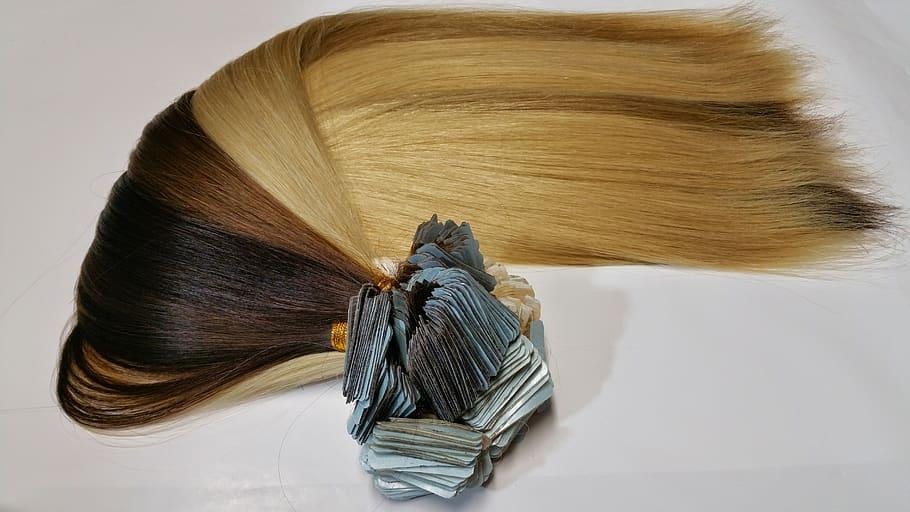
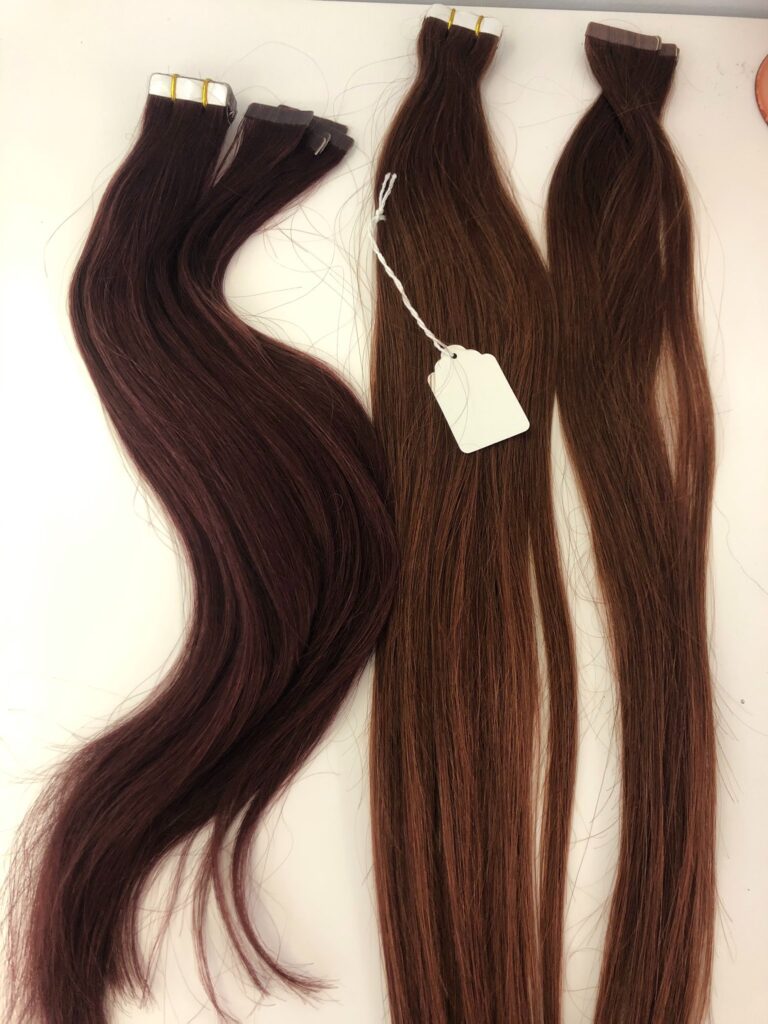
Tape-in extensions consist of a thin weft of hair sandwiched between two strips of medical-grade adhesive tape. The technician takes a thin, horizontal section of natural hair and places a weft on each side of that section, sandwiching the natural hair between the two adhesive strips. They press the sandwich together, and the adhesive bonds create a flat, secure attachment.
The result lies nearly flat against the scalp. When the natural hair falls over the applied wefts, the transition from natural to extension hair is very smooth, which is one of the reasons tape-ins are popular for styles where the hair is worn down or partially down.
The adhesive is removed with a professional bond remover solution and the wefts are re-taped every 6 to 8 weeks as the natural hair grows. At that appointment, the extension hair itself is re-attached with fresh tape, so the same hair can be used through multiple cycles until it shows wear.
How Hand-Tied Weft Extensions Work
Hand-tied weft extensions use a beaded row as their foundation. A row of micro-rings or silicone-lined beads is attached to a horizontal section of natural hair at the nape or around the head depending on where volume is needed. A hand-sewn weft, a continuous strip of extension hair where the weft was literally hand-tied during manufacturing, is then sewn or braided directly to that bead row.
No adhesive. No heat bond. The attachment is mechanical: the bead row holds the weft in place, and the weft is secured to the row by the sewing method. This creates a very flat application with natural movement because there’s no rigid bond point.
The row needs adjustment every 8 to 12 weeks as the natural hair grows. At the maintenance appointment, the technician lets the beads down, moves the row up to account for growth, and re-secures it.
Why Most Bridal Extension Discussions Focus on These Three
Clip-in, tape-in, and hand-tied cover the three distinct categories of bridal extension use: event-only with no advance commitment (clip-in), semi-permanent integration that’s in place before the wedding (tape-in), and the premium semi-permanent option with the most natural result (hand-tied). They represent meaningfully different approaches, not just slight variations of the same thing.
Keratin bond and halo extensions exist and are covered in the full extensions guide, but they’re less commonly the first recommendation for strictly bridal use.
Cost Comparison
Cost for clip-ins and hand-tied reflects the hair quality and professional time invested. Tape-ins fall between the two.
Clip-In: What You’re Paying For
Clip-in extensions for bridal use cost $100 to $600 for the hair itself, depending on quality and volume. Your stylist may provide the extensions directly or guide you to purchase a specific set they know and recommend for color-matching purposes. The application is generally included in the bridal styling service fee.
The quality range is meaningful: a $100 set and a $600 set look noticeably different in photography. Remy human hair, where the cuticle runs in one consistent direction, is the standard for professional bridal clip-ins. It’s what gives the hair its natural movement and prevents tangling.
Tape-In: Installation Plus Hair
Tape-in extensions involve two separate costs. The hair itself, which is the extension wefts and tape, typically runs $200 to $800 depending on how much hair is needed. The installation appointment with a certified tape-in specialist costs an additional $150 to $400. Total: $350 to $1200 or more for a full bridal application.
Re-tape maintenance every 6 to 8 weeks runs $100 to $300, which you’ll do at least once if the extensions are applied 2 to 4 weeks before the wedding and you want them maintained for any period after.
Hand-Tied: The Premium Method and What It Costs
Hand-tied weft extensions are the most expensive common bridal method. A partial set (half head) runs $600 to $1,000 including hair and installation. A full set runs $1,200 to $2,500 or more depending on the amount of hair and the specialist’s market pricing.
Row adjustment maintenance every 8 to 12 weeks costs $150 to $300. One maintenance appointment before the wedding is standard if the extensions were applied more than a month before.
Total Cost of Each Over the Wedding Timeline
If you account for the full period from installation through the wedding:
Clip-in: $100 to $600 for the hair, included in styling fee for the day. Lowest cost.
Tape-in: $350 to $1,200 for installation plus $100 to $300 for one re-tape maintenance. Total: $450 to $1,200.
Hand-tied: $600 to $2,500 for installation plus $150 to $300 for one row adjustment. Total: $750 to $2,800.
Application Time: What to Expect
Clip-In: Morning-of Application
Clip-in extensions are applied on the wedding morning as part of the styling appointment. Application by a professional stylist typically takes 15 to 30 minutes depending on how many wefts are being placed and how complex the blending work is. The morning timeline should account for this, and your stylist needs to know about clip-ins when they’re building your schedule.
Self-application of clip-ins takes significantly longer, often 45 minutes to an hour, and the placement is rarely as precise as a professional application. For a wedding, professional placement is the standard.
Tape-In: The Initial Application Appointment
The initial tape-in installation takes 1 to 2 hours at the specialist’s appointment, 2 to 4 weeks before the wedding. On the wedding morning, the tape-ins are already in and the styling appointment proceeds with the extensions as part of the natural hair. There’s no separate extension placement step.
Hand-Tied: Initial Row Application and Weft Sewing
The initial hand-tied installation is the longest appointment of the three: 2 to 4 hours for a full set. Like tape-ins, they’re in place before the wedding morning, so the wedding day appointment doesn’t include a separate extension placement step.
Which Method Takes Least and Most Chair Time
Wedding morning only: clip-in requires the most additional time on the day itself-however it’s insignificant. Pre-applied methods require the most time at the installation appointment weeks before, but add the least additional time on the wedding morning. Although remember that the more hair you have, the longer it takes to curl and style it so that needs to be accounted for in your timeline.
Over the full timeline: hand-tied requires the most total chair time across the installation, any maintenance appointment, and the wedding morning styling.

Hair Type Suitability
This is where the methods genuinely diverge in ways that affect the decision more than cost or timing.
Clip-In for Fine Hair
Professional clip-ins can work for fine hair, particularly in updos where the clips are fully concealed and the wefts are providing volume to the hidden structure of the style. The challenge with fine hair is providing enough natural hair above each clip to conceal the hardware and create enough grip for the clip to hold through extended wear.
In loose or down styles, clip-ins on very fine hair can create a visible line at the transition between the natural hair and the weft, particularly in photography. Professional placement minimizes this, but it’s something to assess specifically at the trial.
Tape-In for Fine to Medium Hair
Tape-ins are one of the most popular methods for fine hair because the flat sandwich application lies close to the scalp and creates a very smooth transition. The hair naturally falls over the top of the tape rows, concealing the attachment points effectively even in styles where some of the mid-shaft hair is visible.
Medium hair is also well-served by tape-ins. Thick hair can work but requires more careful placement to avoid the tape rows being visible through the natural hair.
Hand-Tied for Fine, Thick, and Textured Hair
Hand-tied weft extensions are the most universally compatible method across hair types. For fine hair, the flat bead row creates the thinnest possible attachment point, with less hardware to conceal than clip clips or tape rows. For thick hair, the weft can be customized in width and placed at appropriate intervals for the hair density. For textured and curly hair, hand-tied is the most common professional recommendation because the beaded row method doesn’t conflict with the natural texture pattern the way some bonded methods can.
Curly and Coily Hair: Which Method Works
For naturally curly and coily hair, hand-tied wefts are generally the first recommendation, particularly when sourcing extension hair that matches the natural texture closely. Clip-ins for curly hair are workable for specific styles, particularly structured updos where the natural curl pattern within the extension weft isn’t visible. Tape-ins aren’t recommended for curly or coily hair.
Longevity and Commitment
Clip-In: Event-Only, Zero Commitment
Clip-ins are worn for the event and removed. There’s no commitment beyond sourcing and color-matching the hair in advance. If you decide the morning of the wedding that you’d rather not wear them, they simply don’t go in. If you love them, you can wear them at the rehearsal dinner, post-wedding events, or future occasions.
Tape-In: 4–8 Weeks with Maintenance
Tape-ins last 4 to 8 weeks per tape application before the adhesive needs to be refreshed. If applied 2 to 4 weeks before the wedding, you’ll have them through the wedding and for several weeks after before the first maintenance appointment is needed. Most brides who go the tape-in route either continue wearing them post-wedding or have them removed at the first maintenance appointment.
Hand-Tied: 8–12 Weeks Before Row Adjustment
The beaded row holds for 8 to 12 weeks before the natural hair growth creates enough gap between the row and the scalp that the row needs to be moved up. Unlike tape-ins where the extension hair is re-taped, hand-tied maintenance involves repositioning the row and re-sewing the weft. Most brides who invest in hand-tied extensions continue wearing them for months after the wedding.
Thinking Beyond the Wedding Day
The investment in tape-in or hand-tied extensions makes more financial sense when the bride plans to wear them for some period after the wedding. If extensions are strictly for the wedding day alone, clip-ins provide 80% of the visual result at 20% of the cost and commitment. If the bride is open to wearing them for several months post-wedding, tape-in or hand-tied amortize their higher initial cost across extended wear.
Removal: What Each Process Involves
Clip-In Removal: No Appointment Needed
Open the clips, slide out the wefts. It can be done in minutes, requires no product, and has zero impact on the natural hair. The bride, a bridesmaid, or the stylist can do it at any point after the reception.
Tape-In Removal: Professional Recommended
Tape-in removal uses a bond remover solution applied to each tape row to dissolve the adhesive before the weft is gently removed. Attempting removal without the bond remover risks pulling on the natural hair and causing breakage. The removal appointment is brief (30 to 60 minutes) and is usually done at the same appointment where the wefts are re-taped for continued wear.
Hand-Tied Row Removal: Stylist Required
A hand-tied row is removed by cutting the weft from the row and removing the individual beads. This requires the specialist’s tools and technique. It’s a 30 to 60 minute appointment and should always be done by the person who applied the extensions or a certified hand-tied specialist.
Hair Condition After Each Removal Type
After clip-in removal, the natural hair is exactly as it was. After professional tape-in removal, the natural hair should be in essentially the same condition as before the extensions were applied. After professional hand-tied removal, the same. Any shedding that accumulated during the extension wear period may become visible on removal, which can look like significant hair loss but is typically normal daily shedding that was caught by the extension rather than falling out in the shower.
South Florida Climate Performance Comparison
For the specific conditions of outdoor South Florida weddings, each method has distinct considerations.
Clip-In in Heat and Humidity
Professional clip-ins hold well in South Florida outdoor conditions when placed correctly and finished with appropriate product. The clips themselves are humidity-neutral: the metal alloy doesn’t respond to humidity, and the grip is mechanical rather than adhesive-based. The extension hair responds to humidity the same way natural hair does, which the stylist addresses through finishing product choices.
At outdoor and waterfront venues, clip-ins in updos hold as reliably as the natural hair does. In loose styles, the humidity effects on the extension hair are the same as on the natural hair: both need anti-humidity finishing to maintain the style.
Tape-In Adhesive in High Heat: What to Know
Tape-in adhesive is designed to be medical-grade and withstand normal body temperature and environmental exposure. Standard South Florida outdoor conditions, including high humidity and temperatures in the 90s, don’t typically cause tape-in bond failure but they can definitely heat up the adhesive which causes some slippage.
The main risk factor is sweating and the heat from being outside which loosens and melts the adhesive or oil-based products near the bond area. Oil is the most common solvent for tape adhesive and is what degrades the bond over time. In South Florida conditions where brides may be inclined to use hair serums or finishing oils, this warning is particularly relevant.
Hand-Tied Rows in Outdoor and Coastal Conditions
The beaded row attachment has no adhesive to degrade. It holds through heat, humidity, salt air, and any outdoor conditions through the mechanical security of the bead-and-sewing method. This makes hand-tied wefts inherently more climate-stable at the attachment level than tape-ins, though in practice the climate performance of both is acceptable for wedding day use.
Which Method Is Most Climate-Stable for Outdoor Ceremonies
Hand-tied edges out tape-in in strictly climate-terms because there’s no adhesive component. Clip-ins in updos hold comparably. The climate performance difference between the methods, in practice, is less significant than the styling technique and product choices.
For the full South Florida climate approach to bridal beauty, the climate-resistant bridal beauty guide covers hair and makeup in depth.
Morning-of Timeline Impact
Clip-In Add-Time
15 to 30 minutes of additional chair time on the wedding morning for professional placement. This should be explicitly accounted for in the timeline built during the booking conversation. Tell your stylist “I’ll be wearing clip-in extensions” and they’ll build the schedule accordingly.
Pre-Applied Extensions: What the Morning Looks Like
Tape-in and hand-tied extensions are already in when the bride sits down. The morning appointment proceeds with the full extension set as part of the hair, which affects overall styling time (more hair to work with) but not in a separated “extension step” way. Styling time increases by 15 to 30 minutes compared to non-extension styling of the same complexity.
How Extensions Change the Overall Styling Duration
Any extension type adds time to the overall styling process. The practical implication is that the morning timeline, the artist count, and the call time all need to be set with the extension situation in mind. Wedding morning beauty timeline planning covers how to structure this correctly.
Which Method Is Right for Your Wedding?
Five Questions That Lead to the Right Decision
1. Do you want any advance commitment? If no, clip-in is the only answer. If you’re open to a pre-applied extension that’s in place before the day, tape-in or hand-tied are both options.
2. What’s your budget for the extension portion of bridal beauty? If $100 to $600 is the limit, clip-in. If $500 to $1,200 is comfortable, tape-in. If $1,000 to $2,500 is within range, hand-tied is worth the conversation.
3. What’s your hair type? Fine hair often gets the best result from tape-in (seamless blend) or hand-tied (thinnest attachment point). Thick hair is well-served by clip-in (maximum flexibility) or hand-tied (customizable weft placement). Curly or coily hair: hand-tied is the most reliable first recommendation.
4. What style are you planning? Updo: clip-ins work excellently (hardware fully concealed). Loose or half-down styles: tape-in or hand-tied produce the most seamless visible result.
5. Do you want to wear extensions after the wedding? If yes, the investment in tape-in or hand-tied amortizes meaningfully. If the extensions are strictly for the day, clip-ins are the more practical value.
Profile 1: The Bride Who Wants Maximum Flexibility
Clip-in. No advance commitment, applied the morning of, removed the same night. The visual result is excellent when placed professionally.
Profile 2: The Bride Who Wants the Most Natural Look
Hand-tied or clip-in. Hand-tied. The most seamless integration, the flattest attachment, the most natural movement in photography. Worth the investment for brides who prioritize photographic naturalness above all other factors.
Profile 3: The Bride with Fine or Thin Hair
Tape-in or hand-tied, with a stylist consultation to determine which works better for the specific density and texture. Both produce significantly better integration than clip-ins for fine hair in loose or partially-down styles.
Profile 4: The Bride Who Wants to Wear Extensions Beyond the Wedding
Tape-in or hand-tied, with the understanding that ongoing maintenance is part of the investment. Hand-tied is often preferred for long-term wear because it’s the lowest-stress method for the natural hair.
When to Ask Your Artist Rather Than Decide Alone
If you’ve answered the five questions and you’re still uncertain, that’s the information your stylist needs to hear. “I’m between tape-in and hand-tied and these are the factors I’m weighing” is exactly the kind of conversation a skilled bridal artist can help you resolve with an in-person assessment of your actual hair.
Frequently Asked Questions
What is the difference between clip-in, tape-in, and hand-tied hair extensions for weddings?
Clip-ins attach via pressure clips, are applied on the wedding morning, and removed after the event. Tape-ins sandwich a thin weft around natural hair using adhesive, applied 2 to 4 weeks before the wedding, lasting 4 to 8 weeks. Hand-tied wefts attach to a beaded row without adhesive or heat, applied 4 to 8 weeks before the wedding, holding 8 to 12 weeks before the row needs adjustment.
Which hair extension method is best for fine hair at a wedding?
Both tape-in and hand-tied produce better integration than clip-ins for fine hair in loose or partially-down styles, because the pre-applied attachment creates a seamless transition that clip hardware can occasionally reveal. Hand-tied is often preferred for very fine hair because the beaded row creates the thinnest possible attachment point. In updos, professionally placed clip-ins work well for fine hair because the hardware is fully concealed.
Are tape-in extensions safe to wear in South Florida heat and humidity?
Yes. Medical-grade tape adhesive withstands outdoor heat and humidity under normal wedding day conditions. The main precaution is avoiding oil-based products near the tape bond area, which degrades adhesive over time regardless of weather. A maintenance check 7 to 10 days before the wedding confirms all bonds are secure before the day.
Can I remove tape-in extensions myself after the wedding?
Professional removal is strongly recommended. Tape-in removal requires a bond remover solution to dissolve the adhesive before the weft is removed from the natural hair. Removing without the solution risks pulling natural hair out with the extension. Removal appointments are typically 30 to 60 minutes and often happen at the same appointment as a re-tape for brides continuing to wear extensions.
Talk to Phairis Luxury About Your Extension Options
The right extension method for your wedding depends on your hair, your style, your venue, and your timeline. Rebecca Mousseau and the Phairis Luxury team consult on all three methods and work with specialists for pre-applied extension types when tape-in or hand-tied is the right direction.
Reach out to check availability for your date and start the conversation with your actual hair in mind.
For more on extension planning and bridal hair:
To be iconic?
Ready
I'm excited to hear all about your wedding/Event day. Have a question about a booking and hair styling sessions? View our services and talk to us, also dont forget to check our portfolio
